

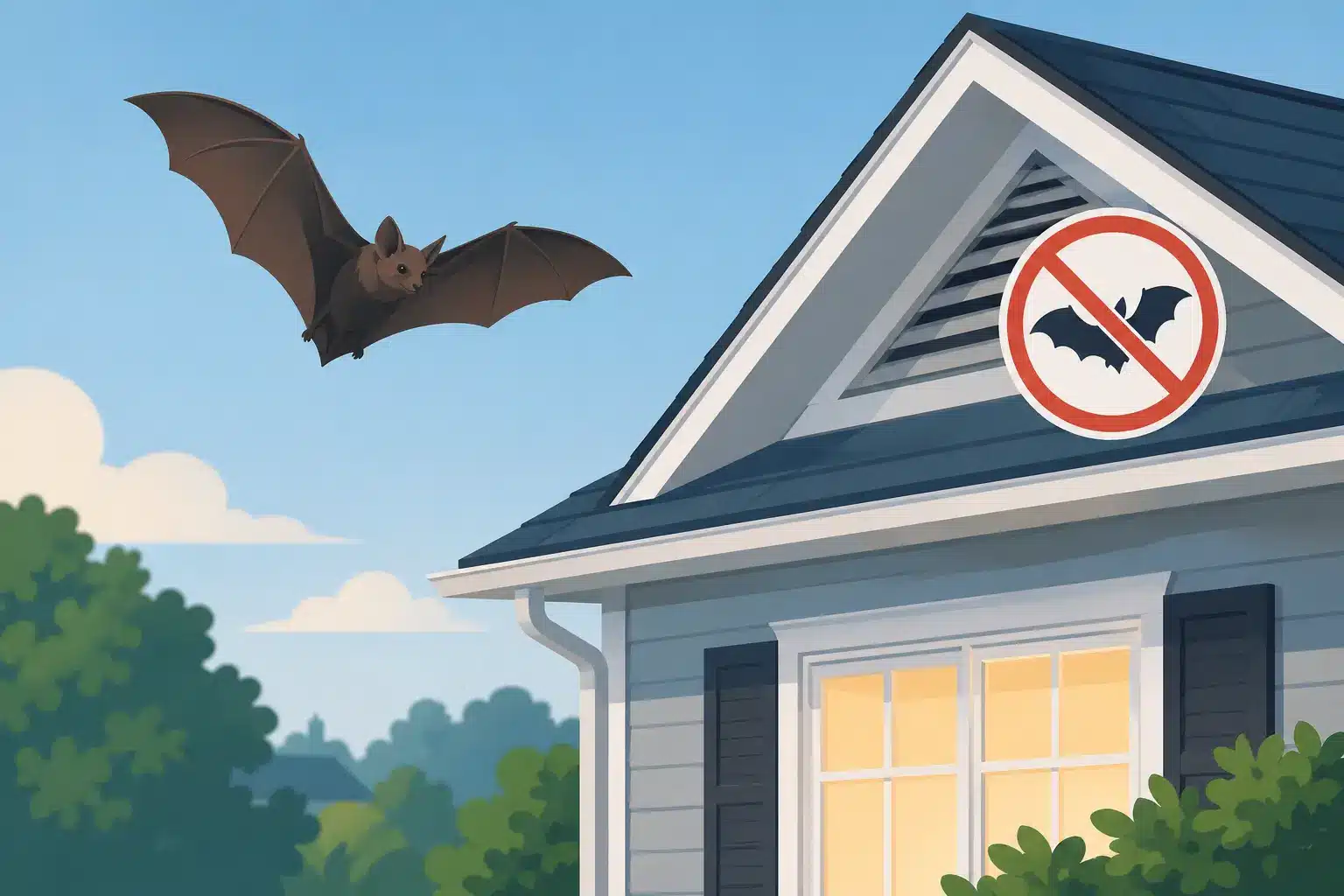
A bat slipping through a gap near the roofline may look like a simple wildlife issue. The timing of removal can make it much more complicated. When should bats be excluded? The right answer depends on whether the colony has flightless young, where bats are entering, local rules, and whether there is an immediate safety concern inside the building.
A properly timed exclusion gets bats out without allowing them back in. A poorly timed one can trap pups in an attic, wall, church steeple, or commercial roof system. That creates an animal welfare concern and can lead to odor, staining, insect activity, and a much larger cleanup problem.
When Should Bats Be Excluded?
In much of the Midwest, the preferred time for bat exclusion is after young bats are old enough to fly and leave with the adults. For many local species, that window often begins in late summer and can extend into early fall. Conditions vary by weather, species, and location, so the calendar alone should never decide the work.
During maternity season, female bats gather in warm, protected spaces to raise pups. Those pups cannot fly for part of the summer. If every entry point is sealed while they are still inside, the adults may be shut out and the young may be left behind. If adults are sealed inside, they can spread through wall voids and emerge into living or occupied spaces while trying to find a way out.
That is why a bat specialist starts with an inspection, not a caulk gun. The goal is to identify the colony, determine whether young are likely present, locate every active and potential entry point, and choose a humane schedule. Every Bat Deserves a Home, Just Not Yours.™
The maternity season exception
Maternity season is generally the period when exclusion must be handled with the greatest care. Across South Dakota, Nebraska, Iowa, and Minnesota, it commonly overlaps with the warmer months, often from spring into mid-to-late summer. Exact timing shifts from year to year, particularly after unusual spring temperatures or prolonged cool weather.
An experienced inspection can identify clues that help establish the stage of activity. Bat droppings beneath an opening, staining around a gap, evening exit patterns, audible chirping, and the number of bats using a structure all matter. A professional may recommend monitoring the site and scheduling final exclusion once the young are confirmed capable of flying.
Waiting is not the same as ignoring the problem. While final one-way exclusion is delayed, the property can be evaluated, vulnerable areas can be documented, and a safe work plan can be put in place. In some cases, limited repairs away from active roost exits may reduce the chance of additional bats entering without trapping the existing colony.
Why Late Summer Is Often the Best Time
Once the young are flying, a proven exclusion system can allow bats to leave naturally while preventing re-entry. This is different from trapping or poisoning bats, neither of which is an appropriate solution. Bats are beneficial animals that consume insects, but they do not belong in an attic, wall, chimney, or occupied commercial building.
During a standard exclusion, technicians seal the secondary gaps bats could use to return. They then place professional one-way devices at the primary exits. Bats can leave at dusk to feed, but they cannot get back into the structure. After activity has stopped and the colony is out, the remaining exit points are sealed for long-term protection.
Late summer can be especially practical because it avoids separating mothers from non-flying pups and gives property owners time to complete repairs before colder weather drives bats to seek protected shelter. Still, a date on the calendar is not a guarantee. A large historic building, a church with high rooflines, or a commercial facility with complex ventilation details may require a more tailored plan.
What About Bats Found in Winter?
Winter bat activity deserves prompt attention, but it does not always mean full exclusion should happen immediately. Some bats may hibernate inside protected wall voids, attics, or other concealed areas. Sealing an active winter entrance without understanding where the bats are can trap them indoors and encourage them to move deeper into the structure.
A winter inspection can reveal whether there is an active colony, a single bat using a temporary shelter, or evidence of a seasonal infestation. Depending on the conditions, the best approach may be to plan exclusion for a safer period, address a bat found in a living area, and prepare permanent repairs for the appropriate season.
There are exceptions. If bats are entering occupied rooms, appearing in a workplace, or creating an immediate public-health concern, the situation needs professional direction right away. Avoid handling a bat with bare hands. If a bat is found in a room where a person was sleeping, or around an unattended child, pet, or someone unable to report contact, contact local health authorities or a medical professional for guidance before releasing it.
Signs It Is Time to Schedule an Inspection
You do not need to see dozens of bats to have a meaningful problem. A colony may use a gap as small as about three-eighths of an inch, often around fascia boards, roof returns, attic vents, chimneys, siding transitions, utility penetrations, and loose flashing.
Schedule an inspection if you notice bats exiting at dusk, scratching or chirping in walls or ceilings, dark staining near a roofline opening, guano on exterior surfaces or in the attic, or a persistent musky odor. Property managers should also pay attention to recurring tenant reports, especially in upper-floor units and older commercial structures with multiple roof elevations.
Guano should not be treated as a routine housekeeping issue. Accumulated droppings can damage insulation, stain surfaces, and create strong odors. Cleanup may require protective equipment, containment, removal of contaminated insulation, and proper sanitation. The extent of the cleanup depends on how long the colony has been present and where the material has collected.
Why DIY Exclusion Can Go Wrong
Homeowners are often tempted to seal the opening they see first. The problem is that bats rarely rely on only one gap, and the most visible opening is not always the primary exit. Closing it at the wrong time can push bats into another part of the home or building.
Bat exclusion also requires work at roof level, around steep pitches, chimneys, and difficult-to-reach details. Beyond the fall risk, a missed gap can undermine the entire job. Bats will return to a familiar roost if even a small access point remains available.
Repellents, bright lights, ultrasonic devices, mothballs, and home remedies do not solve the entry problem. They may disrupt bats temporarily, but they do not create a durable barrier or address guano contamination. The lasting solution is precise identification, humane one-way exclusion, and complete sealing of entry points.
A Professional Plan Protects the Building and the Colony
The best timing is determined by what is happening at your property, not by a generic online timeline. A qualified bat specialist should inspect the exterior and accessible interior areas, identify active exits and vulnerable construction gaps, assess maternity-season concerns, and explain what work can be done now versus what should wait.
CP Bat Mitigation applies proven exclusion methods designed around both property protection and humane treatment. For homeowners, that means protecting the attic and living space from repeat activity. For churches, apartments, warehouses, and commercial facilities, it means planning around occupants, operations, access challenges, and sanitation needs.
If you are hearing bats overhead or seeing them leave at dusk, do not wait for the colony to grow or try to seal the opening overnight. Arrange a professional inspection so the timing, exclusion method, and repair plan fit the bats’ life cycle and your building’s needs. A carefully planned response gives the colony a way out and gives your property a lasting way to stay bat-free.