

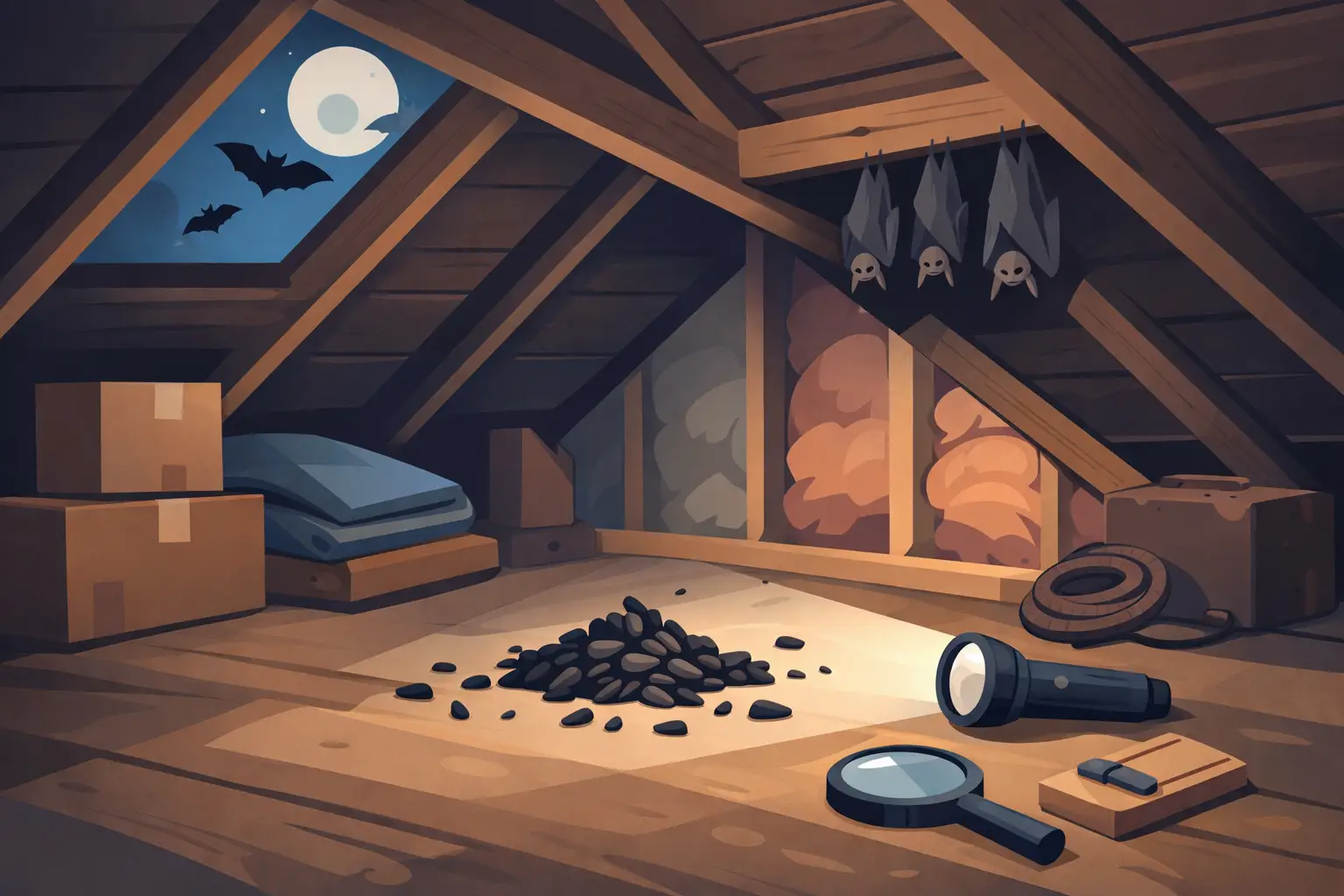
A small pile of dark pellets on attic insulation usually means one thing – bats have been using your home longer than you realized. If you have noticed bat droppings in attic areas, the issue is not just mess or odor. It can point to an active colony, hidden entry points, and contamination that tends to spread the longer it goes untreated.
For homeowners, property managers, churches, and commercial property operators, this is the kind of problem that gets more expensive when it is ignored. Guano buildup can damage insulation, create strong smells, stain ceilings, and raise legitimate health concerns. The good news is that the right response is clear once you know what you are looking at.
What bat droppings in attic spaces usually mean
Bat droppings, often called guano, are a strong sign that bats are roosting above the living space or have done so recently. Unlike a random pest issue that comes and goes, bats tend to return to the same protected roosting spots if access remains open. An attic gives them warmth, darkness, and safety from predators, which is why the problem often repeats until exclusion work is done correctly.
Fresh guano is usually dark and slightly shiny. Older droppings become dry and crumbly. You may see scattered pellets near soffits, around attic access points, along rafters, or below a gap where bats enter and exit. In some homes, the droppings are concentrated in one area. In others, they spread across insulation as the colony grows or shifts roosting spots.
That is why droppings matter so much. They do not just tell you that bats were present. They help show where activity is happening, how long it may have been going on, and how serious the cleanup could become.
Why guano should not be treated like ordinary debris
Many people assume attic droppings can be swept up like dust or rodent waste. That is a mistake. Bat guano can carry fungal spores that become airborne when disturbed, especially in dry attic environments. Breathing in contaminated dust is the main concern during cleanup, not simply touching the droppings.
There is also the issue of saturation. Guano and urine can soak into insulation, wood, and drywall over time. Once that happens, the problem is no longer just surface-level. Odor can drift into living areas. Moisture and waste can attract insects. In severe cases, staining appears on ceilings or around wall junctions.
The trade-off here is straightforward. A very small amount of droppings from brief activity may call for limited cleanup after the bats are excluded. A heavy accumulation usually requires a more controlled remediation process, including contaminated insulation removal and sanitation. The only way to know which situation you have is with a proper inspection.
How to tell bat droppings from mouse droppings
This is where many property owners lose time. Bat droppings and mouse droppings can look similar at first glance, especially in dim attic spaces. The difference matters because the removal strategy is completely different.
Bat droppings tend to crumble easily and may contain shiny fragments from insect wings. Mouse droppings are typically harder and more solid. Guano also often appears directly beneath entry gaps or roosting clusters, while mouse droppings are more likely to show up along travel routes and edges.
Still, visual guesses are not enough when a home or commercial building is involved. If you also hear fluttering near dusk, see staining around roofline gaps, or notice bats outside at sunset, the evidence points much more strongly to a bat issue than a rodent issue.
The risks of leaving bat droppings in attic insulation
The first risk is health-related. Disturbing guano without proper protection can send particles into the air. The second is structural and financial. Attic insulation loses effectiveness when it becomes contaminated, compressed, or soaked with waste. That can affect energy efficiency and indoor comfort long before the damage is visible from below.
There is also a practical risk many owners do not think about right away – delay gives the colony more time. During the active season, more bats can use the same roost. More occupancy means more waste, stronger odor, and a larger cleanup bill.
For commercial buildings, churches, and multi-use properties, there is another layer to consider: occupant complaints and liability concerns. A persistent odor, visible droppings, or bats entering occupied spaces can quickly turn into a sanitation and reputation problem.
What not to do when you find guano
Do not vacuum it with a standard household vacuum. That can spread contaminated dust through the air and into the machine itself. Do not seal holes immediately if bats are still inside. If entry points are closed before proper exclusion, bats can become trapped in walls, living spaces, or other parts of the structure.
It is also wise not to assume the bats are gone just because you found droppings during the day. Bats are nocturnal. A quiet attic at noon does not mean the roost is inactive.
This is one of those situations where the order of operations matters. First identify whether bats are present, then confirm the entry and exit points, then perform humane exclusion at the right time, and only after that move forward with cleanup and repairs.
Why exclusion comes before cleanup
If you clean the attic without solving the access problem, you are setting yourself up to pay for the same work twice. Professional bat control focuses first on getting the colony out safely and preventing re-entry through proven exclusion methods. Cleanup happens after the roost is no longer active.
That sequence protects both the property and the bats. It also helps avoid one of the biggest mistakes in wildlife control – treating the symptom instead of the source. Guano is the symptom. Open gaps at the roofline, vents, soffits, or construction joints are the source.
A specialist inspection should determine how bats are getting in, how many may be involved, whether seasonal restrictions apply, and how extensive the guano contamination has become. In the Midwest, timing can matter because maternity season affects when exclusion should be performed.
When bat droppings in attic areas call for a specialist
If you can see more than a light scattering of pellets, smell a musty ammonia-like odor, hear movement around dusk or dawn, or spot bats entering near the roof, it is time to bring in a bat specialist. The same goes for any church, apartment building, warehouse, school, or commercial property where access points may be high, concealed, or spread across a large structure.
This is not a general pest control job. Bat work requires species-aware inspection, humane exclusion planning, and cleanup methods that address contamination without making it worse. That is why specialized companies focus on long-term prevention rather than quick fixes.
At CP Bat Mitigation, that means inspecting the structure carefully, identifying active entry points, recommending safe, humane bat removal, and helping property owners understand what level of guano cleanup is actually needed. Some attics need targeted remediation. Others need more extensive restoration. It depends on how long the roost has been active and how deeply the waste has affected the materials.
What a proper response usually includes
A strong bat response plan starts with inspection and evidence gathering. From there, the goal is to remove the bats without harming them and prevent them from returning. Only then should cleanup move forward.
In most cases, the process includes locating entry gaps, installing exclusion devices where appropriate, sealing secondary openings, removing contaminated debris, and addressing damaged insulation if necessary. The final step is making sure the structure is protected so the same colony does not reoccupy the attic next season.
Property owners sometimes ask whether cleanup alone will remove the smell and solve the issue. Sometimes it helps temporarily, but if access is still open or contamination is widespread, odor and activity often continue. Permanent results come from pairing cleanup with exclusion and repair.
The right next step for your property
Finding guano overhead can be unsettling, especially if you are not sure how long it has been there. But this is a manageable problem when it is handled in the right order. The sooner the attic is inspected, the easier it is to confirm what you are dealing with and stop the damage from growing.
Every bat deserves a home, just not yours. If you suspect bat droppings in attic spaces, treat it as a sign to act early, protect the building, and choose a humane solution that keeps the problem from coming back.