

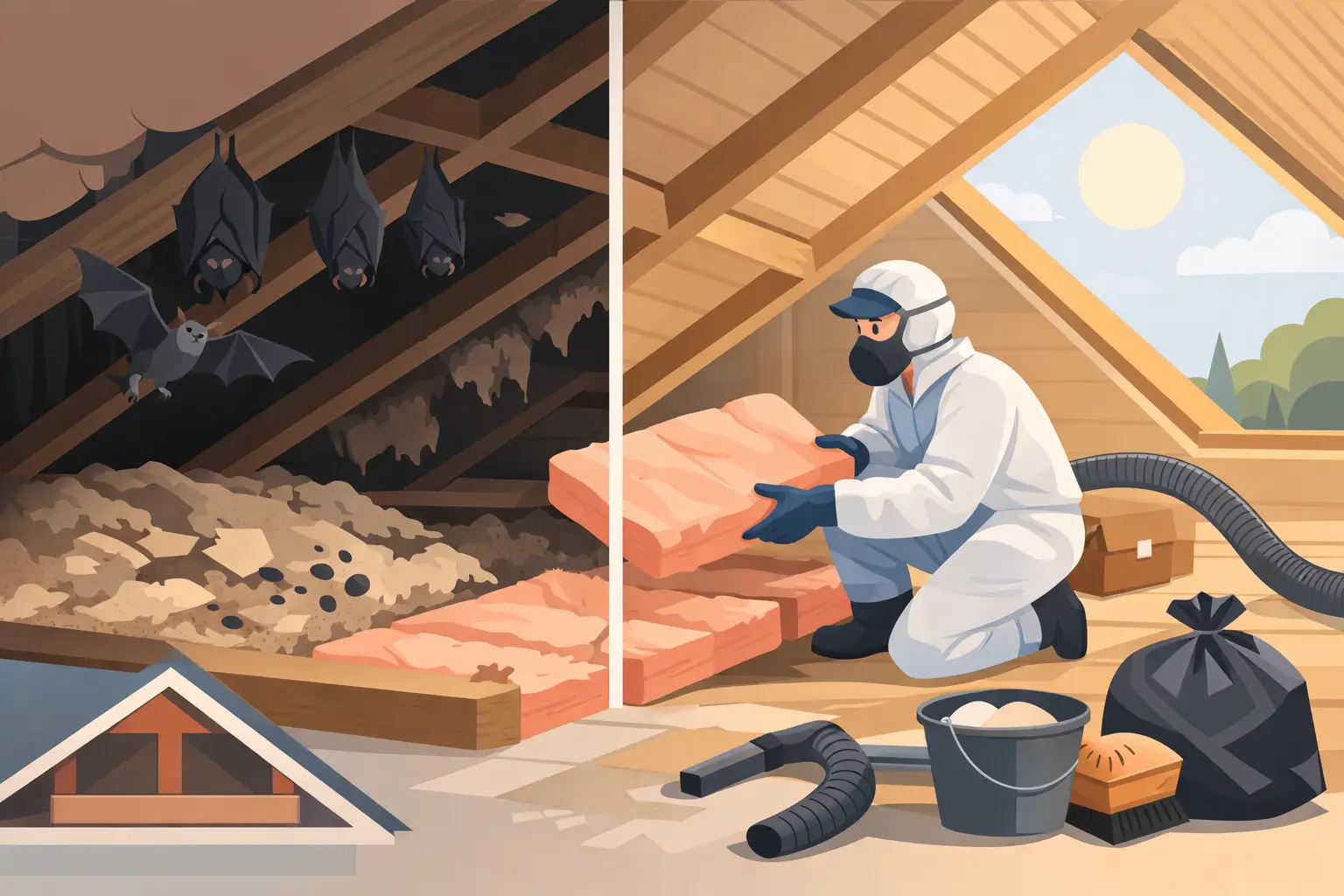
A bat-free attic is not necessarily a restored attic. After bats leave, the remaining guano, urine staining, odor, damaged insulation, and unsealed entry points can continue affecting your home. Proper attic restoration after bat infestation addresses the full problem – not just the bats you saw flying out at dusk.
For homeowners, churches, property managers, and commercial building operators, the right order of work matters. Cleaning an attic before bats are humanely excluded can waste money and expose workers to fresh contamination. Sealing holes before the bats have left can trap them inside. A lasting result begins with expert inspection, safe removal, and a restoration plan built around the actual condition of the space.
Why Bat-Contaminated Attics Need More Than Cleanup
Bats may use an attic as a seasonal roost for years before a property owner discovers the issue. Even a small colony can leave concentrated deposits beneath favored roosting areas. Guano often accumulates on insulation, ceiling joists, stored belongings, ductwork, and around attic access points. Urine can stain wood, create persistent odors, and contribute to moisture concerns.
The concern is not only appearance. Disturbed guano can release dust and airborne particles, which is why sweeping, vacuuming with a household vacuum, or pulling out insulation without proper containment is not a good do-it-yourself project. The amount of cleanup needed depends on how long bats were present, the size of the colony, the attic layout, and whether contamination reached finished areas of the building.
A professional assessment separates superficial droppings near one entry point from widespread contamination that requires insulation removal and detailed sanitation. That distinction protects the building owner from paying for unnecessary work while making sure serious conditions are not minimized.
Start With Humane Bat Exclusion
Restoration should begin only after the bats have been safely and humanely removed through proven exclusion methods. Exclusion allows bats to exit the structure but prevents them from getting back in. It is different from trapping, poisoning, or simply sealing visible gaps.
A specialist should inspect the roofline, soffits, fascia, vents, chimney areas, siding transitions, and other common access points. Bats can enter openings far smaller than many property owners expect. If even one active opening is missed, the colony may return to the newly cleaned attic.
Timing also matters. During maternity season, flightless young may be inside the structure. Excluding adult bats at the wrong time can leave pups trapped behind, creating additional odor, sanitation, and animal-welfare problems. A knowledgeable bat professional will explain the appropriate timing for your property and use an approach that protects both occupants and bats.
Every Bat Deserves a Home, Just Not Yours.™ Humane exclusion gives bats a way out while restoring your building to the place it should be: protected, clean, and bat-free.
Assessing Attic Damage After Exclusion
Once exclusion is complete and the attic is confirmed inactive, restoration begins with a close inspection. The goal is to identify every material affected by bats and determine what can be cleaned versus what should be removed.
Insulation and Stored Materials
Insulation commonly requires the most attention. Loose-fill insulation can hold guano and urine throughout its depth, making complete cleaning impractical. Fiberglass batts may sometimes be removed in targeted sections when contamination is limited, but heavily affected insulation is usually best removed and replaced.
Cardboard boxes, fabric, paper goods, and porous stored items can absorb odor and contamination. In some cases, it is safer and more economical to dispose of these materials than attempt to clean them. Solid, nonporous belongings may be salvageable after careful cleaning, depending on their location and condition.
Wood, Framing, and Building Components
Attic framing does not always need replacement. Surface contamination on joists, rafters, and sheathing can often be removed with appropriate HEPA-filtered equipment and professional cleaning methods. However, prolonged urine exposure may leave staining or odor that requires additional treatment.
The inspection should also look beyond guano. Bat activity can reveal existing roof gaps, damaged vent screens, loose trim, or areas where weather and wildlife have compromised the building envelope. Repairing those conditions is part of preventing the next infestation.
Odor and Air Quality Concerns
Bat odor often becomes more noticeable during warm weather or when humidity rises. Removing droppings alone may not eliminate it if urine residue remains on framing, insulation, or nearby materials. Professional sanitation should focus on the contaminated surfaces, not just fragrance or odor masking.
If an attic connects to living areas through recessed lights, wiring penetrations, open chases, or gaps around attic hatches, odors and dust can move into the home or building. Restoration may include sealing these pathways once cleanup is complete. The best solution depends on the building’s design and the extent of contamination.
What Professional Guano Cleanup Should Include
A qualified cleanup process is controlled, thorough, and designed to avoid spreading contaminants into clean portions of the property. The exact scope varies, but a complete job generally includes these steps:
- Establishing containment around the work area when needed
- Wearing appropriate respiratory and personal protective equipment
- Removing contaminated insulation, debris, and unsalvageable materials
- HEPA vacuuming accessible guano from framing and surfaces
- Applying a professional cleaning and sanitizing treatment where appropriate
- Bagging and disposing of affected materials safely
- Inspecting the attic again before repairs and insulation replacement
The process should be tailored to the attic, not sold as a one-size-fits-all package. A small, newly discovered roost may need localized cleaning. A long-term colony in a large attic may require full insulation removal, treatment of structural surfaces, and replacement insulation to return the space to a healthy, usable condition.
Repairing the Attic So Bats Do Not Return
Restoration is the point where sanitation and prevention come together. Once contaminated materials are removed, the attic should be repaired with future bat activity in mind. That can include closing construction gaps, replacing damaged vent covers, screening vulnerable openings correctly, repairing trim, and addressing roofline defects.
Not every opening should be sealed with the same material. A durable repair must account for weather exposure, building movement, and the type of surface involved. Foam alone is rarely a dependable long-term wildlife barrier in exposed areas. Professional exclusion work focuses on permanent closure methods that stand up to bats, wind, moisture, and seasonal temperature changes.
Insulation replacement can also improve more than cleanliness. If old insulation was compressed, contaminated, or insufficient before the infestation, replacing it may improve energy performance and comfort. Property owners should confirm that all exclusion and structural repairs are complete before new insulation goes in. Otherwise, future repair work can disturb a brand-new installation.
When to Call a Bat Specialist
Call for a professional inspection if you see bats exiting at dusk, hear scratching or chirping in walls or ceilings, notice droppings around an attic hatch, smell a persistent musky odor, or find staining near roofline openings. Do not handle a live or dead bat with bare hands. If a bat was found in a room where someone was sleeping, or where a child or pet may have had contact, contact local public health guidance and a medical professional promptly.
CP Bat Mitigation provides specialized bat exclusion, guano cleanup, and attic restoration guidance for property owners who need a permanent answer, not a temporary patch. With more than 30 years of experience, the focus remains on safe, humane bat removal and repairs that help keep bats out for good.
A clean attic should give you confidence when you open the access hatch, not a lingering question about what was left behind. Start with an expert inspection, make sure the bats are excluded correctly, and restore the space with the same care you would give any other critical part of your property.