

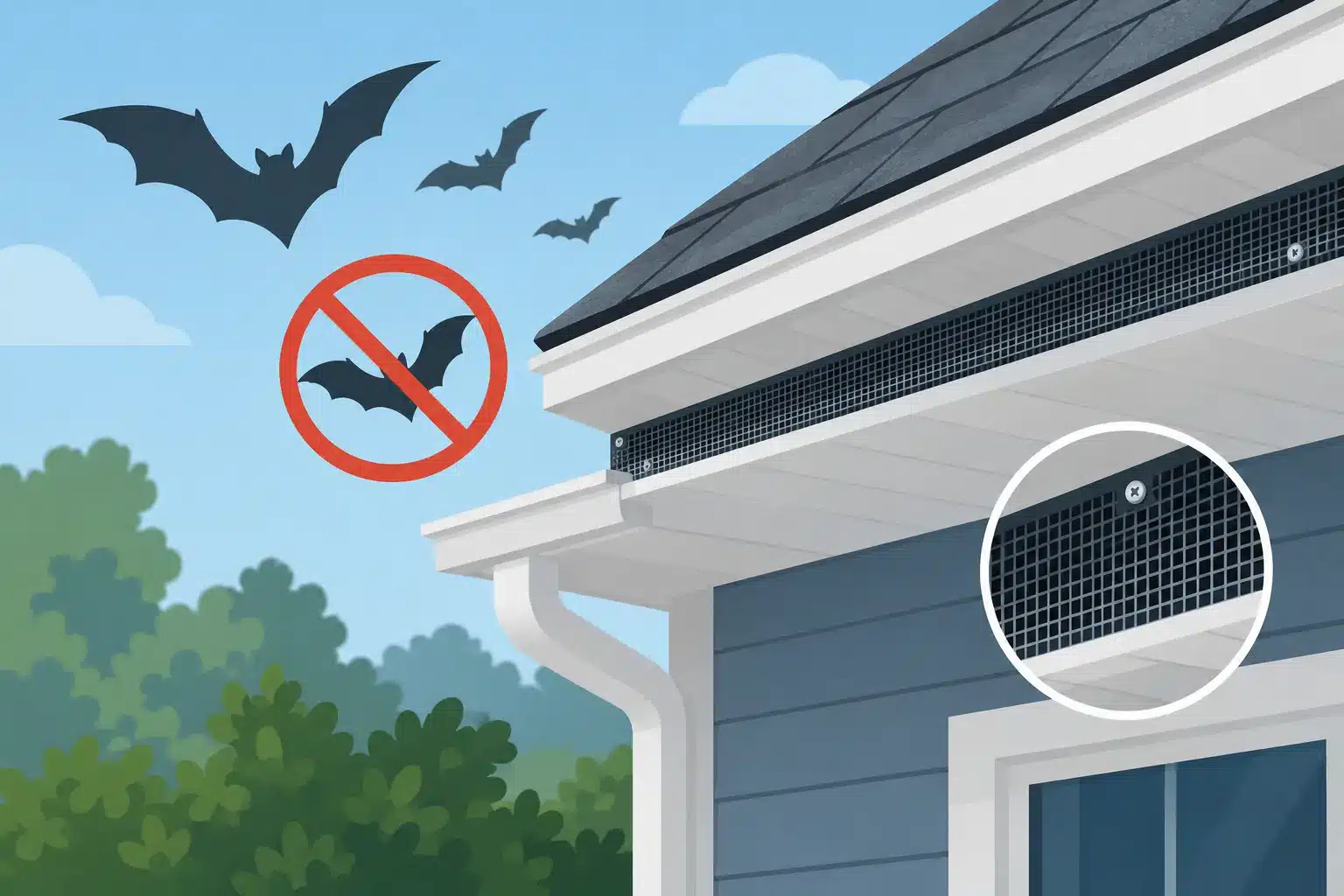
A bat slipping through a gap near the roofline is not looking for a fight. It is looking for a protected roost. But once bats establish themselves in an attic, wall void, church steeple, or commercial structure, the problem can grow quickly. Properly installed bat barriers give the colony a humane way out while preventing it from getting back inside.
For homeowners and property managers, the difference matters. A temporary patch may quiet the problem for a few days. A professionally designed exclusion system addresses the building openings bats are using, protects the animals, and helps keep guano, odor, noise, and repeat infestations from becoming an ongoing property concern.
What Are Bat Barriers?
Bat barriers are specialized exclusion devices and materials installed over active bat entry points. Their job is simple in concept: bats can leave the structure at dusk, but they cannot re-enter through the same opening.
The barrier is not a trap, poison, or repellent. Bats do not reliably leave because an odor, sound machine, or store-bought spray tells them to. They leave to feed. A properly fitted exclusion device uses that normal behavior to move the bats out safely and permanently.
Many barriers are made from durable mesh, netting, tubing, or purpose-built one-way devices. The right material depends on the opening and the structure. A narrow gap along flashing requires a different approach than an open soffit, a warped ridge cap, a gap behind fascia, or a void around utility lines.
A barrier only works when the building is prepared
Installing a one-way device over one visible hole is not enough if bats have three other ways into the building. Bats can use very small openings, often around rooflines and construction joints that are difficult to spot from the ground.
That is why exclusion begins with a detailed inspection. The active entry points need barriers, while secondary openings must be sealed with durable, building-appropriate materials. If secondary gaps remain open, bats may simply relocate deeper into the structure or find a new way back into the attic.
Why Caulk Alone Is Not a Bat Solution
Closing an opening while bats are still inside can create a much larger problem. Trapped bats may search for another exit and emerge into living spaces, drop into wall cavities, or die inside inaccessible areas. That can lead to odor, insect activity, and a stressful situation for occupants.
A humane exclusion plan avoids sealing bats in. The bats need a clear route out first. Once the colony has exited and activity has stopped, the exclusion devices can be removed and the final areas sealed.
The materials also matter. Foam, tape, and thin screen may look effective from a ladder, but weather, wind, heat, and animal pressure can cause weak repairs to fail. A lasting repair should account for how the structure moves, sheds water, and ages through Midwest seasons. On older homes, churches, barns, and commercial buildings, this is especially important because one repair may expose several more vulnerable areas nearby.
How Professional Bat Barriers Are Installed
A successful exclusion is a process, not a single product. It starts with identifying the species, the active entry points, the likely roosting areas, and the condition of the structure. A specialist also looks for staining, guano deposits, rub marks, and the timing of bat activity around sunset.
Inspection identifies the real entry route
Bats often enter where roof components meet: chimney flashing, dormers, soffits, ridge vents, gable returns, and gaps at siding transitions are common examples. On commercial properties, expansion joints, rooftop equipment penetrations, parapet walls, loading areas, and high masonry gaps can create similar access.
The most obvious gap is not always the one bats are using. An experienced inspection follows the evidence and observes the building as a complete system. This prevents the common mistake of repairing a convenient opening while missing the actual access point several feet away.
Timing protects bats and your property
Timing is one of the most important parts of humane bat removal. During maternity season, young bats may be unable to fly. Excluding adult bats at the wrong time can leave pups stranded inside, which is harmful to the colony and can create sanitation problems in the building.
The right timing depends on local conditions, the type of bat, and the stage of the colony. A qualified bat specialist will explain whether exclusion can proceed immediately or whether it needs to be scheduled for a safer window. This is not a delay for its own sake. It is how responsible exclusion protects wildlife while preventing a worse issue inside the property.
Barriers are monitored before final sealing
After one-way barriers are installed, the building should be monitored for continued activity. This confirms that bats are leaving and helps reveal any overlooked access points. Only after the exclusion period is complete should final repairs close the openings permanently.
A professional approach also considers appearance. On a residence, repairs should blend with the roofline, trim, or siding as much as possible. On churches and commercial properties, the work may need to preserve historic features, maintain access for building systems, and minimize disruption to occupants.
Bat Barriers for Homes, Churches, and Commercial Buildings
The goal is the same across property types, but the method changes with the building.
Homes often have accessible rooflines but hidden attic connections. The priority is keeping bats out without creating water intrusion or compromising ventilation. A barrier system may be installed high on a roof edge, behind trim, or along a small construction gap that is nearly invisible from the yard.
Churches can be more complex. Bell towers, louvers, steep roofs, and decorative architecture provide ideal roosting locations as well as challenging access. Exclusion may require careful staging and a plan that respects the building’s use, appearance, and congregation schedule.
Commercial buildings can involve large roof spans, multiple elevations, active tenants, and more complicated safety requirements. For facility managers, a bat problem is not just a wildlife issue. It can affect sanitation, maintenance planning, employee comfort, customer perception, and access to parts of the building. The best exclusion plan is thorough enough to protect the entire structure, not merely the space where bats were first noticed.
When You May Need Bat Barriers
You may see bats leaving at dusk from the same roofline or exterior gap. You may also hear light scratching, chirping, or fluttering above a ceiling or inside a wall near sunrise and sunset. Guano on a porch, window ledge, attic insulation, or exterior wall can be another clear signal.
Odor is often a later-stage concern. As guano accumulates, it can produce a strong ammonia-like smell, especially in warm weather or poorly ventilated attics. If bats have occupied a space for an extended period, exclusion may need to be followed by professional guano cleanup and sanitation work.
Do not handle a bat with bare hands. If a bat is found in a room where someone was sleeping, where a child was unattended, or where a pet may have had contact with it, follow local public health guidance and contact the appropriate professionals promptly.
Why a Specialist Is Worth It
General pest control approaches can miss the details that determine whether bat exclusion succeeds. Bats are protected wildlife in many circumstances, and their behavior, seasonality, entry patterns, and roosting habits require a specific skill set.
CP Bat Mitigation focuses exclusively on safe, humane bat removal, proven exclusion methods, and long-term prevention. With more than 30 years of experience, the team understands how bats use Midwest homes and commercial structures – and how to close those opportunities without cutting corners.
The right bat barrier does more than block a hole. It gives bats a way to leave, restores control of your property, and helps prevent the same colony from returning next season. Every bat deserves a home, just not yours.™