

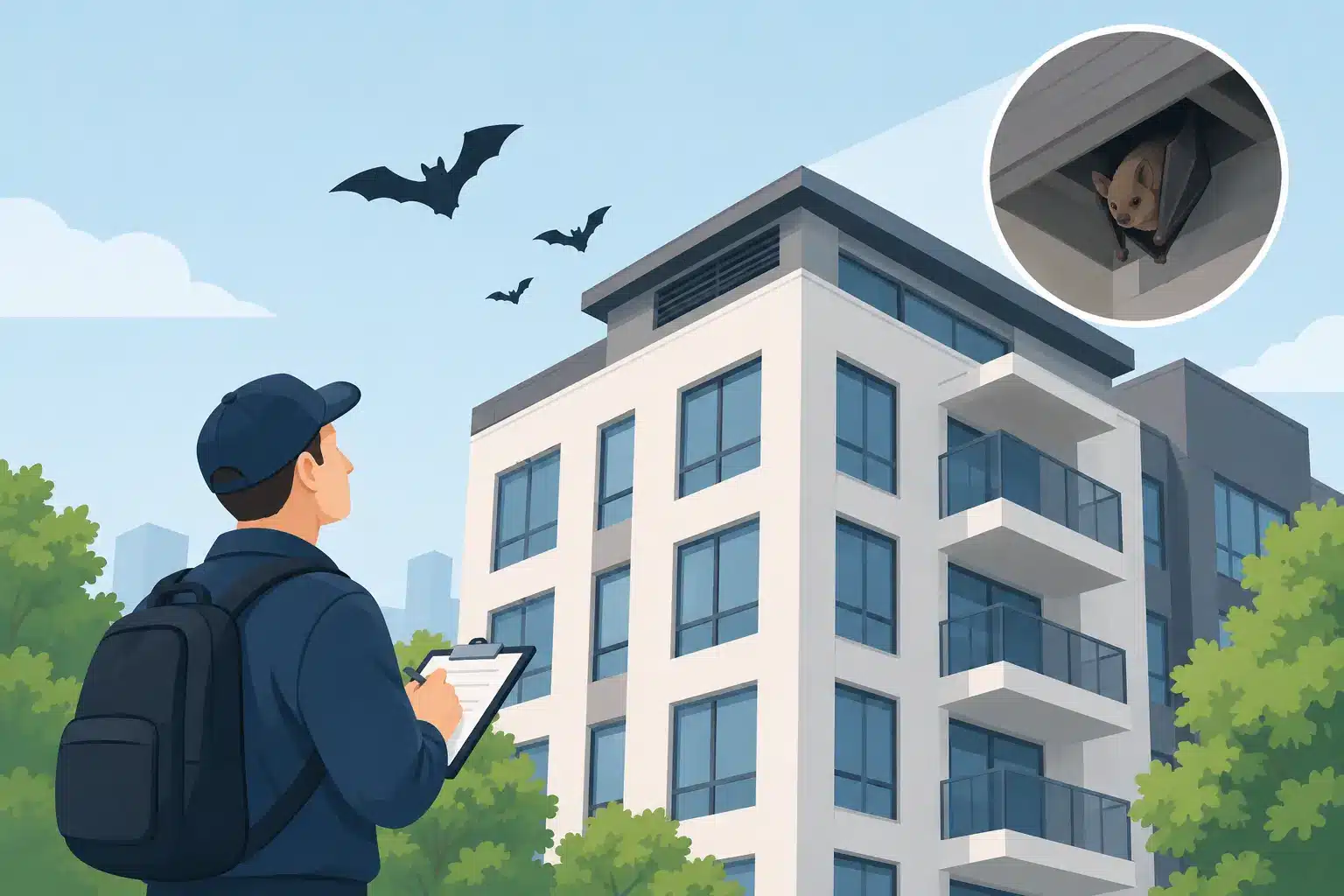
A bat sighting in a stairwell, tenant report of scratching above a ceiling, or guano under a roofline is not a maintenance issue to postpone. This property manager bat mitigation guide explains how to protect occupants, preserve the building, and resolve the problem humanely without creating a larger infestation elsewhere on the property.
Bats can enter through gaps as small as 3/8 inch. On multifamily buildings, churches, offices, warehouses, and historic properties, those openings often hide behind fascia, flashing, louvers, utility penetrations, roof transitions, and decorative architectural features. One visible bat may be a single animal that entered accidentally. Repeated sightings, staining at an opening, or droppings below the roofline usually point to an established roost.
The right response is not to seal every visible hole immediately. Effective bat work requires a careful inspection, correct seasonal timing, humane exclusion, and permanent repairs once bats have left.
Why Bat Issues Require a Property-Level Response
For a property manager, the problem is rarely limited to the spot where a tenant saw a bat. Bats move through wall cavities, attic voids, chimneys, roof systems, and mechanical spaces. A colony may use several entry and exit points across one building, or move between connected structures during the season.
That creates responsibilities beyond wildlife removal. You may need to address resident concerns, document maintenance conditions, coordinate access to units or restricted areas, protect staff, and plan sanitation work. Guano accumulation can stain surfaces, create odor, attract insects, and damage insulation or finishes over time. When droppings are disturbed in enclosed areas, cleanup should be handled carefully with proper containment and protective procedures.
There is also a reputational cost. A tenant who sees bats in a hallway or finds droppings on a balcony expects prompt, informed action. Clear communication reassures people that the building is being protected without resorting to harmful or ineffective shortcuts.
The Property Manager Bat Mitigation Guide: First Steps
Start by gathering observations before anyone performs repairs. Ask maintenance staff and occupants where bats were seen, what time of day activity occurs, and whether they noticed chirping, odor, staining, or droppings. Record dates, locations, and photographs when it is safe to do so. This information helps an exclusion specialist identify travel routes and determine whether the issue is isolated or building-wide.
If a bat is found in an occupied room, keep people and pets away from it. Close interior doors to limit its movement, open an exterior window or door if possible, and avoid handling the bat. Any situation involving possible direct contact with a person or pet should be treated seriously and referred to the appropriate health authorities or medical professionals for guidance.
Do not allow staff to use poisons, glue traps, mothballs, ultrasonic devices, or fogging products. These approaches do not solve entry conditions and can create dead-animal odors, trapped bats inside walls, tenant complaints, and unnecessary harm to wildlife. Bats are beneficial insect-eaters, but they do not belong inside occupied buildings.
Inspection Comes Before Exclusion
A qualified bat inspection is a building assessment, not a quick walk around the exterior. The inspector should examine the roofline, attic or upper voids, siding intersections, vents, chimney areas, utility access points, and any location where construction materials meet. Exterior evidence may include brown staining from body oils, guano deposits, rub marks, or audible activity around dusk.
Commercial and multifamily properties can be especially complex. A tall building may require lift access. A church steeple may have inaccessible voids. A warehouse can have numerous overhead penetrations and expansion joints. Older buildings may contain layers of past repairs that conceal gaps behind trim or metal flashing.
The inspection should identify both active exits and potential secondary openings. Sealing only the opening where bats are observed can push them to another unsealed gap. Worse, if bats are inside when that opening is closed, they may enter occupied areas while searching for a way out.
Use Humane Exclusion, Not Trapping
Humane bat exclusion allows bats to leave the structure through purpose-built one-way devices, while other possible re-entry points are sealed. After the bats exit, the devices are removed and the final openings are closed. This is the proven approach for resolving an established roost while respecting the animal’s role in the local ecosystem.
Timing matters. In the Midwest, exclusion cannot be treated as a one-date-fits-all repair. During maternity periods, flightless young may be present. Excluding adult bats at that time can leave young trapped inside, creating humane concerns and sanitation problems. Weather, species, building conditions, and local guidance all affect the appropriate schedule.
A knowledgeable specialist will evaluate the colony and recommend a plan that avoids trapping bats inside. That may mean completing certain exterior repairs now, monitoring activity, and scheduling final exclusion at the correct time. For a manager facing resident pressure, that can feel slower than simply sealing a gap. It is usually the choice that prevents a far more expensive problem.
Plan for Guano Cleanup and Building Protection
Not every bat issue requires large-scale remediation. A few droppings at an exterior entry point may only require localized cleaning after exclusion is complete. An attic, bell tower, wall void, or mechanical room with long-term accumulation requires a more deliberate cleanup plan.
Guano should not be swept or blown into the air. The area may need containment, HEPA-filtered vacuuming, removal of heavily contaminated insulation, surface treatment, and odor control. The scope depends on the amount of material, the ventilation of the space, whether occupants could be exposed, and the condition of underlying building materials.
Property managers should also inspect for secondary damage. Guano and urine can affect insulation performance, corrode some materials, stain ceilings, and create conditions that draw insects. Addressing these issues after exclusion protects the building and provides a cleaner closeout for owners and occupants.
Communicate Clearly With Tenants and Staff
You do not need to provide residents with technical details of the exclusion system. You do need to explain that the property is using a safe, humane professional process, that staff should not disturb bats, and that sightings should be reported promptly with the exact location and time.
Give maintenance teams a simple escalation process. They should know who to contact, which areas need restricted access, and which repairs must wait until the exclusion plan is complete. This avoids the common mistake of a well-meaning employee caulking an active exit point before the rest of the building has been secured.
For commercial facilities, notify relevant stakeholders early. A school, healthcare-adjacent building, food service operation, church, or hospitality property may have specific operational concerns. Scheduling inspection, exclusion, and cleanup around business hours can reduce disruption while maintaining a documented response.
Prevent the Next Infestation
Long-term prevention relies on the quality of the final seal-up. Durable materials and careful workmanship matter because bats may return to familiar roost sites in later seasons. A short-term patch that separates from flashing or siding can reopen the same problem next year.
A prevention plan should account for roof repairs, vent screens designed to preserve ventilation, chimney caps where appropriate, sealed utility penetrations, secure fascia, and maintained exterior joints. Regular roofline inspections are particularly valuable after storms, construction work, or seasonal freeze-thaw cycles.
CP Bat Mitigation brings more than 30 years of specialized experience to safe, humane bat removal, exclusion, and guano cleanup. A professional inspection can give property managers a clear answer before a small roofline issue turns into a tenant, sanitation, or structural concern.
Every bat deserves a home, just not yours. When bats choose your building, a properly timed exclusion plan protects the colony, the occupants, and the property you are trusted to manage.