

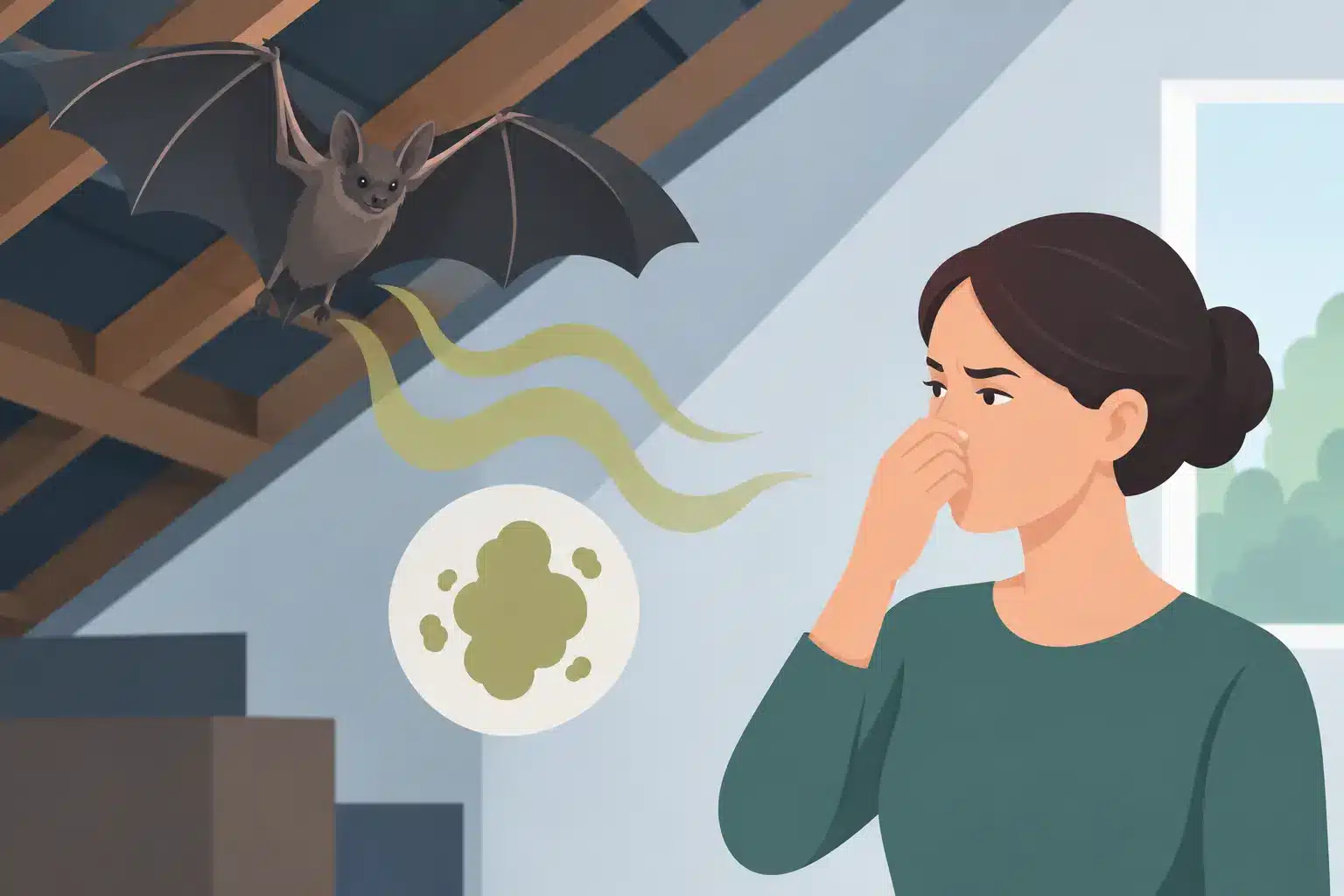
A strong, stale smell in the attic is often one of the first signs people notice after bats have been using a building for weeks, months, or longer. Bat odor causes are not limited to the animals themselves. The smell can come from accumulated guano, urine-soaked insulation, a dead bat in a wall void, or moisture trapped around an active roost. Finding the source matters because deodorizer, air freshener, and a quick cleanup rarely solve the underlying problem.
For homeowners, churches, apartment buildings, and commercial properties, an unexplained odor is a reason to inspect the structure promptly. A bat colony can enter through an opening as small as 3/8 of an inch, then roost where people cannot see them: behind fascia, under rooflines, in attics, wall cavities, chimneys, and louvers. The longer activity continues, the greater the chance of contamination and building damage.
The Most Common Bat Odor Causes
Guano and urine accumulation
Bat guano is the most common source of persistent odor in an infested attic or wall cavity. A small amount may not smell strongly, especially when dry. But an active colony produces a steady buildup of droppings and urine over time. When guano becomes damp from humidity, roof leaks, or condensation, the odor can become earthy, musty, and increasingly sharp.
Urine adds another layer to the problem. It can soak into insulation, wood framing, drywall, and ceiling materials. In severe cases, the smell is similar to ammonia or a dirty animal enclosure, particularly during warm weather. Heat and humidity intensify odors, which is why a property may seem fine in winter but develop a noticeable attic smell in late spring or summer.
The amount of odor does not always reveal the size of the colony. A small group roosting in a poorly ventilated wall void can create a surprisingly strong smell. Conversely, a larger colony in a dry, well-ventilated attic may be less noticeable at first. An inspection is the reliable way to identify the scope of activity.
A dead bat or trapped animal
A sudden rotten or decaying odor may point to a bat that died inside a wall, soffit, chimney, or attic. This can happen naturally, but it also happens when building owners seal holes before confirming that all bats have exited. Trapped bats may die inside inaccessible areas, leaving an odor that can persist until the remains are located and removed.
This is one reason exclusion must be handled carefully. Safe, humane bat removal allows bats to leave through one-way devices while preventing them from getting back inside. Once the colony has exited, entry points can be sealed permanently. Closing openings too early can turn a bat problem into a larger odor and cleanup problem.
Moisture, damaged insulation, and hidden contamination
Bats do not create water leaks, but their presence often exposes conditions that make odors worse. Guano can hold moisture, and urine can saturate insulation. If the attic already has poor ventilation or a roof leak, contaminated materials may stay damp longer and develop a deeper musty smell.
Insulation is especially vulnerable. Loose-fill insulation can conceal droppings beneath the surface, while fiberglass batts can absorb urine and retain odor long after bats are gone. In heavily affected areas, cleaning only visible guano may leave the odor source behind. Contaminated insulation may need to be removed, the area treated appropriately, and new insulation installed after exclusion work is complete.
An active maternity colony
During maternity season, female bats gather in warm, protected spaces to raise their pups. A colony may become more noticeable during this period because activity, droppings, and urine increase. Residents may hear squeaking or fluttering around dusk and dawn, while property managers may notice odor near upper floors, mechanical rooms, or roof access points.
Timing matters. Bat pups cannot fly for part of the summer, so exclusion work must be scheduled responsibly to avoid separating young bats from their mothers. A bat specialist can identify whether maternity activity is present and recommend the correct next step. Humane treatment protects wildlife while protecting the people and property inside the building.
What Does Bat Odor Smell Like?
There is no single description that fits every infestation. Many people describe bat-related odor as musty, stale, earthy, or similar to an old barn. Where urine is concentrated, the smell may be acrid or ammonia-like. If a bat has died inside a concealed space, the odor is more likely to be sour, rotten, and sudden.
Odor alone cannot confirm bats. Mice, birds, squirrels, raccoons, mold, plumbing issues, and dead animals can create similar smells. The difference is usually found in the evidence around the odor: small dark droppings below an exit point, staining near roof gaps, scratch marks, oily rub marks, or bats emerging at dusk.
Bat guano is commonly mistaken for mouse droppings. Both can be dark and pellet-shaped, but bat guano often contains shiny insect fragments when it is carefully examined by a trained professional. Do not handle droppings with bare hands or disturb a large accumulation to investigate. Disturbing dry guano can send dust and contaminants into the air.
Why the Smell Should Not Be Ignored
Beyond being unpleasant, a persistent odor can indicate a sanitation issue that is growing behind finished surfaces. Guano and urine can stain ceilings, damage insulation, attract insects, and create a source of odor that spreads through vents or openings around light fixtures. A colony near HVAC equipment or return-air pathways may allow odors to travel farther through the property.
Large accumulations also require careful cleanup practices. Bat droppings can contain contaminants that should not be swept, vacuumed with a household vacuum, or removed without proper protective equipment and containment. The goal is not simply to make the attic smell better. The goal is to remove the contamination safely after bats have been excluded.
For commercial properties, delay can also affect occupants, tenants, customers, and maintenance schedules. A church with odor above a sanctuary, a multifamily building with upper-level complaints, or a warehouse with activity around rooflines needs a clear plan that addresses access, safety, and long-term prevention.
How to Respond to a Bat Smell in Your Property
Start by limiting disturbance. Do not seal suspected holes, spray chemicals into wall cavities, or set traps. These actions can trap bats indoors, create dead-animal odors, and complicate a humane resolution. Keep people and pets away from concentrated droppings, especially in attics and crawl spaces.
A professional inspection should identify the roosting area, active entry and exit points, the likely species and colony behavior, and the extent of guano contamination. The inspection should also distinguish current activity from an old, inactive roost. That distinction affects the work required. A past infestation may need cleanup and repairs, while an active colony needs exclusion before cleanup begins.
A complete solution generally follows a careful order: confirm activity, install proven one-way exclusion devices when conditions allow, seal secondary openings, verify that bats are out, and then address guano, contaminated insulation, and odor sources. Skipping the exclusion step can invite bats back. Skipping cleanup can leave the property smelling like the infestation never ended.
When to Call a Bat Specialist
Call for an inspection when an attic or upper wall has a recurring musty or ammonia-like odor, when you see droppings near the roofline, or when bats are visible around dusk. A sudden decay smell, staining on ceilings, or a noticeable odor near vents also deserves prompt attention.
CP Bat Mitigation focuses exclusively on safe, humane bat removal, proven exclusion methods, and guano cleanup. With more than 30 years of experience, the team can identify the source of the problem and recommend a practical path to a bat-free property backed by long-term prevention.
Every bat deserves a home, just not yours. If the smell is telling you something is active above the ceiling or behind the walls, a timely inspection can protect your property before a hidden roost becomes a larger repair and cleanup project.