

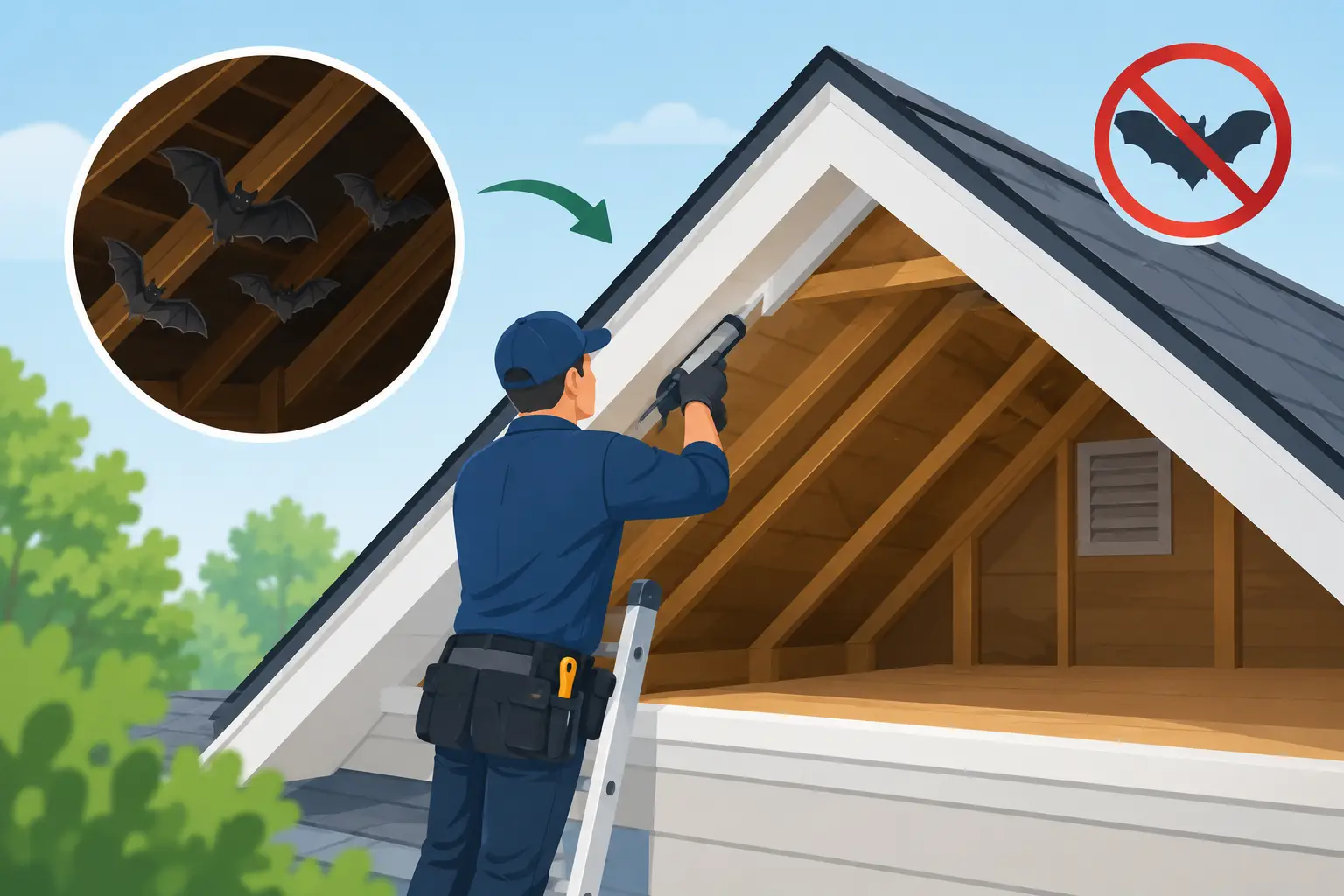
A homeowner may first notice the problem at 4:45 a.m.: light scratching above the bedroom ceiling, followed by a faint chirping sound as daylight approaches. That was the starting point for this attic bat exclusion success story, a representative example of how a small exterior gap can turn into a serious property and sanitation concern if it is handled the wrong way.
The home was a well-maintained two-story property in the Midwest. The owners had heard activity in the attic through the summer but assumed it was mice or birds. Then they found dark staining near a roofline vent and a small amount of debris below an attic access panel. They wanted the bats out quickly, but they also wanted the work done humanely and without creating a repeat problem next season.
That distinction mattered. Removing a bat from a living space is not the same as excluding a colony from an attic. A lasting solution requires careful inspection, proper timing, one-way exit methods, complete sealing, and a plan for contaminated materials.
What the Inspection Revealed
The first concern was identifying the animal accurately. Bats leave clues that can resemble other wildlife activity, but their entry patterns, droppings, staining, and roosting locations tell a more complete story. In this case, the attic contained evidence of a small bat colony rather than a single stray bat.
The active entry point was narrow – a separation near a roof-to-wall transition that measured less than an inch at its widest point. A second gap was found around a utility penetration, and several older openings along the fascia could become future access points. Bats can enter openings that many homeowners would never consider large enough to matter.
The inspection also found guano accumulation concentrated beneath the roosting area. While the buildup was not yet severe enough to compromise ceiling materials, it had created odor concerns and could attract insects. Leaving guano in place after exclusion would have meant leaving part of the problem behind.
Just as important, the technician evaluated timing. Bat exclusion cannot be treated as a simple seal-up job during every season. If dependent young are present and unable to fly, sealing adults outside can leave pups trapped inside the structure. Humane work means respecting bat behavior while still protecting the building.
The Humane Attic Bat Exclusion Method
Once conditions allowed for exclusion, the work began with one clear principle: bats needed a way out, but no way back in. Rather than trapping or poisoning bats, the crew installed purpose-built one-way exclusion devices at the active exit point. These devices allow bats to leave at dusk to feed but prevent re-entry.
Before the devices went up, all secondary gaps were sealed with durable materials appropriate for the building surface. This order is critical. If a crew places an exclusion device over one hole but leaves other openings accessible, bats may simply move to another gap – or remain inside the structure through an overlooked route.
The exterior work addressed the roofline, fascia transitions, utility gaps, and other vulnerable areas identified during the inspection. The goal was not to make a home look patched together. It was to create a clean, durable barrier that protects the structure without changing its appearance unnecessarily.
Over the following evenings, the homeowners noticed the expected change: bats emerged around dusk, but the pre-dawn return activity disappeared. After the appropriate monitoring period confirmed the colony had exited, the one-way devices were removed and the final exclusion points were sealed.
This is where temporary bat removal becomes true bat prevention. A bat-free attic is not much of a success if the same colony can return through the same opening a month later.
Why Sealing the Hole First Would Have Failed
The homeowners initially considered a straightforward repair: seal the visible gap and wait for the noise to stop. It is an understandable reaction, especially when a contractor sees an obvious opening. But sealing active entry points too soon can create bigger problems.
Bats that are locked inside may search for another route into wall voids, living spaces, or other inaccessible areas. In some situations, a homeowner may suddenly find bats appearing near vents, light fixtures, or upstairs rooms. If young bats are present, they may be unable to leave at all.
There is also the issue of incomplete inspection. The gap that looks obvious from the ground is not always the only access point. Roof intersections, loose siding, flashing details, attic vents, chimney areas, and construction joints can all provide entry opportunities. A specialist inspects the entire structure because bat exclusion succeeds or fails at the smallest overlooked opening.
Guano Cleanup Was Part of the Finish, Not an Add-On
After exclusion was complete, the attention shifted inside. The attic’s affected area was carefully assessed for droppings, odor, insulation damage, and staining. Guano cleanup is not simply a matter of sweeping debris into a bag. Disturbing dry accumulations can send dust and contaminants into the air, while damaged insulation can continue holding odor long after bats are gone.
The cleanup process focused on safely removing affected material and addressing the areas beneath the former roost. The exact scope depends on the amount of guano, the attic layout, insulation type, and whether contamination reached structural surfaces. A small, localized cleanup may be relatively direct. A long-term colony can require more extensive removal and restoration work.
For this home, the cleanup restored the attic to a cleaner condition and gave the owners confidence that they were not simply covering up evidence of the issue. That peace of mind matters when the attic sits directly above bedrooms and living areas.
The Result: Quiet Mornings and a Protected Home
The immediate result was simple: no more scratching overhead, no bats entering or leaving through the roofline, and no surprise wildlife activity inside the home. The more meaningful result came later. When warm weather returned, the owners did not see bats circling the previous entry point or hear renewed activity in the attic.
That is the standard a successful exclusion should meet. The work should solve the current infestation and reduce the likelihood of a repeat invasion by addressing how bats entered in the first place.
CP Bat Mitigation approaches this work with more than 30 years of specialized experience in humane bat control. Every Bat Deserves a Home, Just Not Yours.™ That means protecting bats through proven exclusion methods while protecting the people, property, and businesses that depend on a secure building.
What Homeowners Can Learn From This Bat Exclusion Success Story
The biggest lesson is to act when signs first appear. Staining around an exterior gap, chirping near dawn, guano below an attic access point, or bats emerging at dusk are not problems that usually improve on their own. Colonies can return to familiar roosting sites year after year, and the longer activity continues, the more likely cleanup and repairs become more involved.
It also pays to choose a provider whose work is centered on bats, not a general pest-control approach built around trapping or chemicals. Bats require species-aware timing, detailed structural inspection, and methods that allow them to leave safely. A permanent result depends on all three.
If you suspect bats are using your attic, resist the urge to block openings yourself. Keep the area undisturbed, avoid handling bats or droppings, and arrange a professional inspection. A careful exclusion plan can protect your home for the long term while giving the bats a chance to relocate safely.