

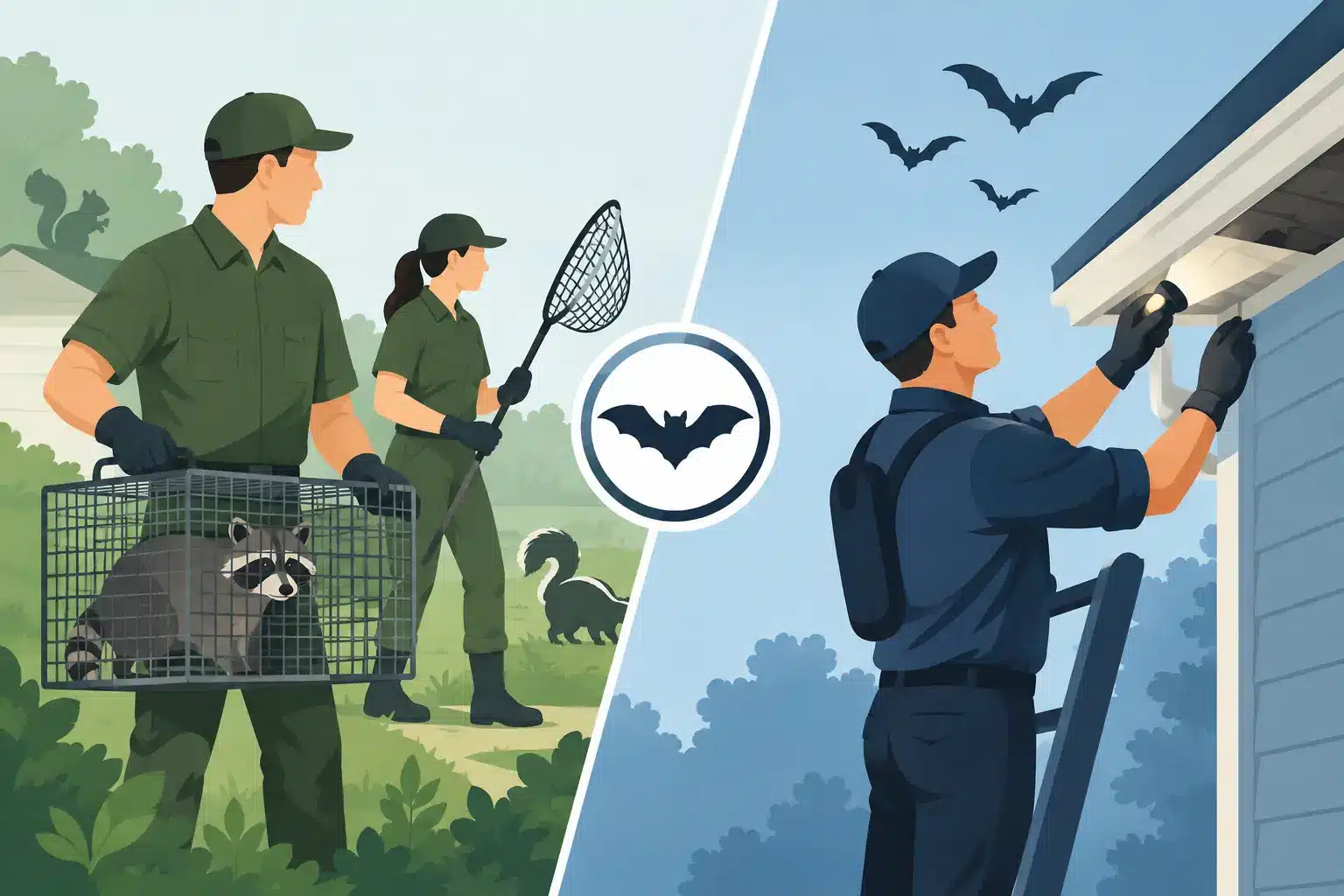
A bat slipping through a gap near a roofline is not the same problem as a raccoon in a trash bin or a squirrel in an attic. When comparing wildlife control versus bat specialists, the difference comes down to the animal’s behavior, the risks inside the structure, and whether the solution actually keeps the colony from coming back.
A general wildlife company may be qualified to handle many nuisance animals. But bats require a very specific process: correct species identification, careful timing around maternity season, humane exclusion, complete entry-point sealing, and safe guano cleanup when contamination is present. For homeowners, churches, property managers, and commercial operators, choosing the right type of provider can determine whether the problem ends permanently or repeats next season.
Wildlife Control Versus Bat Specialists: The Core Difference
General wildlife control companies are often built to address a broad range of animal issues. Their technicians may respond to calls involving squirrels, skunks, raccoons, mice, birds, snakes, or bats. That range can be useful when the animal has been clearly identified and the issue is straightforward.
Bat work is different. A colony can enter through openings as small as 3/8 of an inch, often along roof intersections, fascia boards, chimney gaps, ridge vents, utility penetrations, or aging siding. The visible opening is rarely the only opening. A proper inspection requires the technician to understand how bats travel, where they roost, what evidence they leave behind, and how they may move through walls, soffits, attics, and other concealed areas.
A bat specialist concentrates on these patterns every day. Instead of treating bats as one item on a long wildlife-control list, a specialist builds the inspection, exclusion plan, repair process, and cleanup recommendations around bat behavior. That focus matters when the goal is not simply to get bats out tonight, but to make sure they cannot reenter next month or next year.
Why Bat Removal Requires More Than Trapping
Bats should not be trapped inside a building, poisoned, or sealed in without a plan for their exit. These approaches can create a larger problem, including dead bats in walls, odor, insects, and desperate bats finding their way into living or occupied spaces.
Safe, humane bat removal relies on exclusion. After identifying active entry points, a trained professional installs one-way devices that allow bats to leave but prevent their return. The remaining access points are sealed in a way that protects the building without trapping bats inside.
Timing is a critical part of this work. During maternity season, flightless pups may be present in the roost. Excluding adult bats at the wrong time can separate mothers from pups and leave young bats inside the structure. A bat specialist understands seasonal restrictions and adjusts the plan to protect both the property and the animals.
This is where a broad wildlife service and a dedicated bat company can differ significantly. A general provider may know that bats are present. A specialist knows how to determine whether the colony is using the structure, where it is entering, whether young may be present, and when exclusion can be completed safely.
The Inspection Is Where Long-Term Results Begin
The strongest bat-control work starts with a detailed inspection, not a quick estimate from the driveway. Bats are quiet, nocturnal, and highly skilled at using construction gaps most property owners never notice. A technician needs to inspect the roofline, dormers, vents, soffits, flashing, siding transitions, chimneys, and other vulnerable areas.
At CP Bat Mitigation, the purpose of a free inspection is to identify the full scope of the issue before recommending a solution. That includes locating likely entry points, identifying evidence of roosting activity, and assessing areas where guano or urine may have accumulated.
A specialist also recognizes that a building can have multiple bat-related concerns at once. There may be an active colony in the attic, staining beneath an exterior entry gap, guano above insulation, and secondary openings that will become the colony’s next route indoors once the main opening is sealed. Closing only the most obvious hole is not exclusion. It is an invitation for bats to relocate within the building.
When a General Wildlife Company May Be Enough
There are situations where a general wildlife control company may be a reasonable first call. If a single bat enters a living area through an open door, fireplace, or window and there is no evidence of an established colony, a qualified wildlife professional may be able to help. The same can be true when a property owner is not sure whether the animal is a bat, bird, squirrel, or rodent.
The trade-off is specialization. If bats are consistently seen leaving the roofline at dusk, noises are coming from walls or the attic, guano is accumulating, or bats have appeared indoors more than once, the issue has moved beyond a simple one-animal removal call. It needs a bat-specific inspection and exclusion plan.
For commercial properties, the stakes can be even higher. Churches, schools, apartment buildings, warehouses, and offices often have tall rooflines, complex architecture, or inaccessible voids that make entry points difficult to locate. A provider who regularly handles bat exclusion is better positioned to plan the work safely and protect the building’s occupants, reputation, and maintenance budget.
Guano Cleanup Is a Separate Part of the Job
Removing bats does not automatically resolve the sanitation issue they leave behind. Bat guano can accumulate in attic insulation, wall voids, mechanical spaces, bell towers, and other secluded areas. Over time, it can produce odors, stain building materials, attract insects, and create concerns for people working or living below the affected area.
The scope of cleanup depends on the amount of accumulation and where it is located. A few droppings near an exterior entry point may require limited cleaning. A long-term attic colony may require protective procedures, removal of contaminated material, and recommendations for restoration or insulation replacement.
A bat specialist can help distinguish between a minor cleanup need and a larger mitigation project. That clarity prevents property owners from paying for unnecessary work while ensuring serious contamination is not ignored. The goal is to leave the property protected, sanitary, and ready to stay bat-free.
Questions to Ask Before Hiring Any Bat Removal Company
Before choosing a provider, ask how they plan to remove the bats. A clear answer should include one-way exclusion devices, sealing work, and a process that accounts for the season. Be cautious of anyone who proposes poison, trapping a colony inside, or simply covering an active opening without confirming bats can safely exit.
Ask whether the inspection includes the entire exterior and roofline, not just the area where bats were first noticed. You should also ask whether the company handles guano cleanup, what repairs or sealing are included, and whether its work is backed by a meaningful guarantee.
Experience matters, but bat-specific experience matters more. A company that handles bats occasionally may have good intentions. A company focused exclusively on bat removal and mitigation has the benefit of seeing the same structural vulnerabilities, seasonal patterns, and exclusion challenges across thousands of projects.
Choose the Solution That Protects Your Property and the Bats
Bats are valuable wildlife, and they do not belong inside homes, businesses, churches, or rental properties. Humane exclusion respects both facts. It allows bats to leave, prevents them from returning, and addresses the openings that made the building vulnerable in the first place.
If you are hearing activity in the attic, finding droppings, seeing bats leave at dusk, or dealing with repeat sightings indoors, do not wait for a temporary fix. A careful inspection by a dedicated bat professional can turn an uncertain wildlife issue into a clear, lasting plan. Every Bat Deserves a Home, Just Not Yours.™