

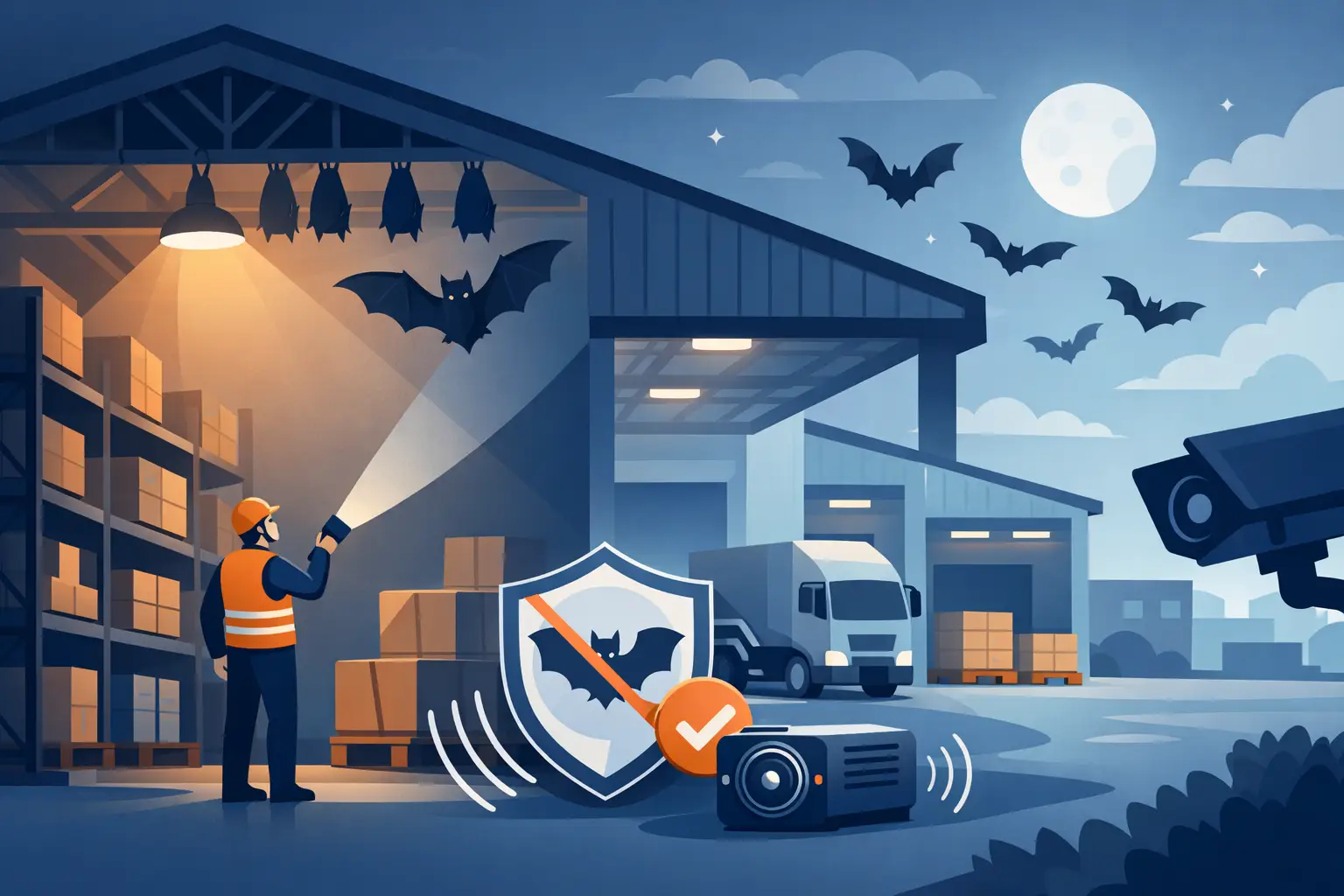
A single bat flying through a warehouse is not always a one-time event. In a large commercial building, it can be the visible sign of a colony using rooflines, wall voids, loading dock gaps, or expansion joints as shelter. Professional warehouse bat mitigation protects the people, products, equipment, and operating continuity that keep your facility moving.
For warehouse managers and property owners, the issue is rarely just the bat itself. Guano beneath a roost can contaminate stored materials, stain ceilings, create odors, and introduce health concerns for employees. A rushed response can make matters worse by trapping bats inside, creating more interior activity, or violating seasonal protections for pups that cannot yet fly. The right solution is careful, humane, and built to stop repeat entry.
Why Bats Choose Warehouses
Warehouses offer the conditions bats naturally seek: high, protected spaces; stable temperatures; dark voids; and exterior gaps that may be hard to see from the ground. Corrugated metal panels, aging roof transitions, louvers, utility penetrations, dock canopies, and gaps around masonry can all become access points.
Unlike a small home, a warehouse may have hundreds of linear feet of roofline and multiple additions built at different times. That complexity matters. Sealing only the opening where a bat was seen often shifts the colony to another unsealed gap. Effective bat control requires a building-wide assessment, not a quick patch at one location.
Bat activity also changes with the season. In the Midwest, bats may use a structure as a seasonal roost, maternity site, or temporary stopover. A humane mitigation plan accounts for the species present, the size and condition of the building, and whether non-flying young may be inside. Timing is not an inconvenience – it is central to doing the job correctly.
The Real Costs of a Bat Problem in a Warehouse
A bat issue can affect far more than an unused corner of the building. Facilities that store food, packaging, pharmaceuticals, agricultural products, sensitive electronics, or customer-owned inventory may face stricter sanitation and documentation expectations. Even where contamination is limited, managers need a clear record of what was found, what was cleaned, and what prevention measures were completed.
Guano accumulation is another concern. Bat droppings can build up in insulation, on mezzanines, beneath rooftop equipment, and inside wall or ceiling voids. Over time, the material can create strong odors, attract insects, damage finishes, and complicate maintenance work. Disturbing dry guano without proper containment and protective equipment can also release dust into the work area.
There is also an operational cost. Employees who see bats near workstations or break areas may understandably raise safety concerns. Receiving doors may be left open longer than necessary during a response, access to parts of the facility may be restricted, and maintenance teams can lose valuable time trying to locate an entry point. A permanent resolution restores confidence as well as cleanliness.
What Professional Warehouse Bat Mitigation Looks Like
The goal is not to poison, trap, or harm bats. Bats are valuable insect-eating wildlife, but they do not belong in a commercial facility. As CP Bat Mitigation puts it, Every Bat Deserves a Home, Just Not Yours.™
A professional process starts with a detailed inspection. A bat specialist evaluates exterior elevations, rooflines, vents, loading areas, wall transitions, and interior evidence of roosting. This includes looking for staining around entry gaps, guano deposits, rub marks, odor patterns, and areas where daylight is visible from inside the structure.
Identify every active and potential entry point
Bats can enter through openings that appear too small to matter. On a warehouse, those openings may be high above ground level or concealed behind trim and flashing. The inspection should distinguish between active exits, secondary openings, and construction gaps that could become future access points.
This is where bat specialization matters. General pest control approaches may focus on removing the animal that was seen. Bat exclusion focuses on understanding how the colony is using the building and closing the entire access system without trapping animals inside.
Install humane one-way exclusion devices
Once timing and building conditions allow, one-way exclusion devices are placed over active exit points. These devices let bats leave to feed but prevent them from re-entering. Meanwhile, secondary gaps are sealed with durable materials appropriate for the structure.
The exclusion period gives the bats time to exit naturally. It also gives the specialist a chance to confirm that activity has stopped before finalizing the work. This approach is safer for occupants, more humane for bats, and far more reliable than attempting to catch bats inside a large facility.
Seal the building for long-term protection
After bats have exited, final sealing addresses the gaps that invited them in. The best materials and methods depend on the building surface. Metal panel systems, masonry walls, roof membranes, vents, and utility connections each require a different approach. A repair that looks acceptable from the ground may fail quickly if it is not designed for weather movement and commercial-scale exposure.
A long-term exclusion plan should also consider areas that are difficult to inspect routinely. High parapets, rooftop mechanical areas, rear elevations, and spaces above loading docks are common weak points. Permanent prevention is the difference between resolving a current colony and receiving another bat call next season.
Guano Cleanup Requires More Than a Broom
Bat guano cleanup should begin only after the bats have been excluded and the work area has been assessed. Sweeping or vacuuming droppings with ordinary equipment can spread dust and contamination. Depending on the location and amount of material, cleanup may require containment, HEPA-filtered equipment, protective gear, removal of damaged insulation, and sanitizing or deodorizing affected surfaces.
The scope varies. A small deposit on an inactive ledge is different from years of accumulation above a suspended ceiling or within a storage void. Warehouse managers should ask for a clear explanation of the affected areas, the cleanup method, and any recommendations for repairs or monitoring afterward.
It is also wise to inspect nearby systems. Guano can collect around conduits, ductwork, lighting, ceiling grids, and rooftop penetrations. Cleaning the visible evidence while leaving an adjacent contaminated void untreated can allow odor and insect activity to continue.
How Facility Managers Can Reduce Risk Before an Inspection
Do not try to seal an opening while bats may still be inside. Avoid handling bats, and keep employees away from any bat found on the floor or in an occupied area. If there has been direct contact between a bat and a person or pet, follow local public health guidance promptly.
You can help a specialist assess the problem by documenting where bats have been seen, when activity occurs, and whether guano has appeared in a particular area. Note recent roof work, storm damage, siding repairs, or changes around loading docks. These details often point to the route bats are using.
For active facilities, temporary operational adjustments may be appropriate. Keep exterior doors closed when not in use, check dock seals, and limit access to areas beneath known roosts until they have been professionally evaluated. These are interim measures, not a substitute for exclusion and sealing.
Choosing the Right Bat Control Partner
Warehouse bat mitigation is not a generic pest-control task. The contractor should understand bat behavior, humane exclusion timing, commercial building construction, and safe guano remediation. Ask whether the inspection covers the full exterior, how active exits will be confirmed, what happens if young bats are present, and what guarantee supports the sealing work.
Experience matters because warehouse projects often require lifts, roof access planning, coordination with maintenance teams, and careful scheduling around shipping, staffing, and tenant operations. The best partner communicates clearly, works safely, and explains what will happen at each stage rather than offering a vague promise to “get rid of bats.”
A warehouse should be a controlled environment, not an accidental roost. A thorough inspection and humane exclusion plan can protect your building without harming the wildlife outside it – and give your team the confidence to focus on the work that belongs inside.