

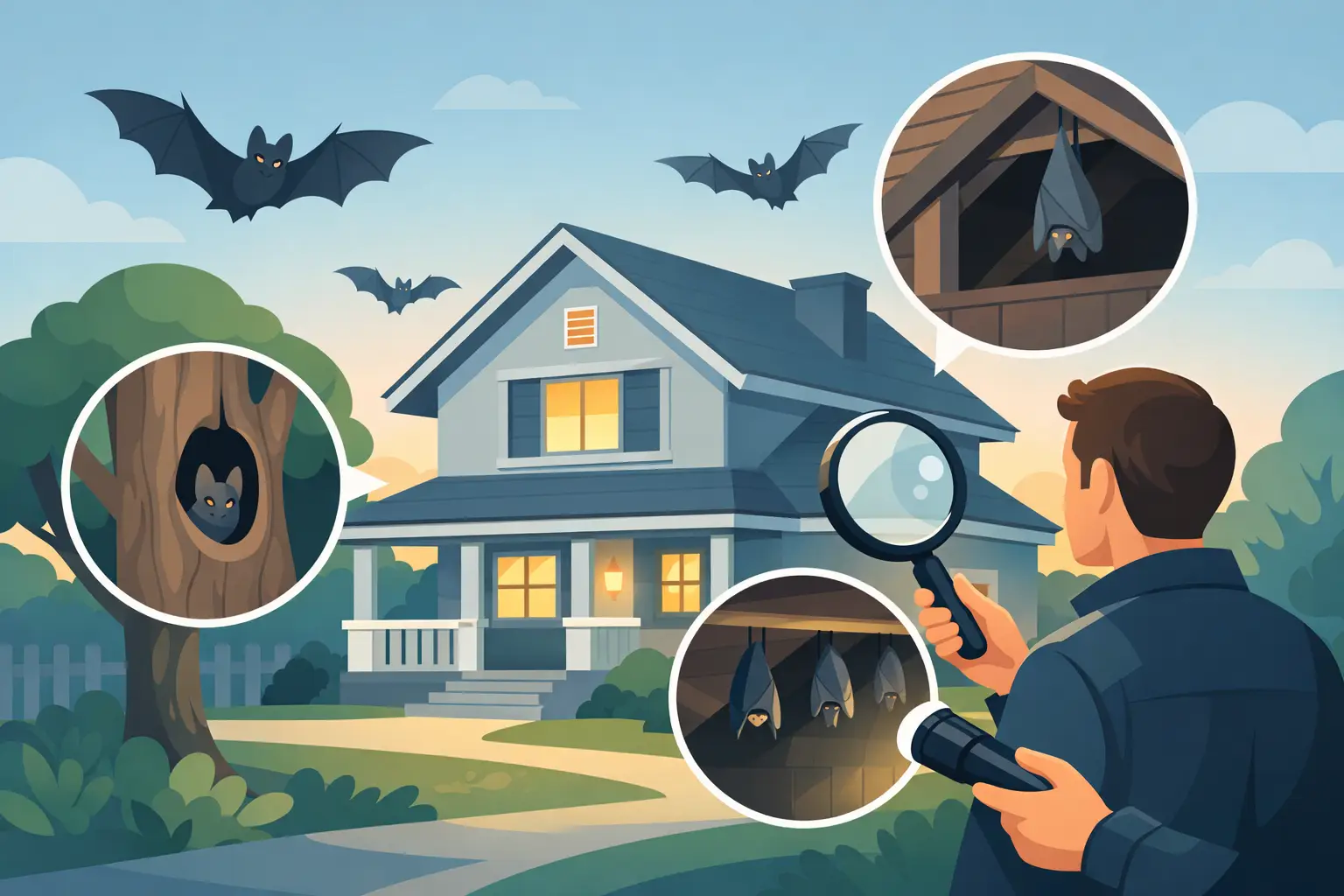
A bat inspection often starts with a small clue: a faint scratching sound after sunset, droppings on a porch, or a dark stain near the roofline. Knowing how to inspect for bats helps you document what is happening without disturbing wildlife, exposing yourself to guano, or accidentally trapping bats inside the structure.
Bats are valuable animals outdoors, where they consume insects. Inside an attic, wall cavity, church steeple, warehouse, or soffit, however, they can create sanitation concerns and leave a building vulnerable to repeat entry. Every Bat Deserves a Home, Just Not Yours.™ The purpose of an inspection is not to catch or handle a bat. It is to identify evidence, locate likely access points, and determine whether a humane exclusion plan is needed.
Start by Inspecting Safely
Do not touch a bat, living or dead. If a bat is found in a room where someone was sleeping, or where a child, pet, or person who may not be able to report contact was present, contact local public health officials or a medical professional promptly for guidance. Keep people and pets out of the area, and do not release the bat until you have received appropriate instructions.
For exterior and attic observations, wear closed-toe shoes, long sleeves, gloves, and a properly fitted respirator when guano or dust may be present. Avoid sweeping, vacuuming, or disturbing droppings. Dry guano can release particles into the air, and a routine visual inspection can become a cleanup problem if the material is agitated.
Use a flashlight during daylight, but do not climb steep roofs, enter unsafe attics, or reach into gaps where an animal may be resting. A professional inspection is the safer choice when access requires ladders, roof work, confined-space entry, or investigation around damaged electrical wiring.
Where Bats Commonly Enter Buildings
Bats do not need a large opening. Some species can use gaps as small as about three-eighths of an inch. That means a property can look well maintained from the ground and still have several usable entry points along the upper structure.
Begin at the roofline and work methodically around the building. Check fascia boards, soffits, roof returns, attic vents, ridge vents, chimney flashing, gable vents, dormers, siding transitions, and areas where utility lines or pipes enter the structure. Look closely at warped wood, missing caulk, loose screens, cracked trim, and gaps behind gutters.
On older homes and commercial buildings, pay particular attention to brick or stone joints, decorative architectural features, cupolas, bell towers, parapet walls, and aging expansion joints. Churches, schools, apartment buildings, and warehouses often have high, difficult-to-see voids that provide ideal roosting space.
A hole by itself does not prove bat activity. The strongest inspection results come from connecting an opening with physical evidence and observed behavior. This distinction matters because sealing every visible crack without a plan can trap bats indoors or leave the true entry route open.
Look for Staining, Droppings, and Odor
Bat activity can leave a greasy brown or black stain below a frequently used gap. This staining comes from oils in the bats’ fur and repeated contact with the building surface. It is often visible on light-colored siding, trim, brick, or vent covers.
Guano is another important clue. Bat droppings are usually dark, elongated, and may crumble into shiny insect fragments when handled, but visual identification is not a reason to touch or break apart droppings. Take a clear photo from a safe distance instead. Guano may collect on window ledges, decks, attic insulation, beneath roosts, or along exterior walls below an entry point.
Odor can also be significant, especially in a long-established colony. A musty, ammonia-like smell near an attic access panel, wall, or ceiling can indicate accumulated guano or urine. Odor alone is not conclusive, since moisture damage and other animals can create similar smells, but it warrants a closer assessment.
Watch at Dusk and Before Dawn
The most reliable way to confirm an active entry point is often a quiet observation period. About 30 to 60 minutes before sunset, position yourself at a safe distance with a clear view of suspected roofline gaps. Do not stand directly beneath an opening or shine a bright light into it. Watch for bats leaving one at a time or in small groups.
Repeat the observation for two or three evenings if possible. Weather affects bat activity, so a cool, rainy, or windy night may produce little movement even when bats are present. Early morning observations can also reveal bats returning to the same opening.
Write down the location, time, number of bats observed, and direction of travel. Photos of stains, guano deposits, and building gaps are useful, but never block an opening to test whether it is active. Bats may be inside, and temporary materials can cause them to enter living spaces in search of another exit.
Inspect the Attic Without Disturbing the Roost
If your attic is safely accessible, inspect it during the day with a flashlight and without moving insulation or stored belongings. Look along rafters, roof decking, chimney areas, and the edges where the roof meets exterior walls. Bats commonly use tight, high spaces that are difficult to see from the attic floor.
Signs may include guano piles, urine staining, a strong odor, dead insects, or dark rub marks around an opening. You may hear faint chirping, scratching, or fluttering, especially near dusk. Do not assume all attic noises are bats. Mice, squirrels, birds, and raccoons leave different evidence and require different control methods. Accurate identification protects the building and prevents the wrong repair work.
If you see bats clustered in the attic, leave the area calmly and close the access point behind you. Do not use sprays, mothballs, ultrasonic devices, smoke, or poison. These approaches do not create a permanent solution and can lead to dead animals in inaccessible spaces, stronger odors, and a more difficult cleanup.
Consider the Season Before Any Exclusion Work
Finding bats is only part of the inspection. The timing of the discovery affects what should happen next. During maternity season, flightless young may be present in a roost. Sealing active entry points at that time can separate mothers from pups, creating an inhumane outcome and leaving young bats trapped inside.
A qualified bat specialist evaluates species, colony behavior, the building’s design, and seasonal conditions before installing exclusion devices. Humane exclusion uses one-way systems that allow bats to leave but prevent their return. After the colony has exited, the remaining gaps can be sealed with durable materials designed for the structure.
The trade-off is simple: a rushed repair may seem faster, but it can create a larger problem. A planned exclusion may require waiting for suitable conditions, yet it is far more likely to protect the animals, occupants, and property for the long term.
When to Schedule a Professional Bat Inspection
Call a bat specialist when you have confirmed bat activity, found guano, noticed repeated dusk movement at the roofline, or cannot safely inspect high exterior areas. Professional help is especially valuable for large buildings, multi-unit properties, churches, and structures with extensive attic contamination.
An experienced inspection should identify active and potential entry points, assess the likely roosting areas, explain seasonal limitations, and outline whether guano cleanup or repairs are needed. The goal is not a temporary scare tactic. It is safe, humane bat removal followed by proven exclusion methods that help keep bats from returning.
For homeowners and property managers across the Midwest, CP Bat Mitigation provides free inspections backed by more than 30 years of bat-focused experience. If the signs point to bats, documenting the evidence and getting the timing right can turn an unsettling discovery into a lasting solution that protects both your property and the wildlife outside it.