

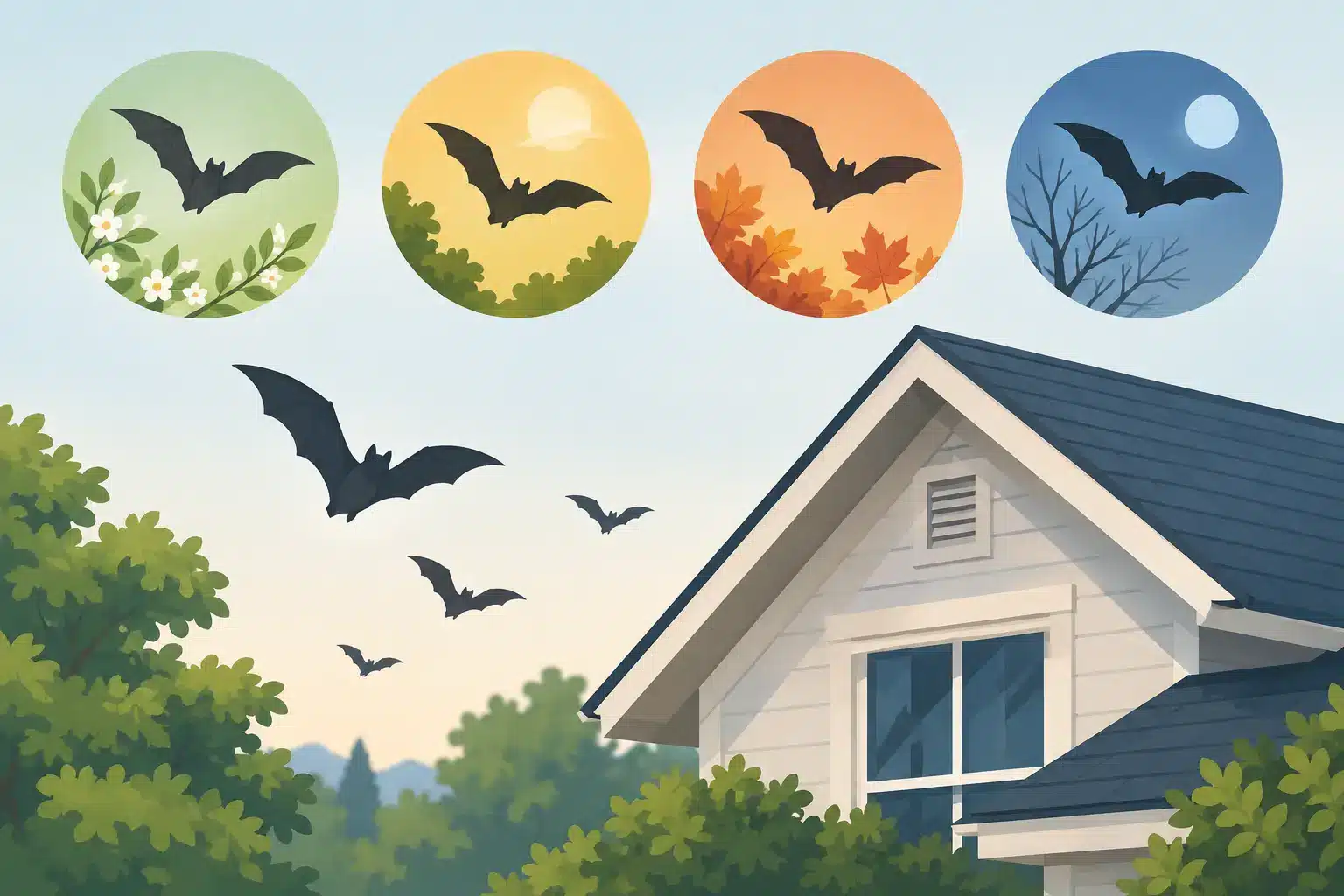
A quiet scratching sound above the ceiling in April can become a full maternity colony by early summer. That is why understanding seasonal bat behavior trends matters for homeowners, property managers, churches, and commercial building operators. Bats do not use buildings the same way all year, and the right response depends heavily on the season.
At CP Bat Mitigation, we see this pattern across South Dakota, Nebraska, Iowa, and Minnesota: a small opening that goes unnoticed in spring can become a serious sanitation, odor, and repeat-entry problem later in the year. The goal is never to harm bats. Every Bat Deserves a Home, Just Not Yours.™ The goal is to move them out safely, humanely, and permanently.
Seasonal Bat Behavior Trends in Midwest Buildings
Most bats that enter Midwest structures are looking for one of three things: a protected roost, a warm place to raise young, or a reliable place to survive cold weather. Their needs change with the weather, food supply, and reproductive cycle.
A home, warehouse, school, church steeple, or apartment building can provide exactly what bats need. Gaps around rooflines, vents, siding transitions, chimneys, flashing, utility penetrations, and attic louvers can be enough. Some bats can use openings as small as about three-eighths of an inch.
That is also why a bat seen indoors should not be treated as an isolated event without an inspection. It may be a single bat that entered accidentally, but it can also be evidence of an active exterior entry point or a colony using an attic, wall void, or roofline.
Spring: Bats Return and Search for Roosts
As temperatures rise, bats become more active after winter. In the Midwest, spring activity often begins when nighttime insect activity increases and bats can feed consistently again. Some bats are returning from migration, while others are leaving winter hibernation sites and seeking seasonal shelter.
Spring is a common time for property owners to notice bats around eaves at dusk or find one in a living space. Female bats may begin selecting warm, stable structures that could serve as maternity roosts. Attics and upper wall voids are especially attractive because they offer darkness, high temperatures, and protection from predators.
Early spring is often one of the best times to identify entry points and prepare a humane exclusion plan. The timing still depends on weather and the local species, but addressing accessible gaps before young bats are born can prevent a much larger problem.
Summer: Maternity Colonies and the Need for Careful Timing
Summer is when bat activity inside structures becomes most noticeable. Female bats gather in maternity colonies to give birth and raise their pups. These young bats cannot fly immediately. If a building is sealed while flightless pups remain inside, the adult bats may be locked out while the pups are trapped in the structure.
That can create an inhumane situation and a difficult property problem. Trapped pups can die in wall voids or attics, causing odor and attracting insects. Desperate adult bats may also look for another way inside, which can lead to bats appearing in occupied rooms.
For this reason, exclusion timing is not a simple calendar decision. A qualified bat specialist evaluates the building, colony activity, species, and the stage of the maternity season before installing one-way exclusion devices. The humane approach is to let bats leave on their own, prevent their return, and complete permanent sealing at the appropriate time.
Summer colonies can produce substantial guano accumulation. Guano beneath roosting areas may stain insulation, compress attic materials, create persistent odor, and contribute to moisture-related damage. A proper response addresses both the bats’ access and the contamination they leave behind.
Fall: Swarming, Feeding, and New Shelter Searches
Fall often brings a different kind of activity. Young bats born in summer are now flying, feeding heavily, and learning to navigate. As insect populations begin to decline and nighttime temperatures cool, bats may become more visible around buildings.
Some species engage in swarming behavior near caves, mines, and other seasonal gathering places. Others begin searching for protected locations where they can rest or spend the winter. This is why homeowners sometimes assume a bat problem has started suddenly in September or October. In reality, bats may have found an overlooked gap while scouting for shelter.
Fall can be an excellent time to complete bat exclusion because young bats are generally capable of flight. It is also an important time to close gaps before cold weather pushes bats toward protected spaces. However, each building is different. A bat specialist should confirm that no bats remain inside before final sealing is completed.
Winter: Quiet Does Not Always Mean Bat-Free
Winter activity is often misunderstood. Many bat species hibernate in caves, mines, and other stable environments. Yet some bats may overwinter in buildings, particularly in wall cavities, attics, chimneys, and other areas that offer enough protection from severe temperature swings.
A bat may occasionally appear indoors during a winter warm-up. It may have been disturbed, followed changing temperatures, or found its way from a wall void into the living area. That does not necessarily mean a large active colony is flying every night, but it should not be ignored.
Winter is also a useful time to inspect exterior conditions and identify repair needs. The actual exclusion process may need to wait for temperatures and bat activity that allow bats to exit safely. A professional inspection can determine what is happening now and build a plan for the correct season.
What Seasonal Activity Means for Your Property
The biggest mistake property owners make is treating bat control like a one-time trapping job. Bats are protected wildlife in many situations, and poisoning, trapping, or blocking holes without a plan can create bigger problems. Effective bat removal is a building-exclusion process, not a quick spray or a temporary patch.
A complete service approach begins with identifying every active and potential entry point. One-way devices are installed at the proper exits so bats can leave but cannot re-enter. Then the remaining openings are sealed with durable materials and methods suited to the structure. After bats are excluded, guano cleanup and damaged insulation assessment may be needed to restore the affected area.
The trade-off is simple: a rushed seal may appear faster, but it can trap bats inside and leave contamination behind. A carefully timed exclusion takes more expertise, yet it protects occupants, respects the animals, and gives the property a much better chance of staying bat-free.
Signs You Should Schedule a Bat Inspection
Seasonal clues are useful, but the condition of your property matters more than the date on the calendar. Watch for bats exiting from the same area around dusk, chirping or scratching from an attic or wall, dark staining near roof gaps, droppings below a suspected roost, unusual attic odors, or bats appearing in interior rooms.
If you find a bat in a bedroom, nursery, or other area where someone may have been asleep, avoid handling it. Keep people and pets away from the bat if possible, close interior doors to limit its movement, and contact the appropriate local health authority or a qualified professional for guidance. Exposure concerns should be handled promptly and seriously.
For exterior colonies, do not attempt to cover holes with foam, mesh, or caulk without confirming the season and the bats’ location. The visible opening may not be the only access point, and bats often use alternate gaps once one route is blocked.
A Humane Plan Works With the Season
Bats are valuable insect-eating wildlife, but they do not belong in your attic, wall voids, or commercial facility. Seasonal behavior explains why the noise, odor, and sightings may change through the year. It also explains why the right solution is based on inspection, timing, proven exclusion methods, and permanent prevention rather than guesswork.
If you are seeing bats now, document what you notice, especially the location and time of evening activity. That small detail can help a bat specialist determine how the animals are using your building and recommend the safest next step for your property and the bats.