

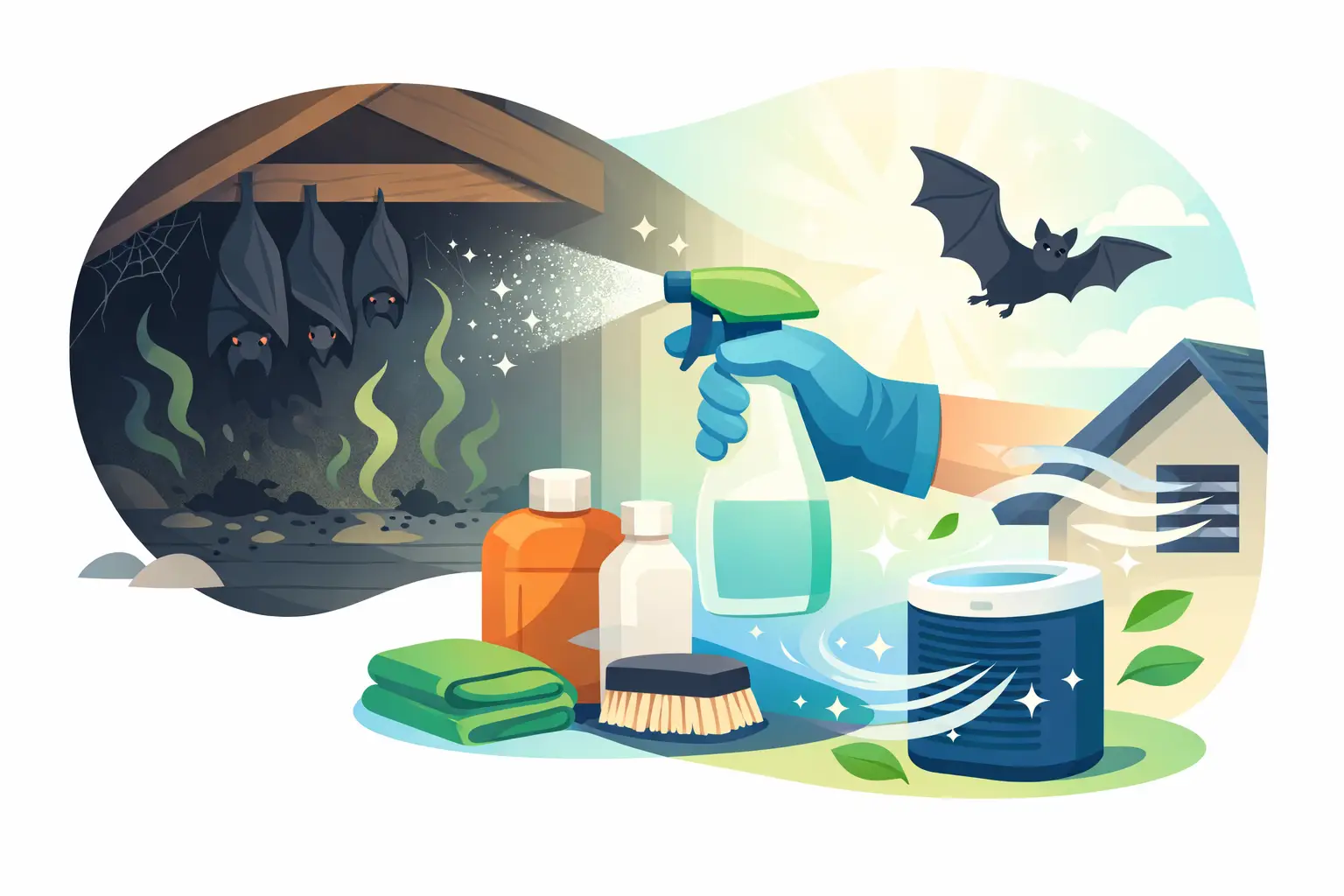
Bat odor rarely starts as a simple smell problem. If you are searching for how to remove bat odor, there is usually a buildup of guano, urine, nesting debris, or a deceased bat somewhere in an attic, wall void, chimney, or other concealed space. Covering the odor with fragrance may make the room more tolerable for a day, but it does not remove the contamination or stop bats from returning.
The permanent solution is to identify the source, make sure bats are safely excluded, remove contaminated material, and treat the affected area correctly. That order matters. Cleaning before the colony is out can create more disturbance, leave you exposed to waste, and allow fresh odor to develop right after the cleanup.
Why bat odor can be so persistent
Bat droppings, called guano, have a sharp, earthy, ammonia-like odor that becomes stronger as waste accumulates. In warm, humid attic conditions, urine can soak into insulation, wood framing, drywall, and stored belongings. A small colony may create a noticeable smell near a vent or ceiling opening. A long-term colony can contaminate enough material that the odor travels into living areas.
The smell may be strongest during hot weather, after rain, or when your heating and cooling system creates pressure changes inside the building. Odor can also become more obvious when an attic hatch is opened or when air escapes through gaps around recessed lights, plumbing penetrations, or ceiling fixtures.
Not every unpleasant attic smell is from bats. Mice, birds, raccoons, mold, wet insulation, and a dead animal can produce similar odors. That is why a proper inspection should come before cleanup. Bat specialists look for droppings, rub marks, staining, entry points, and the species and activity level involved, rather than guessing from odor alone.
Do not clean until active bats are addressed
The first step in bat odor removal is confirming whether bats are still using the structure. If they are, the building needs safe, humane bat removal through exclusion. Exclusion devices allow bats to leave but prevent them from getting back inside. Once the animals have exited, all entry points must be professionally sealed to prevent another colony from moving in.
Do not trap bats inside, use poison, or seal gaps while bats may still be present. These approaches can cause bats to die in walls or attic spaces, creating a worse odor issue and potentially driving animals into occupied rooms. They also fail to solve the actual access problem.
Timing matters as well. During maternity season, young bats may be unable to fly. Excluding adult bats at the wrong time can separate mothers from pups and leave animals stranded inside. A bat specialist can determine the appropriate exclusion window for your location and building conditions while protecting both your property and the bats.
How to remove bat odor after exclusion
Once the bat activity has been resolved, odor removal becomes a sanitation and restoration project. The right scope depends on how much guano is present, how long the bats occupied the space, and which materials absorbed urine and waste.
Find the full extent of contamination
Guano is not always directly beneath an entry hole. Bats often roost along rafters, behind fascia boards, in wall cavities, or beneath insulation. Air movement can carry odor far beyond the primary roosting area. A thorough evaluation should check attic insulation, ductwork, soffits, chimney areas, wall voids, and gaps where odor may be reaching the interior.
Look for these common signs:
- Dark, dry droppings accumulated on insulation, ledges, or attic floors
- Brown or yellow staining on wood, drywall, or ceiling materials
- A sharp ammonia smell near vents, ceiling openings, or attic access doors
- Insulation that is matted, damp, compressed, or visibly soiled
- Flies, beetles, or insect activity around a hidden carcass or waste buildup
A small, localized deposit may only require targeted cleanup and treatment. Deep guano accumulation or urine-soaked insulation can require removal of affected materials. Keeping contaminated insulation to save money can be a false economy if the odor returns every summer or continues affecting indoor air quality.
Use the right protective measures
Bat guano should be handled carefully. Disturbing dry droppings can send dust and particles into the air, especially in an enclosed attic. The risk depends on the amount of material, site conditions, and how cleanup is performed, but it is not a job to approach with a household broom, shop vacuum, or leaf blower.
Professional crews use appropriate personal protective equipment and controlled removal practices to limit dust exposure. The work area may need containment, and contaminated waste should be bagged and removed carefully. HEPA-filtered equipment is often used where needed, followed by detailed cleaning of surfaces.
If there is extensive guano, a large colony history, or contamination in an occupied commercial building, professional remediation is strongly recommended. Property managers and business owners also need to consider employee exposure, tenant concerns, and the need to document that the source was corrected.
Remove materials that are holding the smell
Surface cleaning alone will not fix odor trapped in porous material. Insulation is particularly prone to absorbing urine and guano dust. If it is visibly contaminated or heavily odor-saturated, removal and replacement may be the most effective answer.
Depending on the situation, remediation can include removing soiled insulation, cleaning exposed framing and attic decking, treating affected surfaces with an appropriate odor-neutralizing product, and replacing insulation after the space is dry and clean. In more serious cases, drywall or other building materials may need evaluation if staining, odor, or moisture has penetrated deeply.
An enzyme-based odor treatment can help break down remaining organic residue, but it is not a substitute for physical removal of guano. Fogging, deodorizing sprays, and air fresheners may temporarily mask the smell. They cannot correct a pile of droppings hidden under insulation or a dead bat in a wall cavity.
Check for a deceased bat or trapped animal
A sudden, intense odor may indicate a dead bat, bird, rodent, or other animal rather than an active guano problem. This can happen after an entry point is sealed incorrectly or when an animal becomes trapped in a wall, chimney, or attic.
The source should be located and removed when accessible. If the carcass is inside a wall void, a trained professional may need to identify the least invasive access point. Once the source is removed, nearby material should be cleaned and treated. The odor often improves quickly, though porous materials can hold a residual smell longer.
Prevent bat odor from returning
Odor removal is only as permanent as the bat-proofing behind it. Bats can enter through openings as small as about three-eighths of an inch. Common access points include roofline gaps, loose soffits, ridge vents, chimney flashing, utility penetrations, warped siding, and gaps where additions meet the original structure.
A lasting prevention plan uses proven exclusion methods first, followed by detailed sealing once bats have exited. The work should account for the entire exterior, not just the hole where bats were first seen. It is common for a structure to have several usable entry points, particularly older homes, churches, warehouses, and commercial buildings with complex rooflines.
After remediation, keep an eye on attic conditions during warm months. If you notice fresh droppings, chirping, staining, or returning odor, act quickly. Early inspection can prevent a minor access issue from becoming another large cleanup project.
When to call a bat specialist
You should bring in a specialist when odor is strong or recurring, guano is visible, bats are seen leaving at dusk, insulation is contaminated, or the source appears to be inside a wall or inaccessible attic area. This is especially true for schools, churches, multifamily properties, and commercial facilities where sanitation and occupant safety affect more people.
CP Bat Mitigation provides safe, humane bat removal, exclusion, and guano cleanup backed by more than 30 years of bat-specific experience. A professional inspection can determine whether the smell is active bat contamination, an old roost, or another animal issue, then build the right plan for your property.
A clean attic should not have to depend on candles, sprays, or closed doors. Once the bats are safely out, the contamination is removed, and the structure is sealed, your building can finally smell like home again.