

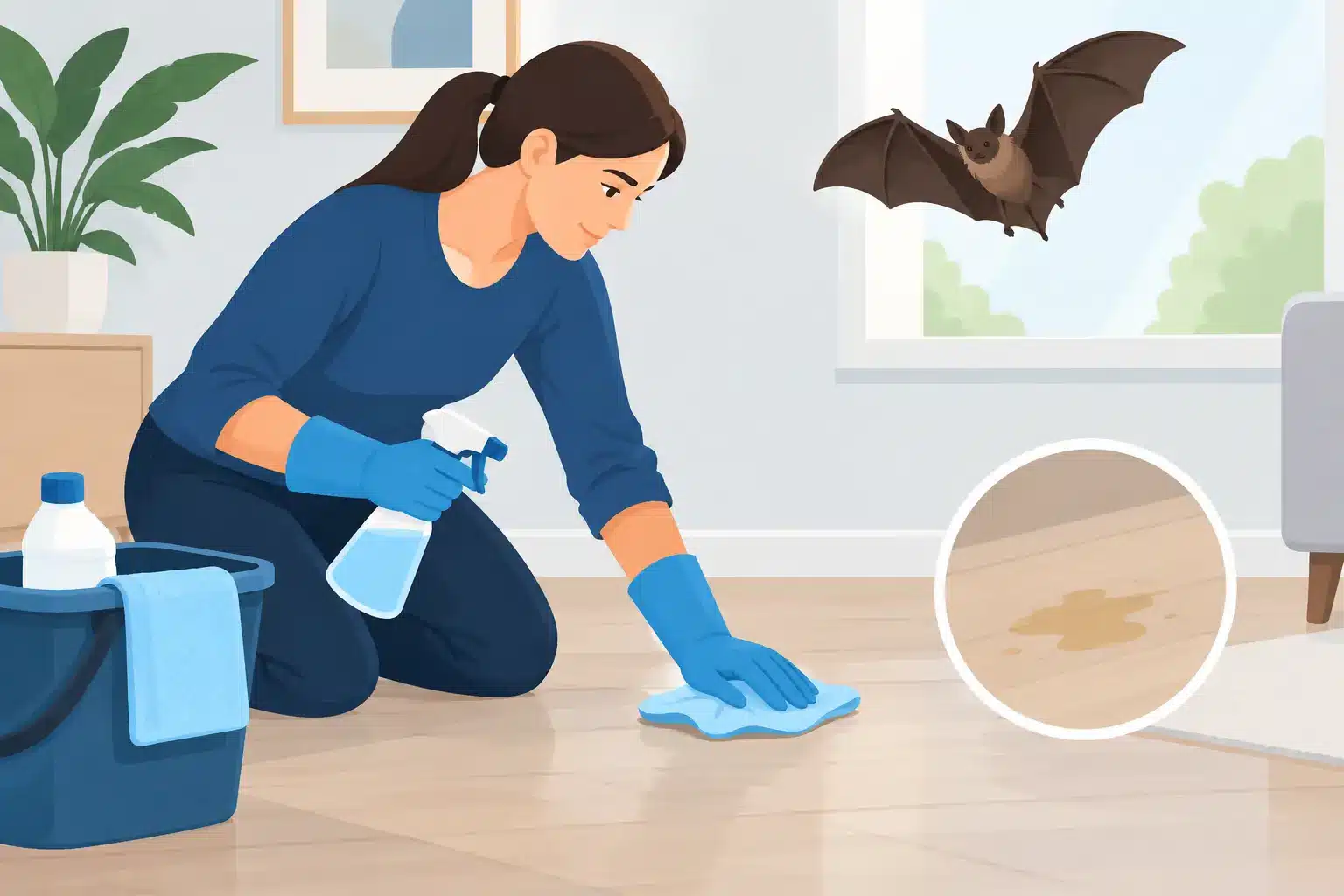
A brown stain beneath an attic roost, a sharp ammonia-like odor near a wall, or droppings collecting along insulation are not ordinary housekeeping problems. If you are searching for how to clean bat urine, treat the area as potential wildlife contamination first and a cleaning job second. The visible stain may be minor, but urine often appears alongside guano, and the larger issue is whether bats still have access to the structure.
Bat urine can discolor wood, drywall, insulation, and ceilings. Over time, repeated contamination can leave odors that travel through vents and wall cavities. Cleaning the affected surface matters, but it will not solve the problem if bats remain in the attic, chimney, soffit, or siding. The safest outcome is a clean property and a permanently sealed building.
Start by confirming what you are seeing
Bat urine is not always easy to identify on its own. It may leave dark yellow, brown, or streak-like stains, especially below a consistent roosting spot. In an attic, it can dampen insulation and create a musky or ammonia odor. On ceilings, stains may spread as moisture moves through porous materials.
Look for guano nearby. Bat droppings are typically small, dark, and crumbly, often collecting in piles below a gap, beam, or roofline opening. Do not crush or sweep droppings to inspect them. Guano cleanup requires extra care because disturbing dry material can send contaminated dust into the air.
A single spot near an exterior entryway could come from another animal. But recurring stains, chirping at dusk or dawn, guano, oily rub marks around gaps, and a strong attic odor point toward bat activity. A trained bat specialist can identify the source and locate entry points that are easy to miss from the ground.
Do not clean while bats are still inside
This is the step property owners most often skip. Cleaning urine and guano before exclusion can mean doing the same work twice. It can also put you close to an active roost, increase the chance of contact with a bat, and leave contaminants in areas that become inaccessible later.
Never handle a bat with bare hands. If a bat was found in a room where a person may have been sleeping, or where a child, pet, or impaired adult was present, contact local public health officials or a medical professional for exposure guidance. Rabies concerns are about direct contact or possible unnoticed contact with a bat, not urine or guano alone.
The timing of bat removal matters, too. During the maternity season, sealing an entry point at the wrong time can trap flightless pups inside. That creates odor, sanitation, and animal welfare problems. Humane exclusion uses one-way devices that allow bats to leave but prevent their return, followed by complete sealing of the structure at the proper time.
How to clean bat urine safely after exclusion
Once a qualified professional confirms the bats are out and entry points are sealed, you can assess whether the affected area is appropriate for careful household cleaning or requires professional remediation. Small, accessible stains on a hard, nonporous surface are very different from a heavily contaminated attic full of soiled insulation.
Before entering the area, ventilate it if possible. Keep children, pets, and unnecessary occupants away. Wear disposable gloves, eye protection, long sleeves, and a properly fitted respirator rated for fine particles, especially if guano is present. A basic dust mask is not adequate for heavy cleanup work.
Lightly mist any dry droppings or dusty contaminated material with water before handling it. The goal is to keep particles from becoming airborne, not to soak framing, drywall, or insulation. Avoid dry sweeping, brushing, leaf blowers, and ordinary household vacuums. These methods can spread fine material throughout the room and into the vacuum exhaust.
For a small urine stain on sealed wood, metal, tile, vinyl, or another hard surface, use a damp disposable cloth and a household disinfectant used according to the label. Clean from the outer edge of the stain toward the center. Wipe the area again with clean water if the product directions call for rinsing, then dry it thoroughly.
Do not mix bleach with ammonia, vinegar, or other cleaners. Because urine odors can contain ammonia compounds, combining products is particularly risky. If you choose a bleach-based disinfectant, use it only as directed on the product label, with good ventilation. More chemical is not better, particularly in an enclosed attic or crawl space.
Place used cloths, gloves, and other disposable cleanup materials into a durable bag, seal it, and dispose of it according to local waste requirements. Wash reusable clothing separately in hot water after cleanup. Shower or wash exposed skin when the job is done.
Treat odor separately from surface cleaning
A cleaned stain may still smell because urine can soak into porous materials. Enzyme-based odor treatments may help on some surfaces, but they cannot restore insulation, drywall, or unfinished wood that has been repeatedly saturated. In those cases, removal and replacement are usually more reliable than trying to mask the odor.
Odor also has a way of revealing contamination that is hidden above ceilings or inside walls. If the smell returns on hot or humid days, or becomes stronger when an attic fan runs, there may be additional material outside the visible area. A professional inspection can help determine whether targeted cleanup is enough or whether full attic remediation is necessary.
When bat urine cleanup needs a professional
Professional cleanup is the prudent choice when contamination is widespread, when guano has accumulated, or when urine has reached insulation and building cavities. It is also wise for churches, multifamily properties, commercial facilities, and buildings with HVAC equipment near the affected area. These sites have larger exposure areas and more people to protect.
Call a specialist when you see any of the following:
- Guano piles, dusty droppings, or contamination spread across an attic, crawl space, or wall cavity.
- Wet, compressed, or heavily stained insulation.
- Ceiling damage, warped drywall, peeling paint, or stains that continue to grow.
- Persistent odor after surface cleaning.
- Evidence that bats are still entering or leaving the structure.
- A bat found indoors, especially in a sleeping area or near someone unable to report contact.
A proper remediation plan usually includes containment, controlled removal of contaminated material, cleaning of structural surfaces, odor treatment where appropriate, and replacement of damaged insulation. Just as important, it should follow complete bat exclusion. Otherwise, a new colony can undo the work in a single season.
Prevention is the real answer to recurring stains
Bat urine cleanup is only one part of protecting the building. Bats can enter through gaps as small as about three-eighths of an inch, including openings near roof returns, fascia boards, chimney flashing, ridge vents, utility penetrations, and aging siding. Caulk alone is rarely a complete answer because bats may use several gaps across a structure.
A thorough exclusion process identifies every active and potential entry point, installs humane one-way exit devices where needed, and seals the building after bats leave. This approach protects the property without harming bats. Every Bat Deserves a Home, Just Not Yours.™
CP Bat Mitigation focuses exclusively on safe, humane bat removal, exclusion, and guano cleanup. For homeowners and property managers, that specialization matters: the same inspection that identifies the source of urine contamination should also address the entry points that allowed it to happen.
A clean attic should stay clean
If the contamination is small and the bats have already been professionally excluded, careful cleaning and odor control may be all your space needs. If droppings, insulation damage, or recurring odors are involved, do not gamble on a surface wipe-down. Protect the people in the building, remove the contamination correctly, and make sure the bats cannot return.