

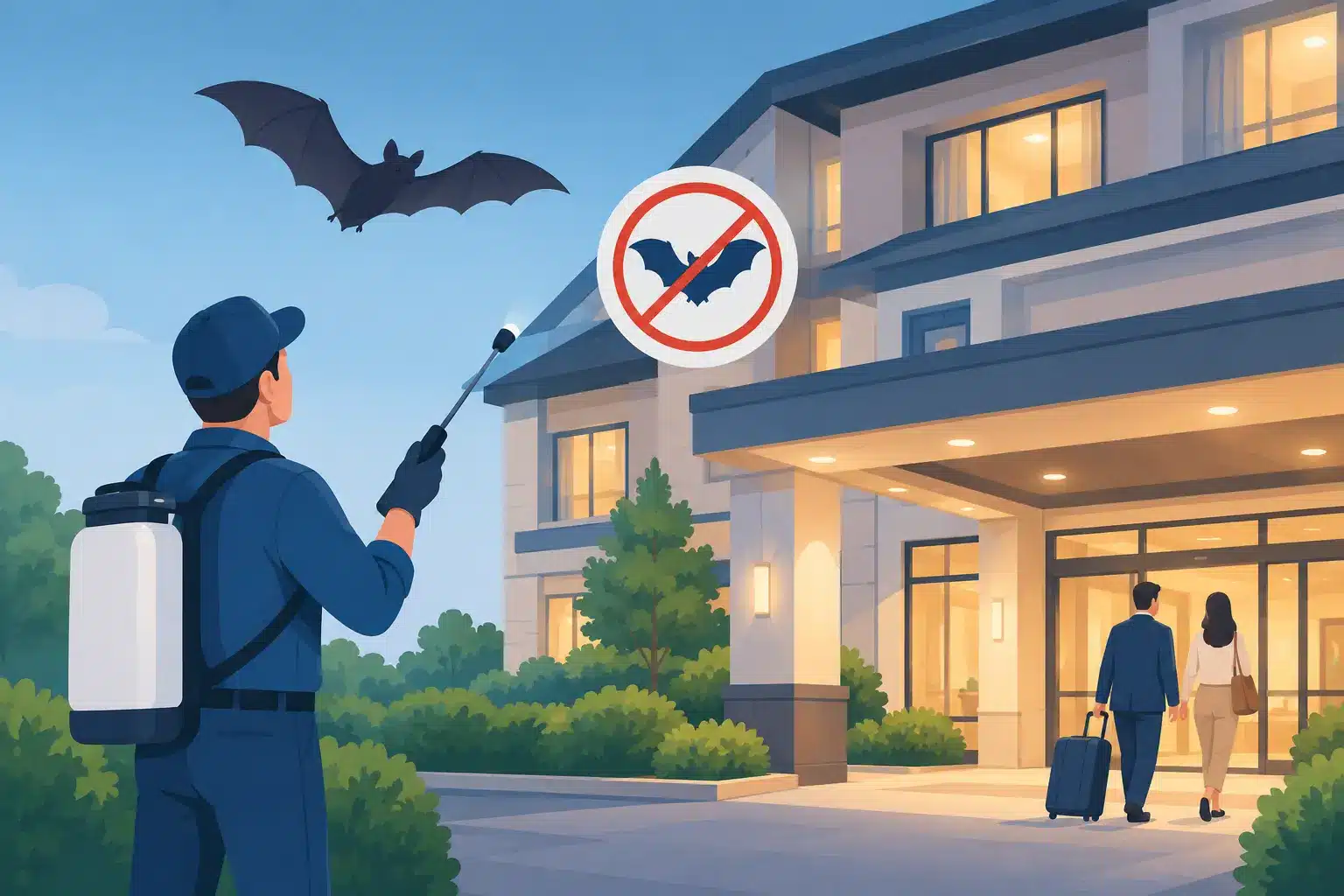
A bat seen flying through a hotel lobby is an obvious problem. The more common issue is quieter: scratching above a top-floor room, droppings around a roofline, a musty odor near an attic access point, or a guest reporting a bat in their suite at 2 a.m. For hotel owners and property managers, hotel bat removal is not simply a wildlife concern. It is a guest-safety, sanitation, reputation, and building-protection issue that needs a professional response.
Bats are valuable wildlife, but they do not belong inside occupied lodging facilities. The right solution protects people, preserves your property, and removes bats humanely through proven exclusion methods – not poisons, traps, or temporary fixes.
Why hotel bat removal requires a specialist
Hotels present challenges that a typical single-family home does not. A large building can have hundreds of potential access points, from roof-wall intersections and parapet caps to utility penetrations, soffits, vents, expansion joints, and gaps around older masonry. Bats can enter through openings as small as 3/8 of an inch, so a gap that appears minor to maintenance staff may be an active entry point.
The operational stakes are also higher. A bat in a guest room can lead to room closures, refunds, difficult reviews, and an urgent call to management. An established colony in an attic, wall void, or mechanical area can create ongoing odor and guano contamination. If the issue reaches common areas or food-service spaces, the response may involve additional health and regulatory considerations.
A general pest-control approach is rarely enough. Effective hotel bat removal starts with identifying the bat species, locating every primary and secondary entry point, understanding how the animals are using the structure, and planning exclusion around the property’s occupancy and maintenance schedule.
The first priorities when bats are found at a hotel
If a bat is discovered in an occupied guest room, keep guests and staff from handling it. Close the room off when practical, document where and when it was found, and contact qualified professionals for guidance. Any possible human or pet contact should be handled cautiously and referred to the appropriate health authorities or medical professionals.
For managers, the immediate goal is to protect occupants without making the structural problem worse. Avoid attempting to sweep, spray, trap, or seal bats inside the building. Sealing an active entry hole before the colony has exited can trap bats in walls or attics. That can result in dead animals, odor, staining, and bats searching for another way into guest-facing spaces.
It is also wise to preserve useful evidence. Staff can note where bats were seen, what time activity occurred, and whether droppings are present near exterior walls or interior access points. These observations help a bat specialist focus the inspection, especially on large properties with multiple roof elevations.
How humane bat exclusion works
Humane exclusion allows bats to leave the building but prevents them from returning. It is the permanent, professional alternative to trying to remove individual bats one at a time.
The process begins with a detailed inspection. A trained technician examines the hotel exterior, roofline, attic spaces, service areas, and other likely roosting locations. The objective is not just to find one visible hole. It is to identify the complete network of openings bats may use.
Once the active exits are confirmed, exclusion devices are installed at the appropriate points. These devices let bats leave on their normal evening flight but block re-entry. Other non-active gaps are sealed with durable materials suited to the building’s construction. After the exclusion period, the specialist confirms activity has stopped and closes the final exit points.
Timing matters. Many bat species have a maternity season when flightless young may be present. Excluding adult bats at the wrong time can separate mothers from pups that cannot leave, creating an animal welfare issue and a serious building problem. A qualified provider will evaluate the timing, local conditions, and species behavior before scheduling work. The correct plan may require immediate protective measures in some areas and a carefully timed exclusion in others.
Guano cleanup is part of protecting the property
Bat guano is more than an unpleasant housekeeping issue. Accumulated droppings can affect insulation, stain surfaces, create odors, and attract insects. In commercial properties, contamination near HVAC components, attic access areas, or storage spaces can complicate routine maintenance and future renovations.
Cleanup should follow exclusion, not come first. Removing droppings while bats still have unrestricted access only treats the symptom. Once the building is secured, professionals can assess the affected area and recommend cleanup, removal of damaged insulation where necessary, deodorizing, and sanitation measures appropriate for the site.
The scope depends on the location and amount of material. A small, contained accumulation in a seldom-used attic is different from widespread guano across insulation above guest rooms or meeting spaces. Property managers should expect a clear explanation of what is affected, what work is recommended, and what can be monitored instead of replaced.
Preventing repeat bat problems in hotels
A long-term solution depends on two things: complete exclusion and ongoing attention to the building envelope. Hotels constantly undergo maintenance, signage changes, HVAC work, roof repairs, and renovations. Each project can create or reveal small gaps if bat-proofing is not part of the final inspection.
After professional bat removal, maintenance teams should know which areas deserve regular attention. Rooflines, chimney structures, louvers, utility penetrations, upper-wall joints, and decorative façade features are common trouble spots. Seasonal exterior inspections are particularly helpful after severe weather, roof work, or freeze-thaw cycles that can open joints and dislodge materials.
Landscaping and exterior lighting can also influence bat activity around a property, although they do not cause an infestation by themselves. Bats often feed around insects attracted to lights. Reducing unnecessary insect attraction near entrances can improve the guest experience, but it will not replace proper exclusion if bats are already roosting in the building.
Choosing a hotel bat removal company
For a hotel, the lowest bid is not always the lowest cost. A partial seal-up can leave the colony active, send bats into interior spaces, or lead to another closure later in the season. Look for a provider that specializes in bats, uses humane exclusion methods, understands maternity-season restrictions, and can work safely on commercial structures.
You should also ask how the company documents entry points, whether it provides a written scope for exclusion and cleanup, and what kind of guarantee stands behind the work. Hotels need a partner who can communicate clearly with ownership, engineering, housekeeping, and operations teams while minimizing disruption to guests.
CP Bat Mitigation brings more than 30 years of focused bat-control experience to residential and commercial properties. Our approach is built around safe, humane bat removal, complete exclusion, and long-term protection because Every Bat Deserves a Home, Just Not Yours.™
A better response starts before the next guest complaint
A bat issue rarely improves by waiting for warmer weather, the next renovation, or another report from housekeeping. Early inspection gives hotel operators more options, protects occupancy, and helps avoid an emergency response during a busy weekend. When bats choose your hotel for shelter, a careful exclusion plan can make sure their next flight out is their last way back in.