

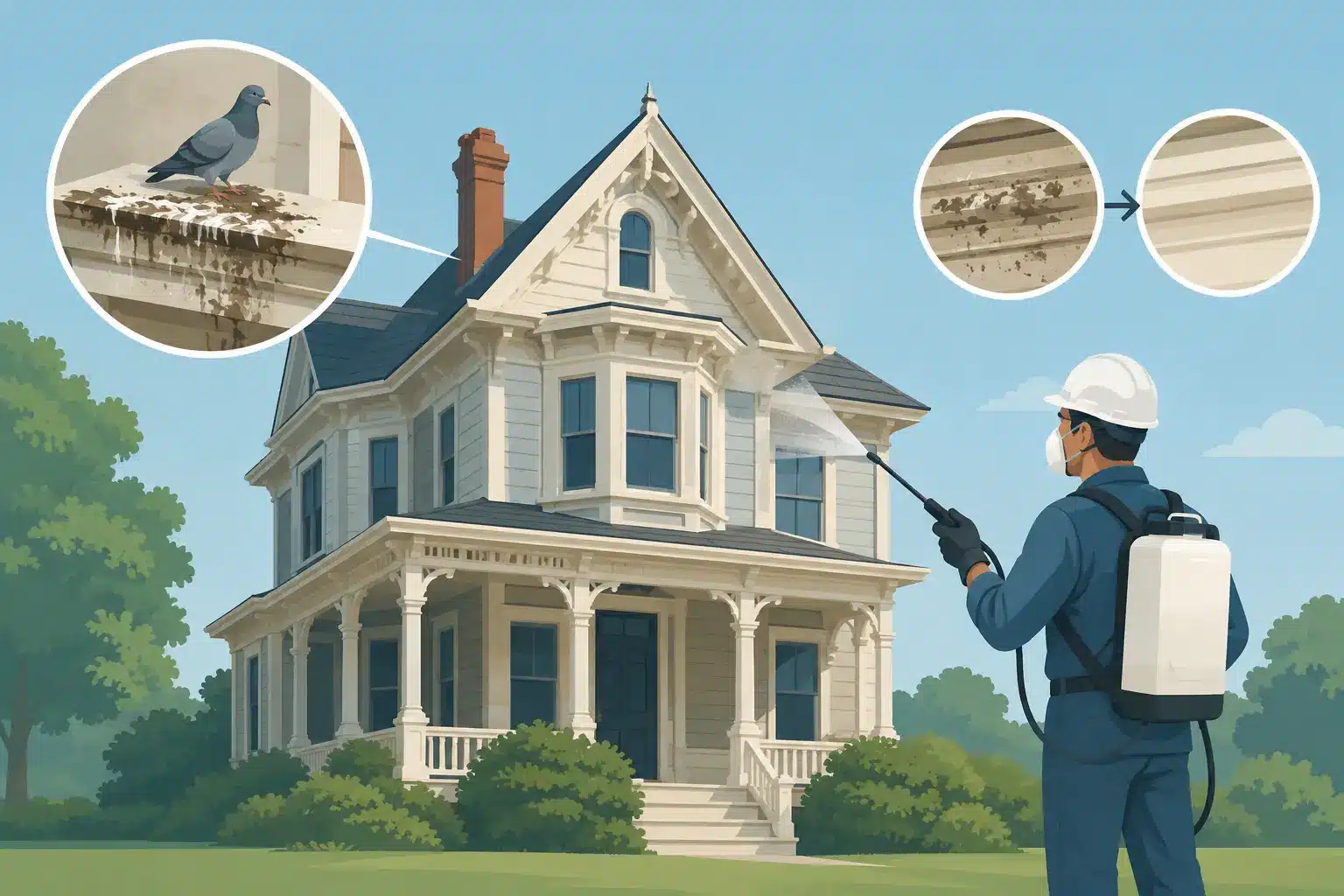
A bat colony in a historic home can leave behind more than an unpleasant odor. Guano may collect in attic insulation, wall cavities, bell towers, chimneys, eaves, and original framing that has lasted for generations. Historic home guano restoration requires a careful balance: remove contamination thoroughly, protect the people using the building, and avoid damaging the materials that give the property its character.
For a homeowner, church trustee, or property manager, the pressure can feel immediate. You want the smell gone and the building safe, but you do not want a cleanup crew tearing through original plaster, woodwork, or roof systems without a plan. The right response begins with professional bat exclusion, followed by a restoration scope built around the building’s age, construction, and condition.
Why Guano Is Different in Older Properties
Bat guano is not ordinary dust or debris. Large accumulations can carry fungal spores associated with histoplasmosis, and droppings can contaminate insulation, stored belongings, and surfaces below an active roost. Urine can also create staining, odor, and moisture-related deterioration over time.
In a newer home, contaminated insulation may be relatively straightforward to remove and replace. In a historic property, the same material may sit beside hand-hewn timbers, original lath and plaster, antique brick, old electrical systems, or finishes that cannot be casually disturbed. A crew that treats the job like a standard attic cleanup can create avoidable repair work.
The amount of guano matters, but location matters just as much. A small pile in an accessible attic is a different project from years of accumulation behind a decorative cornice or beneath a church steeple. Before anyone begins removal, the building needs a clear assessment of where bats entered, where they roosted, and how contamination moved through the structure.
Restoration Starts After Safe, Humane Exclusion
Cleanup should not be the first step when bats are still entering the building. If entry points remain open, new droppings can quickly undo the work and put occupants back in the same position. Proven exclusion methods allow bats to leave without trapping them inside, then permanently seal the gaps they used to access the structure.
This is especially important for historic homes, where bats may use openings at roof intersections, behind loose trim, around masonry joints, through attic vents, or along old flashing. Many of these access points are small enough to be overlooked during a general roof inspection. Bats need only a narrow gap, and older buildings often have plenty of them.
Timing also deserves attention. Bat exclusion must account for maternity season, when young bats may be unable to fly. Sealing an active roost at the wrong time can trap pups inside and create a larger sanitation problem. Humane bat removal protects the colony while protecting the building. Every Bat Deserves a Home, Just Not Yours.™
What a Careful Guano Restoration Plan Includes
A proper restoration plan is not simply a vacuum and deodorizer. It should identify affected areas, isolate the work zone, remove contaminated materials safely, and address the conditions that allowed odor and damage to persist.
Inspection and documentation
The first step is a detailed inspection. This establishes the extent of the guano, identifies staining or moisture damage, and helps determine whether contamination reached insulation, framing, ducts, ceilings, or stored items. In a historic property, documentation is also useful before work begins, particularly when original features are present or preservation requirements apply.
The inspection should distinguish between active contamination and old residue. It should also identify other concerns that may affect the project, such as fragile plaster, vermiculite insulation, asbestos-containing materials, lead-based paint, unstable flooring, or outdated wiring. These conditions do not make restoration impossible, but they can change the scope, safety procedures, and the specialists needed on site.
Containment and controlled removal
Guano cleanup requires containment so dust and contaminants are not spread into occupied rooms or unaffected sections of the building. Professional crews use appropriate personal protective equipment and controlled removal practices rather than dry sweeping or blowing material around with a shop vacuum.
Contaminated insulation often needs removal because it can hold droppings, urine, odor, and nesting debris deep within its fibers. Whether it should be fully removed depends on the extent of the contamination and the insulation type. In some cases, targeted removal is appropriate. In others, complete removal is the safer long-term choice.
Historic framing and masonry call for restraint. The goal is to remove contamination without aggressively stripping surfaces, forcing moisture into old materials, or disturbing finishes that should be preserved. A specialist should know when the bat cleanup scope needs coordination with a restoration contractor, preservation professional, electrician, or environmental testing provider.
Sanitizing, odor control, and repairs
After removal, affected surfaces may need treatment to reduce remaining biological residue and odor. This is not a cover-up step. Fragrance alone will not solve an odor source that remains in insulation, wood joints, or inaccessible cavities.
Some structures also need minor repairs after cleanup, such as replacing damaged insulation, repairing a ceiling area, correcting ventilation issues, or restoring a sealed access point. Where historic materials are involved, matching materials and careful workmanship can make a meaningful difference in the final result.
Common Mistakes That Put Historic Materials at Risk
The most costly mistake is sealing holes before bats have been properly excluded. This can trap bats indoors, leading to noise, odor, and additional contamination in living areas or wall cavities.
Another common mistake is attempting cleanup without respiratory protection or containment. Disturbing dry guano can send dust into the air and spread it beyond the original roosting area. Homeowners may also underestimate hidden contamination because the visible pile is only part of the problem.
Finally, avoid assuming that every old surface should be scrubbed, sprayed, or pressure washed. Historic wood, plaster, brick, and finishes can react poorly to aggressive methods. The restoration process should be tailored to the material, not rushed to fit a one-size-fits-all cleaning approach.
When to Call a Bat Specialist
Call for an inspection when you notice droppings in the attic or along exterior walls, hear scratching or chirping near dusk and dawn, smell a persistent ammonia-like odor, or see bats exiting near rooflines. Churches, schools, barns converted for commercial use, and older multi-unit buildings deserve particular attention because large rooflines and inaccessible voids can support sizable colonies.
CP Bat Mitigation brings more than 30 years of bat-focused experience to inspections, humane exclusion, and guano cleanup planning across the Midwest. A bat specialist can identify entry points that a general pest company may miss, explain the appropriate timing for exclusion, and help you understand what restoration work is truly necessary.
Historic properties are worth protecting with patience and the right expertise. Address the bats first, restore the affected areas carefully, and give the building a clean, secure future without sacrificing the details that made it worth saving.