

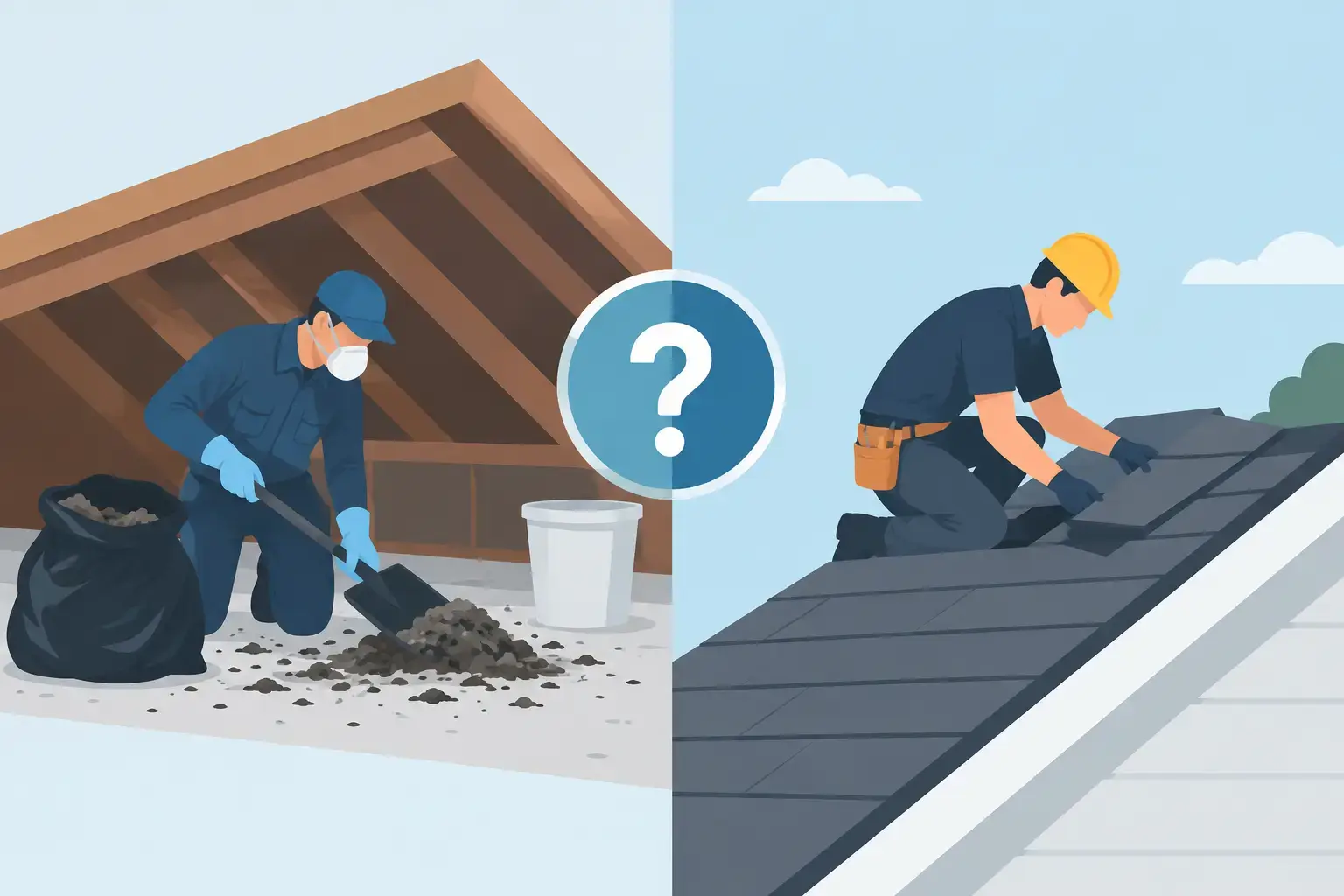
A bat colony can leave more than a few droppings behind. When guano has collected in an attic, wall cavity, church steeple, or commercial structure, the decision is rarely just about sweeping up debris. Guano cleanup versus replacement is a property-protection question: Can the affected materials be safely cleaned and restored, or has contamination reached the point where insulation, damaged building materials, or other contents need to be removed and replaced?
The answer depends on where the guano is located, how long bats occupied the structure, how much contamination is present, and whether urine, odor, moisture, or pests have affected surrounding materials. The right approach protects the building and the people who use it, while humane bat exclusion addresses the source of the problem.
Guano Cleanup Versus Replacement: The Key Difference
Guano cleanup means professionally removing bat droppings and contaminated debris, treating affected surfaces as appropriate, and restoring the area when the original material remains structurally sound and sanitary after remediation. It is often the right solution for hard, nonporous surfaces such as framing, masonry, metal, or certain attic floors where droppings are concentrated but have not caused lasting damage.
Replacement means removing materials that cannot be reliably restored. In bat-affected properties, attic insulation is the most common example. Loose-fill and fiberglass insulation can trap droppings, urine, odor, and insect activity deep within the material. Once contamination is widespread, surface cleaning does not solve the actual problem. The contaminated insulation must be removed, the underlying area cleaned, and new insulation installed after the space is properly sealed.
This is not a matter of replacing materials simply because bats were present. A qualified inspection should identify what can be preserved and what needs to go. Property owners deserve a clear scope of work based on conditions inside the structure, not a one-size-fits-all recommendation.
When Professional Guano Cleanup May Be Enough
Cleanup may be sufficient when droppings are limited to a defined area and surrounding materials have not absorbed contamination or deteriorated. For example, a small amount of guano on attic framing beneath a minor roosting site may be removable without replacing the entire attic’s insulation.
Cleanup is also more likely to be appropriate when the affected surfaces are hard and accessible. Wood framing, brick, concrete, metal, and other durable surfaces can often be carefully cleaned after contaminated debris is removed. The condition of the material still matters. Wood that has been repeatedly exposed to urine or moisture may retain odor or show deterioration that requires a different repair plan.
A proper cleanup is more involved than vacuuming visible droppings. Disturbing dry guano can release dust and potential contaminants into the air. Professionals use appropriate protective equipment, containment practices, and specialized removal methods designed to limit exposure and prevent debris from spreading through the property.
In a lightly affected space, timely cleanup can help avoid a larger restoration project. That is one reason a free inspection after signs of bats are discovered is so valuable. The earlier the infestation is addressed, the more options a property owner typically has.
When Insulation or Materials Need Replacement
Replacement becomes the better long-term choice when guano and urine have spread through porous materials. Insulation is especially vulnerable because it is difficult to clean thoroughly without reducing its performance or leaving odor behind. Even when droppings are visible only in one section, bats may have traveled, roosted, or urinated beyond the obvious pile.
Insulation removal is commonly recommended when contamination is extensive, odor is persistent, insulation has been compressed or saturated, or there is evidence of insects feeding or nesting in the debris. Bat guano can attract insects, and a long-standing colony may create conditions that affect more than the immediate roosting location.
Replacement may also be necessary if the material no longer performs its intended job. Contaminated insulation can lose effective R-value when it is compacted, wet, or disrupted. For a Midwest homeowner, that can mean higher heating and cooling costs along with an unpleasant attic odor.
Other materials may need replacement when they have been damaged beyond safe restoration. Examples can include soiled stored belongings, heavily contaminated vapor barriers, damaged duct insulation, compromised ceiling materials, or wood components showing prolonged moisture damage. Each situation should be evaluated individually. Replacing a material that can be safely restored wastes money, but trying to save deeply contaminated material can leave a property with lingering odor and unresolved sanitation concerns.
Exclusion Must Happen Before Restoration
Cleaning or replacing insulation before bats are fully excluded can create an expensive repeat problem. If the entry points remain open, bats may return to the same attic or wall void and contaminate newly restored areas.
The correct sequence begins with identifying the bat species, locating active entry points, and determining whether seasonal restrictions affect the timing of exclusion. Bats are beneficial wildlife, and humane work matters. A proven exclusion system allows bats to leave without allowing them back inside. Once the colony has exited and the structure is sealed against reentry, cleanup and restoration can move forward with confidence.
This order is particularly important during the maternity season, when young bats may not yet be able to fly. Sealing a building at the wrong time can trap bats inside or separate flightless pups from their mothers. A bat specialist understands when exclusion can be performed safely and how to protect both the building and the animals.
Every Bat Deserves a Home, Just Not Yours.™ The goal is not simply to remove evidence of bats. It is to keep the structure bat-free without causing unnecessary harm.
What a Thorough Guano Remediation Plan Should Address
A professional plan should start with an inspection of the entire affected area, not just the most visible pile of droppings. Bat activity may be present in more than one attic bay, wall cavity, soffit, chimney chase, or upper-story void. The inspection should document active and historic entry points, contamination levels, damaged materials, and any signs of odor or insect activity.
After exclusion is complete, the remediation scope should address removal, cleaning, and restoration in the right order. This may involve carefully removing contaminated insulation, collecting guano with specialized equipment, treating affected surfaces where appropriate, and disposing of waste responsibly. If insulation is replaced, the attic should be evaluated for proper coverage and condition rather than simply adding new material over old contamination.
For commercial buildings, churches, and multifamily properties, access and occupancy add another layer of planning. Work may need to be scheduled around tenants, worship services, business operations, or sensitive equipment. A specialist should be able to explain how the work will be contained, where access is needed, and what conditions could affect the project scope.
Why DIY Cleanup Can Create Bigger Problems
A small, isolated amount of guano may look manageable, but attics and voids often hide the full extent of the issue. Homeowners can miss contaminated insulation beneath a visible layer, entry points along the roofline, or bat activity in adjacent cavities. Cleaning only what is easy to see can leave the odor source and the infestation pathway intact.
There is also a safety concern. Sweeping, brushing, or using an ordinary household vacuum can stir fine dust into the air. Opening an attic hatch without containment can allow debris to move into living areas. The more extensive the contamination, the less appropriate a do-it-yourself approach becomes.
The cost question matters too. Cleanup alone may appear less expensive at first, but it is not a bargain if bats return or contaminated insulation continues to hold odor. Conversely, full replacement is not automatically necessary for every bat issue. The most cost-effective solution is the one matched to the actual condition of the property.
Make the Decision Based on Evidence, Not Guesswork
If you have heard scratching at dusk, found droppings near attic access points, noticed staining around roof gaps, or smell a persistent musty odor upstairs, schedule an inspection before disturbing the area. Photos can help document visible signs, but a specialist needs to assess the full structure to determine whether cleanup, replacement, or a combination of both is appropriate.
CP Bat Mitigation provides safe, humane bat removal and guano cleanup with proven exclusion methods designed to stop repeat entry. The right restoration plan begins with making sure the bats are out, the building is sealed, and the contamination is understood.
A clean attic is valuable. A clean attic that stays bat-free is the result that protects your property long after the cleanup crew leaves.