

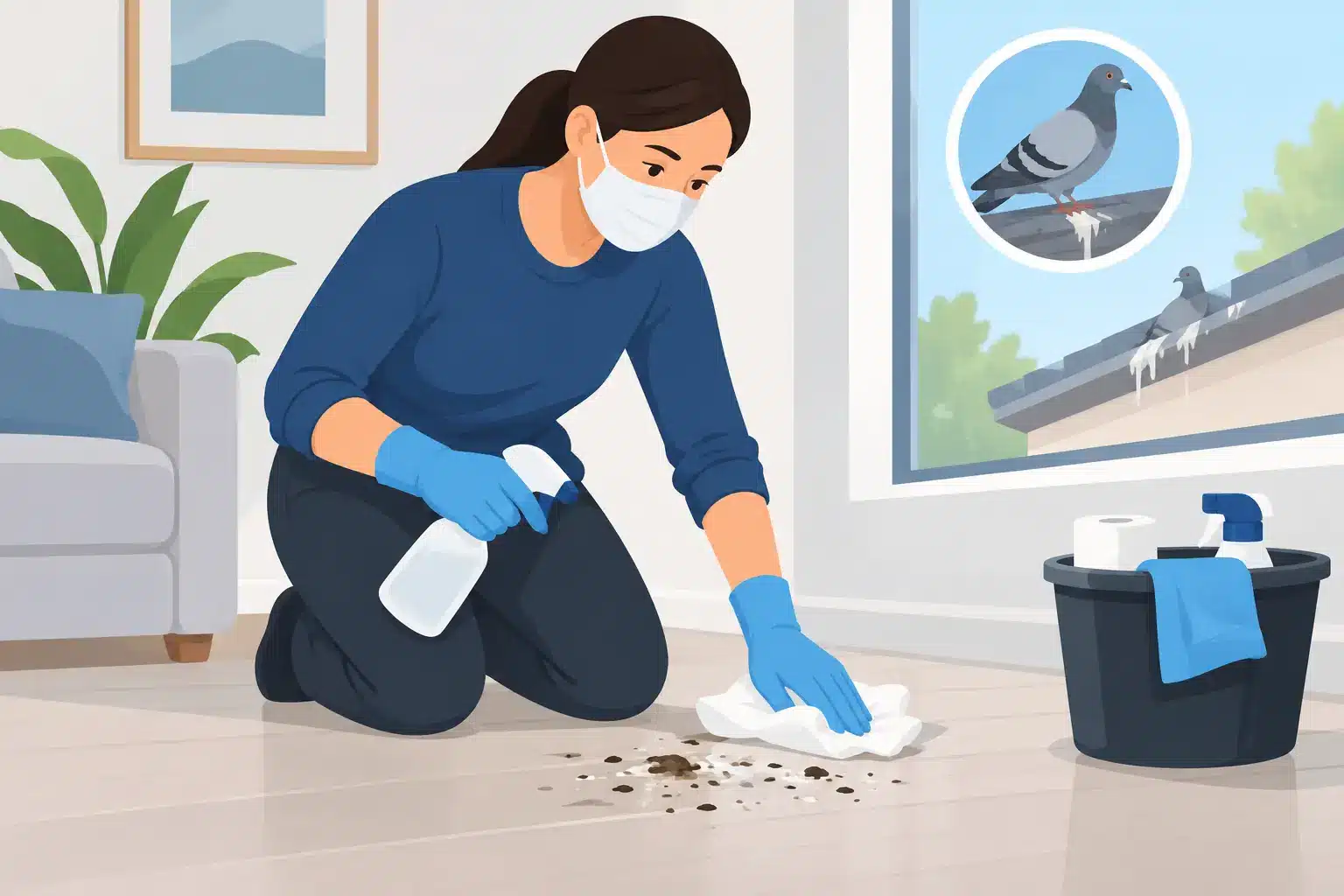
A small pile of bat guano beneath an attic vent can become a much larger property problem than it appears. Odor, staining, insulation damage, and airborne dust are all concerns when droppings have accumulated. The best ways to remove guano begin with controlling exposure, not grabbing a broom and a trash bag.
Bat guano should be treated differently than ordinary household dirt. The material can contain fungal spores and other contaminants, especially when it has dried out or built up over time. A safe cleanup plan protects the people in the building while addressing the reason the guano is there in the first place.
Why Dry Guano Requires Extra Caution
The biggest cleanup mistake is disturbing dry droppings without proper protection. Sweeping, vacuuming with a standard household vacuum, or using a leaf blower can send fine particles into the air. Once dust is airborne, it can travel beyond the immediate cleanup area and settle in adjacent rooms, ventilation pathways, or personal belongings.
In parts of the Midwest, concerns about histoplasmosis are one reason professionals take guano cleanup seriously. Histoplasmosis is associated with a fungus that can grow in soil and accumulations of bird or bat droppings. Not every guano deposit creates the same level of risk, but larger, older, or heavily contaminated accumulations deserve a cautious approach.
The appropriate response depends on the amount of guano, where it is located, and whether the bats are still using the structure. A few fresh droppings on an exterior porch may call for careful spot cleaning. A deep attic accumulation or contamination inside wall voids is a different category of work.
Best Ways to Remove Guano Without Spreading Dust
The safest approach is to isolate the area, use appropriate personal protective equipment, and remove contaminated material in a way that minimizes dust. For substantial attic, crawlspace, church steeple, or commercial-building cleanup, professional remediation is usually the better choice.
First, make sure bats are no longer inside
Cleanup should not start until the bat entry and exit activity has been evaluated. Removing guano while bats remain in the attic does not solve the source of the contamination. It also creates the frustrating cycle of paying for cleanup only to find fresh droppings days or weeks later.
A humane bat exclusion process allows bats to leave through one-way devices while sealing secondary entry points. Once the colony has exited and the timing is appropriate, the final access points can be sealed. Exclusion must be planned carefully around maternity season, when flightless young may be present inside.
This is why general pest-control methods often fall short. Poison, trapping, or simply sealing holes without an inspection can create dead-animal odors, leave young bats trapped inside, or push bats farther into the building. Every Bat Deserves a Home, Just Not Yours.™
Wear the right protective equipment
For any cleanup beyond a very small, isolated deposit, protection should include a properly fitted respirator rated for fine particles, disposable gloves, eye protection, and disposable coveralls or washable work clothing. Footwear should be cleaned before entering other parts of the property.
A simple dust mask is not a substitute for a properly fitted respirator. If the area is heavily contaminated, poorly ventilated, or difficult to access, do not assume more layers of clothing make the work safe. The challenge is controlling contaminated dust while moving material through the structure.
Lightly dampen, then remove carefully
Never dry sweep guano. Instead, lightly mist the affected material with water or an appropriate disinfecting solution so it is less likely to become airborne. The goal is damp, not soaked. Excess liquid can drive contamination deeper into insulation, wood framing, drywall, or other porous materials.
After dampening, guano and visibly contaminated loose material can be collected with dedicated tools and placed directly into durable bags. Bags should be sealed before being carried through clean areas of the home or building. Avoid overfilling them, since a torn bag can turn a contained cleanup into a larger contamination issue.
For limited deposits on nonporous surfaces, careful damp wiping may be sufficient after removal. For deep accumulations, loose-fill insulation, or debris in inaccessible cavities, specialized removal equipment and containment practices are more effective.
Use HEPA filtration, not a standard vacuum
Ordinary household vacuums are not designed for guano remediation. They may exhaust fine particles back into the room, even when the cleanup area looks clean afterward. A commercial HEPA vacuum captures much smaller particles and is used only after bulk waste has been removed and surfaces have been properly treated.
HEPA filtration can also be useful during a larger remediation project to help manage airborne particulate. However, equipment alone does not make a cleanup safe. It must be paired with containment, protective gear, and methods that prevent cross-contamination.
When Insulation and Building Materials Must Be Removed
Guano is often discovered after it has mixed with attic insulation. Once contamination is widespread, trying to pick out visible droppings is rarely enough. Insulation can hold odor, debris, urine, and dust long after the bats are gone.
Removal may be warranted when insulation has heavy staining, a persistent odor, visible droppings throughout the area, or evidence that bats have used the attic for an extended period. Contaminated insulation should be bagged and removed carefully, then the exposed framing and surfaces can be cleaned and treated before new insulation is installed.
Porous materials present a similar concern. Unfinished wood may often be cleaned and treated, depending on the level of contamination. Damaged drywall, ceiling tiles, or duct insulation may need replacement if guano has penetrated the material or moisture has caused deterioration. A professional inspection helps distinguish between materials that can be remediated and those that should be removed.
Disinfecting After Guano Removal
Disinfecting is not the same as cleaning. The first priority is physical removal of droppings and contaminated debris. Applying disinfectant over a thick guano deposit does not eliminate the need to remove it.
Once bulk material has been removed, affected hard surfaces should be cleaned and treated with a suitable disinfectant according to its label directions. Allow the product to remain wet for the required contact time. Avoid mixing cleaning chemicals, especially bleach with other products, since hazardous fumes can result.
Odor may linger even after cleanup, particularly in enclosed attics or wall cavities. Odor treatment can help, but it should never be used as a shortcut for removing the contamination source. If an attic still smells strongly after cleaning, inspect for hidden droppings, contaminated insulation, urine-soaked materials, or an active bat entry point.
Situations That Call for Professional Guano Cleanup
Homeowners and property managers should strongly consider professional help when the accumulation is extensive, when guano is in an attic or crawlspace, or when the affected area serves a school, business, church, apartment building, or other occupied property. The stakes are higher when employees, tenants, visitors, or vulnerable occupants could be exposed.
Professional cleanup is also appropriate when bats are still active, entry points are difficult to identify, or guano has spread into insulation and structural voids. A bat specialist can coordinate humane exclusion with cleanup so the property is not reopened to the same problem.
CP Bat Mitigation provides specialized bat exclusion and guano cleanup for homes and commercial properties, with the goal of resolving the contamination and preventing future access. A thorough inspection should identify active entry points, determine the scope of cleanup, and establish whether materials such as insulation need replacement.
Prevent Guano From Returning
The best cleanup will not last if bats can still enter. Bats can use small gaps around rooflines, fascia boards, gable vents, chimneys, siding transitions, utility penetrations, and damaged screens. What looks like a minor opening from the ground can be a dependable entry route for a colony.
After humane exclusion is complete, all potential reentry points should be professionally sealed with durable materials suited to the building. This is more than stuffing a visible hole with foam. Long-term bat proofing requires attention to construction gaps across the entire structure and careful timing that protects bats and property owners alike.
If you have found guano, treat it as a signal to inspect the building, not just a mess to erase. Removing it safely protects the people who use the property. Keeping bats out for good protects everything that comes next.