

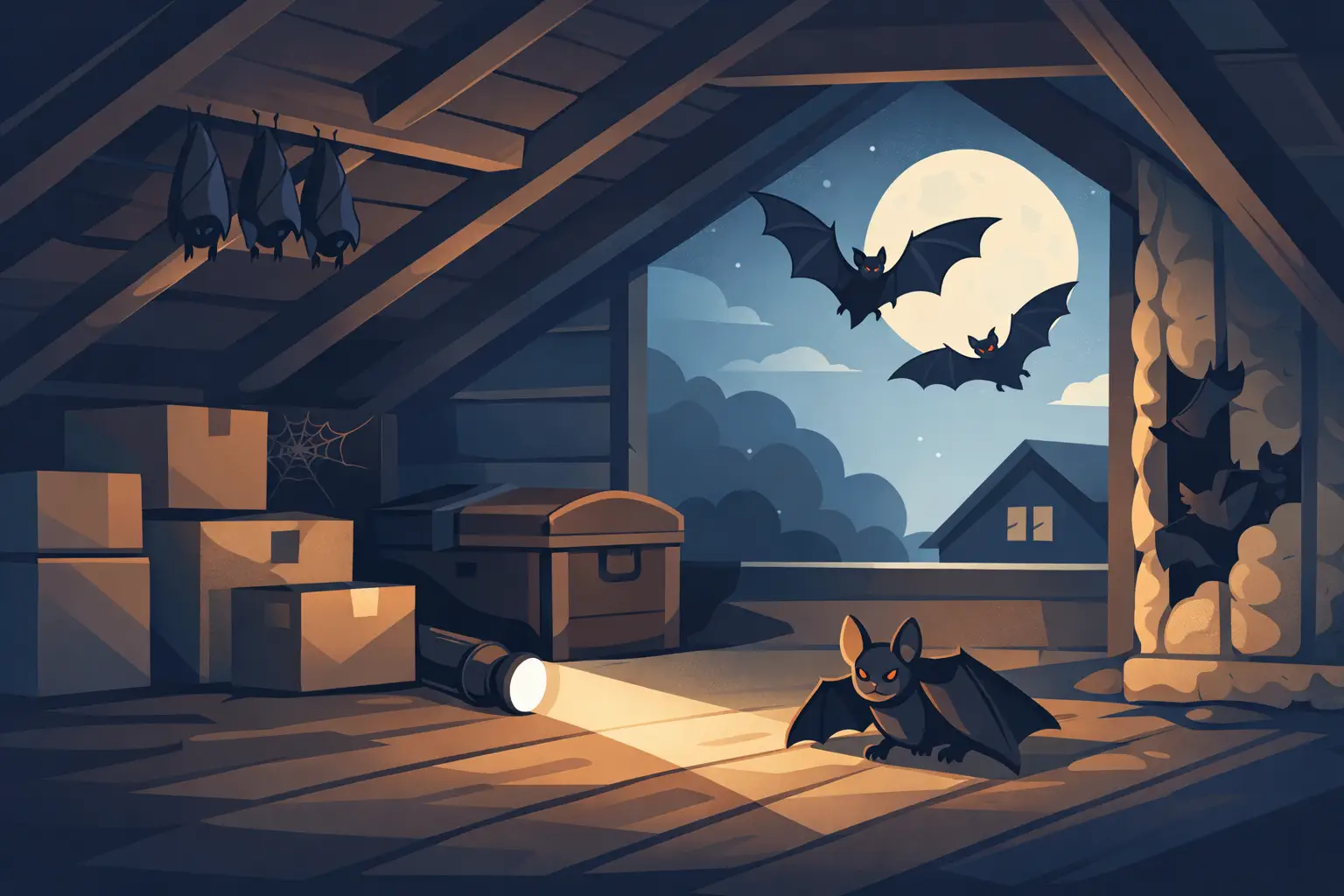
You hear scratching above the ceiling after dark, catch a faint ammonia-like odor, and suddenly the question gets very real: are bats dangerous in attics? The short answer is yes, they can be. Not because bats are aggressive house pests, but because once they move into an attic, the risks shift from wildlife curiosity to health concerns, contamination, and property damage.
That distinction matters. Bats play an important role outdoors, and they should be treated humanely. But an attic is not a safe place for them or for the people living and working below.
Are bats dangerous in attics for homeowners and buildings?
In most cases, the main danger is not a bat swooping at people. It is what happens when a colony settles in a confined structure over time. Attics give bats warmth, protection, and stable conditions for raising young. For a homeowner or property manager, that same setup can create serious issues that grow quietly until the colony is large enough to notice.
The biggest concerns usually fall into three categories: health risk, structural and insulation damage, and the chance of bats getting into living spaces. How dangerous the situation is depends on how many bats are present, how long they have been there, where their waste is collecting, and whether anyone in the building has had direct contact with a bat.
A single bat occasionally entering an attic is different from an established maternity colony. Both need attention, but the level of urgency is not the same.
The real health risks of bats in an attic
When homeowners ask whether bats are dangerous, they are often thinking about bites. That concern is understandable, but direct attacks are not the most common issue in attic infestations. The more common problem is exposure to bat guano and urine.
As guano accumulates, it can support fungal growth associated with histoplasmosis, a respiratory illness linked to airborne spores. Risk levels vary based on the amount of contamination and whether waste has been disturbed, but this is one reason bat cleanup should never be treated like routine sweeping or vacuuming. Stirring up droppings without the right protection can make a bad situation worse.
There is also the rabies question. Most bats do not carry rabies, but some do, and any bat found in a living area, especially a bedroom or near a child or pet, should be taken seriously. If there is any chance of direct contact, that is a medical conversation, not a wait-and-see moment.
Odor can become its own health and comfort issue as well. Bat urine and guano create strong smells that can spread through insulation, framing, and wall cavities. In commercial spaces, churches, apartment buildings, and homes, that can affect indoor air quality and make the property unpleasant to occupy.
What makes exposure more likely?
Risk goes up when colonies remain undetected for months or years, when guano piles are large, when HVAC systems or air movement spread particles, and when bats begin slipping from attic voids into hallways, bedrooms, or offices. Older buildings with gaps around utility lines, rooflines, louvers, or fascia can also create more pathways between roosting space and occupied space.
Can bats damage an attic?
Yes, although not in the same way rodents chew wires or tear open materials. Bats do not gnaw through wood or electrical lines, but they can still create expensive damage.
The most common issue is contamination of insulation. Once guano and urine soak into attic insulation, the material often loses effectiveness and may need to be removed and replaced. Staining on rafters, drywall, and soffits can also develop over time. In heavier infestations, waste buildup can be substantial enough to affect ceilings and create cleanup costs well beyond the initial removal.
Another form of damage is indirect. If a colony keeps returning year after year through the same gaps, moisture and waste can continue accumulating in one area. That repeated use can compound odor problems and create a longer restoration process.
This is where specialized bat work matters. General pest control is not the same as true bat exclusion. Sprays, poisons, and quick-fix repellents do not solve entry-point problems. If access points stay open, the colony or a new one can come right back.
Are bats in the attic dangerous to pets or children?
They can be, mainly because children and pets are more likely to have unrecognized contact with a bat. A bat that ends up in a bedroom, playroom, stairwell, or living space should always be handled with caution. Never pick one up bare-handed, even if it appears weak or injured.
Dogs and cats may corner a bat, paw at it, or carry it. Children may be curious and try to touch it. In those situations, the concern is not that bats are naturally attacking people. The concern is that any direct exposure creates uncertainty, and uncertainty is exactly what families do not need when health is involved.
If you have vulnerable occupants in the building, such as young children, elderly residents, or anyone with respiratory issues, a long-running attic colony deserves prompt attention.
Signs the situation is becoming more serious
A few warning signs suggest the attic issue has moved beyond minor nuisance territory. One is seeing bats regularly at dusk entering and leaving the roofline, vents, or eaves. Another is finding droppings on insulation, window ledges, porches, or below exterior gaps.
Persistent odor is another clue. So are squeaking or scratching sounds at dawn and dusk, especially in spring and summer when maternity colonies are active. If a bat appears indoors more than once, that usually means there is a pathway from the attic or wall void into occupied space.
The timing of the year also matters. During maternity season, exclusion work has to be planned carefully so flightless young are not trapped inside. That is one reason bat work should be done by specialists using proven, humane methods rather than rushed DIY attempts.
Why DIY bat removal can create bigger problems
Homeowners often start by searching for sprays, ultrasonic devices, lights, or foam sealants. The problem is that bats are persistent, and attics offer exactly the shelter they want. Most repellent products do little or nothing to remove an established colony.
Sealing holes too early can also backfire. If bats are trapped inside, they may end up in walls or living spaces trying to escape. If young bats are present and unable to fly, improper timing can create a sanitation and animal welfare issue at the same time.
Safe, humane bat removal depends on identifying all primary and secondary entry points, understanding seasonal restrictions, installing one-way exclusion devices where appropriate, and then sealing the structure so bats cannot re-enter. That is precision work. Missing even a small gap can undermine the whole job.
What professional bat exclusion does differently
A professional inspection should answer more than whether bats are present. It should show where they are getting in, how active the colony is, what contamination exists, and what long-term repairs are needed to keep the building protected.
That matters because every structure is a little different. A church steeple, a downtown commercial building, and a suburban home may all have bat activity, but the access points, safety concerns, and exclusion plan will not look exactly the same.
A specialist will also know when removal can be performed immediately and when it needs to be scheduled around bat life cycles. Humane bat control is not just about getting them out. It is about getting them out the right way and keeping them out.
For property owners across the Midwest, that local experience matters. Buildings in South Dakota, Nebraska, Iowa, and Minnesota deal with seasonal changes that affect bat behavior, entry patterns, and timing.
So, are bats dangerous in attics?
Yes, they can be dangerous in attics, but the danger is often misunderstood. The biggest threats are usually guano contamination, odor, possible disease exposure, and the growing cost of damage when a colony stays in place too long. The bats themselves are not the enemy. The problem is that your attic becomes an active roost inside a structure meant for people.
That is why the best response is calm, fast, and professional. Do not disturb the colony, do not seal openings without a plan, and do not assume the issue will clear up on its own. If you suspect bat activity, a proper inspection can tell you exactly what you are dealing with and what it will take to fix it safely.
Every bat deserves a home, just not yours. The sooner the problem is addressed, the easier it is to protect your property, your indoor environment, and the people inside it.