

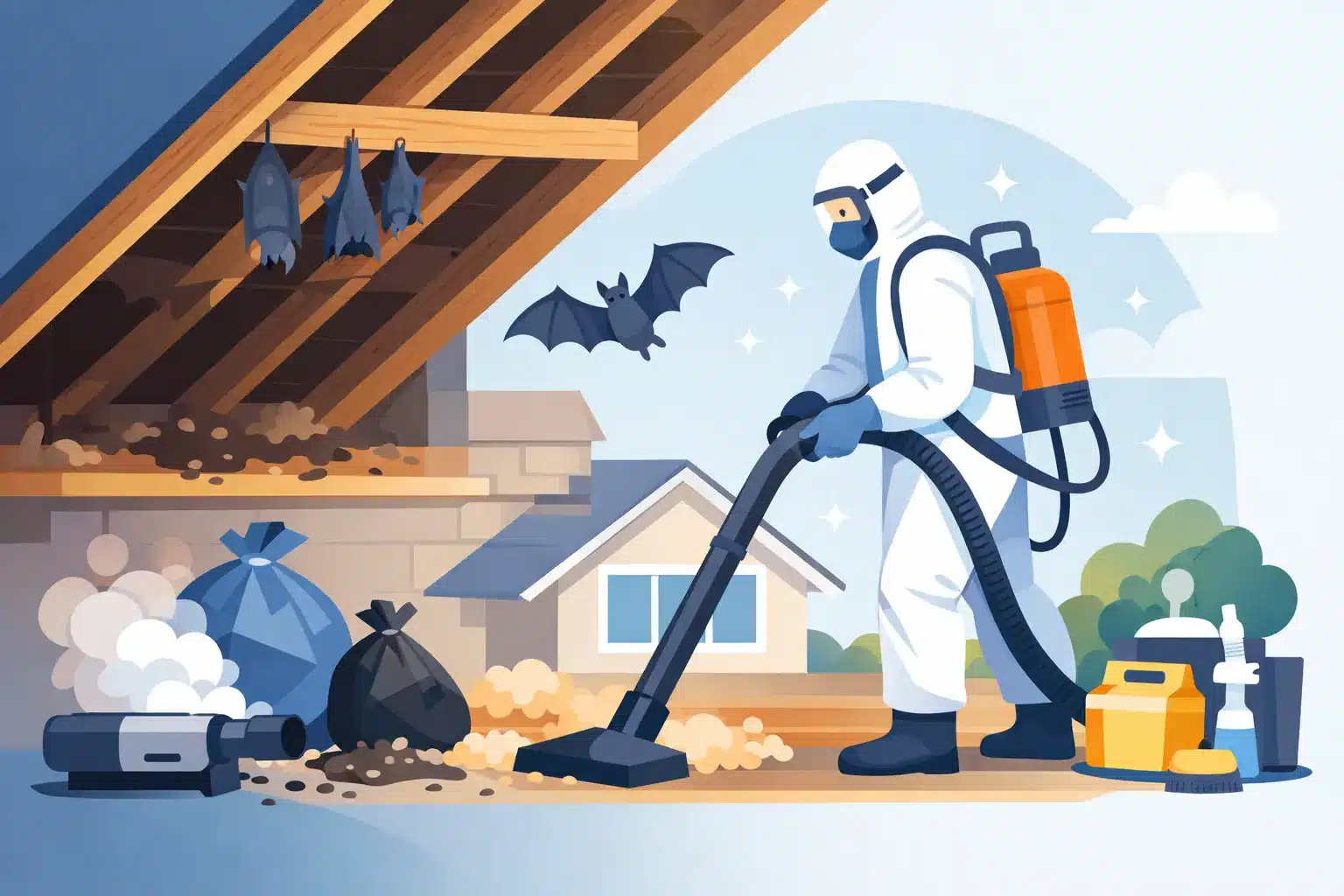
A bat-free attic is not necessarily a clean attic. The best attic cleanup after bats addresses what was left behind – guano, urine staining, damaged insulation, persistent odor, and the entry points that allowed bats inside in the first place. Skipping any one of those steps can leave a property with a sanitation problem or create the conditions for another infestation.
For homeowners, churches, rental properties, and commercial buildings, cleanup should begin only after bats have been humanely excluded. Removing contaminated material while bats are still using the attic can disturb the colony, create new interior access issues, and waste money if the problem has not been permanently resolved.
Cleanup Starts After Safe, Humane Exclusion
Bats are protected wildlife in many situations, and exclusion timing matters. A professional bat specialist identifies the species, confirms active entry and exit points, and uses proven exclusion methods that allow bats to leave without letting them return. Every Bat Deserves a Home, Just Not Yours.™
Once the colony is fully out, all primary and secondary entry points must be sealed with durable materials suited to the building. This is the foundation of a successful cleanup. If gaps around rooflines, vents, siding transitions, chimneys, or utility penetrations remain open, a cleaned attic can quickly become contaminated again.
A visual check from the ground is rarely enough. Bats can enter through openings as small as about three-eighths of an inch. Experienced inspection matters because the visible gap is not always the one bats are using, especially on older homes, large churches, and commercial structures with multiple roof elevations.
What the Best Attic Cleanup After Bats Includes
The right scope depends on how long bats occupied the space, the size of the colony, attic ventilation, and whether insulation was affected. A small, recent issue may require targeted removal and sanitation. A long-term infestation can require extensive insulation removal, odor treatment, and repairs to protect indoor air quality and property value.
Guano removal with proper containment
Bat guano should not be swept, brushed, or blown around with a leaf blower or household vacuum. Disturbing dry droppings can put contaminated dust into the air. Cleanup professionals use protective equipment, controlled removal practices, and appropriate containment to reduce unnecessary exposure and keep debris from moving into living areas.
The goal is to remove accumulated waste from attic floors, framing, insulation surfaces, and other affected areas. This work is especially important near attic hatches, HVAC equipment, ductwork, and penetrations where attic air may communicate with the rest of the building.
Insulation evaluation and replacement when needed
Insulation often holds the evidence of a bat infestation. Guano can become embedded in loose-fill or batt insulation, and urine can contribute to odor, staining, and loss of material performance. In heavily affected areas, surface cleaning is not enough because the contamination is below the visible layer.
Complete insulation replacement is not required in every attic. The decision should be based on the extent of contamination, the insulation type, moisture conditions, odor, and the age and condition of the material before bats arrived. A specialist should explain the findings clearly rather than treating full replacement as an automatic upsell.
When removal is warranted, the attic should be cleaned before new insulation is installed. Re-insulating over guano may hide the issue, but it does not correct it.
Disinfection and odor control
After waste and affected material are removed, exposed surfaces may need treatment with an appropriate disinfectant or deodorizing process. This helps address residue and the musky odor that can remain after a colony has left.
Odor control is not a substitute for removal. Fragrance products and surface sprays cannot solve a problem buried in insulation or concentrated around roosting areas. The best results come from removing the source first, then treating the attic as needed.
Damage and moisture assessment
Bat activity can reveal other attic concerns that deserve attention. Guano buildup around framing, vents, and insulation can conceal moisture damage, roof leaks, or inadequate ventilation. Urine may stain drywall or wood below a roosting location.
A thorough cleanup should include a close look at these areas. Not every stain means structural damage, but ignored moisture can create a separate repair issue. Property managers and building operators should also consider whether contamination reached mechanical systems or occupied spaces, particularly in older or multi-level buildings.
Why DIY Bat Guano Cleanup Can Create More Problems
Homeowners are often tempted to handle a small pile of droppings themselves. The trade-off is straightforward: saving on an initial service call can expose you to unnecessary health and cleanup risks, while also making it easier to miss hidden contamination and active entry points.
Do not enter an attic with active bats, disturb droppings without suitable protection, or use methods that send dust airborne. Avoid poisons, traps, and attempts to seal bats inside. These approaches are inhumane, can create odor problems from trapped animals, and do nothing to correct the conditions that attracted bats to the structure.
A professional cleanup is particularly worthwhile when there is a large accumulation of guano, visible staining, odor inside the home or building, contamination near HVAC equipment, or evidence that bats have been present through more than one season. These are signs that the project needs more than a quick attic sweep.
A Practical Cleanup Plan for Property Owners
The sequence matters. Trying to clean before confirming exclusion can turn one project into two. A reliable process generally follows these five stages:
- Inspect the exterior and attic to identify bat activity, entry points, contamination, and affected materials.
- Complete safe, humane exclusion at the proper time of year and seal the structure once bats have exited.
- Remove guano and contaminated insulation or debris using controlled cleanup procedures.
- Treat affected surfaces and assess odor, staining, ventilation, and any related damage.
- Restore insulation as needed and document repairs that help keep the building protected.
For a homeowner, this process brings peace of mind that the attic is safe to use and the odor will not return with the next warm day. For a commercial property, church, or multifamily building, it also supports cleaner maintenance records and reduces the chance of complaints from occupants.
Questions to Ask Before Hiring an Attic Cleanup Company
Not every pest control company specializes in bats, and that distinction affects the result. Ask whether the company performs bat exclusion before cleanup, how it identifies all entry points, what materials it uses for permanent sealing, and whether it evaluates insulation instead of simply spraying an odor product.
It is also reasonable to ask about experience with your type of structure. A single-family home, historic church, warehouse, and apartment building present different access challenges. The right provider should have a clear plan, explain what is included, and offer confidence that bats will not regain access after the work is complete.
CP Bat Mitigation focuses exclusively on bat removal, exclusion, mitigation, and guano cleanup, bringing more than 30 years of specialized experience to Midwest property owners. A focused bat specialist can often identify details that a general pest service may overlook.
Protect the Attic Before the Next Bat Season
The cleanest attic is one bats cannot re-enter. After cleanup, keep an eye on roofline gaps, damaged screens, loose soffits, and changes around chimneys or utility lines. If you notice chirping near dusk, staining below an exterior opening, or new droppings in the attic, act before a small roost becomes a larger cleanup project.
A professional inspection gives you a clear answer about what happened, what needs to be removed, and what will protect the property long term. Once bats are safely out and the attic has been properly restored, you can move forward knowing the space is clean, protected, and no longer serving as a wildlife entry point.