

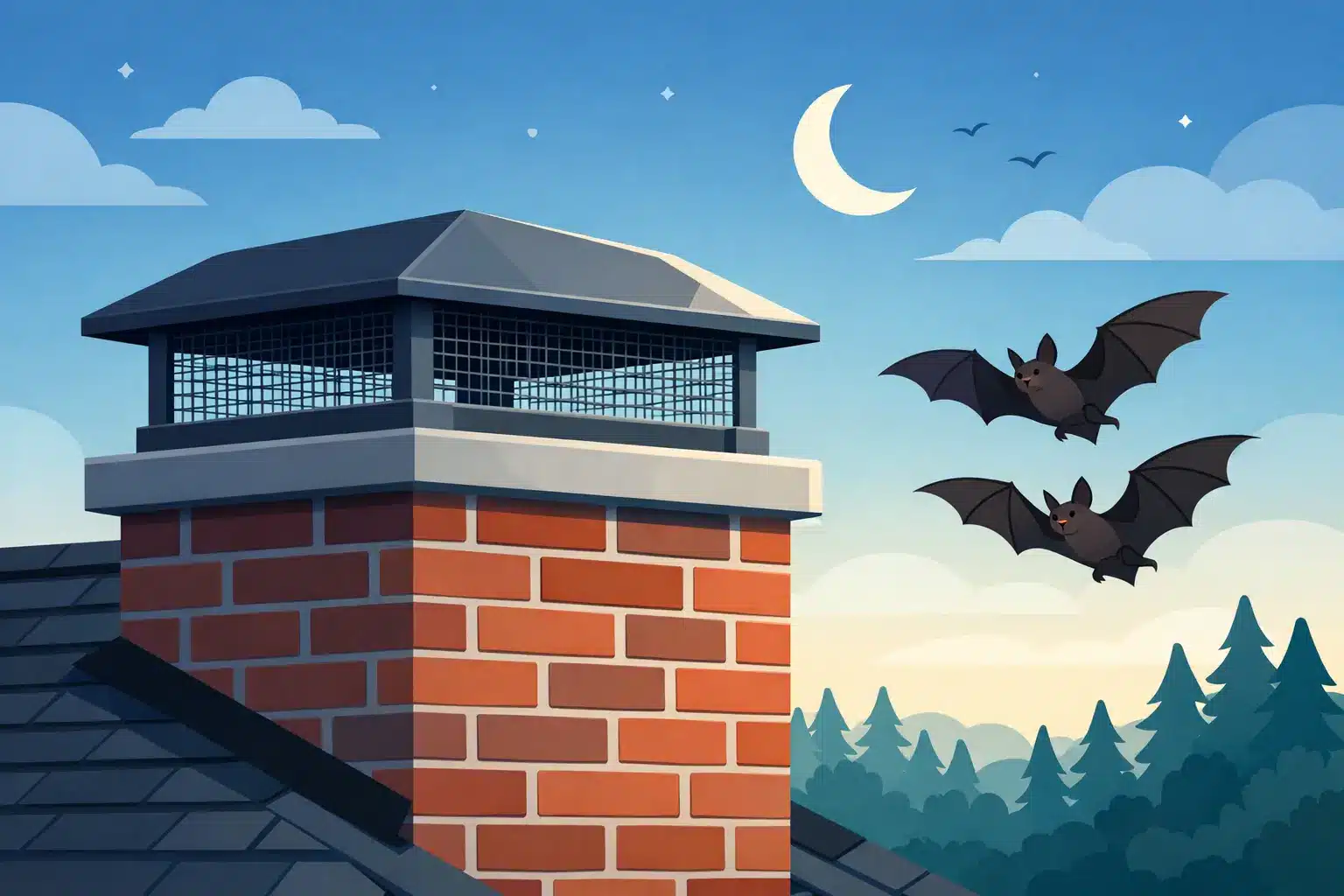
A bat proof chimney cap can be an excellent part of a permanent bat-control plan, especially when bats are using a chimney as a sheltered route into the structure. But a cap is not a one-size-fits-all fix. If bats are already inside a flue, attic, wall void, or chimney chase, simply covering the opening can trap them indoors and create a much larger problem.
For homeowners, churches, and commercial property managers, the goal is not just to put metal over a chimney. The goal is to let bats leave safely, prevent their return, and identify the smaller gaps that may still give them access to the building. Every Bat Deserves a Home, Just Not Yours.™
What Makes a Chimney Cap Bat Proof?
A chimney cap is considered bat proof when it closes off the top of the flue with durable, properly fitted mesh or screening that bats cannot pass through. Bats can fit through surprisingly small openings – in some cases, a gap as small as 3/8 inch is enough. A loosely fitted cap, wide wire mesh, or a damaged screen may look secure from the ground while still leaving room for bats to enter.
The cap also needs to protect the chimney’s function. A well-designed installation keeps wildlife out while allowing smoke, gases, and moisture to vent properly. That is why chimney caps should not be improvised with solid covers, loose hardware cloth, plastic materials, or makeshift screens that can restrict draft, rust quickly, or become a fire hazard.
Material matters as well. Stainless steel and quality galvanized metal generally hold up better against Midwest weather than lightweight materials that can bend, corrode, or pull loose in wind. The right choice depends on the chimney’s size, shape, number of flues, roof access, and condition of the crown and mortar.
Why a Cap Alone May Not Solve a Bat Problem
Chimneys are common bat entry points, but they are rarely the only vulnerability on an older or complex building. Bats may access the attic through roofline gaps, fascia boards, soffits, ridge vents, siding transitions, flashing, or openings around utility penetrations. If the chimney is capped but another route remains open, bats may simply relocate inside the same structure.
There is also an important difference between bats using the chimney and bats using the chimney to reach another area. A colony may roost in the flue itself. Or the chimney chase may connect to wall voids, attic areas, or openings behind masonry and trim. A surface-level inspection cannot always reveal what is happening inside.
This is why professional bat exclusion begins with an inspection of the entire exterior, not just the visible chimney opening. The work should identify active entry points, staining or rub marks, droppings below access areas, construction gaps, and conditions that could allow a future infestation.
Never Seal a Chimney With Bats Inside
The most common mistake is installing a bat proof chimney cap as soon as bats are seen flying out. That approach may prevent the bats from returning after they forage, but it can also seal in bats that have not left. Trapped bats can enter the living space through vents, fireplaces, gaps around framing, or other interior pathways. They may also die in inaccessible areas, creating odor and sanitation concerns.
Timing matters even more during maternity season. In late spring and summer, many bat species form maternity colonies and give birth. Young bats cannot fly for a period of time. Excluding adult bats while nonflying pups remain inside is neither humane nor effective, because the adults will continue trying to get back in and the young will be stranded.
A trained bat specialist evaluates the activity, season, species considerations, and building design before closing an entry point. When exclusion is appropriate, one-way devices may be installed at active exit points. These allow bats to leave but prevent re-entry. Once activity has stopped and the structure is confirmed clear, the final sealing and chimney cap installation can be completed.
Signs Your Chimney Needs Attention
A chimney should be inspected when you notice bats emerging from the top around dusk, hear scratching or chirping near the fireplace or chimney chase, or find small droppings on the roof, hearth, attic, or ground below. Bats may also leave dark oily staining near gaps where they repeatedly squeeze through.
Not every chimney noise is a bat problem. Birds, squirrels, raccoons, and chimney swifts can use flues too, and each situation calls for a different response. Chimney swifts, for example, are protected migratory birds and should not be removed or blocked while they are nesting. Correct identification protects wildlife and prevents property owners from taking the wrong action.
If there is an active fireplace, avoid lighting a fire until the chimney has been evaluated. Smoke, heat, and flame can injure animals in the flue and may create additional hazards if nesting material, debris, or a damaged cap is present.
Choosing the Right Bat Proof Chimney Cap
The best cap is not necessarily the cheapest product on a shelf. Proper fit and installation determine whether the cap will stay in place and whether it will actually exclude bats. A cap should fit the flue or chimney crown securely, cover every opening, and use appropriately sized wildlife-exclusion mesh where needed.
For a single round flue, a fitted cap may be relatively straightforward after the chimney is cleared. Multi-flue chimneys, masonry chimneys, decorative chimney pots, and large commercial stacks often require custom solutions. Buildings with multiple roof elevations or limited roof access may also need specialized safety equipment and a detailed work plan.
Before installing any cap, consider the chimney’s condition. Cracked crowns, loose mortar, missing flashing, and deteriorated brick can create gaps around the cap that defeat the purpose of the installation. In those cases, masonry or chimney repairs may need to be addressed alongside exclusion work.
A good installation should also account for maintenance. Chimneys need periodic inspection for rust, storm damage, debris buildup, and loose fasteners. A cap that was effective five years ago may no longer be secure after severe weather or repeated freeze-thaw cycles.
What Property Owners Can Do Now
If you suspect bats are using your chimney, observe from a safe distance at dusk for several evenings. Note where bats emerge, the approximate number you see, and whether activity appears limited to the chimney or includes roofline gaps. Do not place a ladder against the chimney, stuff the flue with insulation, spray repellents, or attempt to catch bats.
Repellents, bright lights, ultrasonic devices, and strong odors do not provide reliable long-term control. They can push bats deeper into the structure without closing the actual entry point. Likewise, a chimney cap installed without a full exclusion plan may only shift the problem to another opening.
For buildings with known bat activity, documentation is useful. Property managers can record dates, locations, tenant reports, and photos of exterior gaps or droppings. This helps a specialist assess the situation efficiently and helps owners make informed decisions about repairs and sanitation.
Professional Exclusion Protects More Than the Chimney
A complete bat solution protects the building, its occupants, and the bats themselves. It starts with identifying entry points, then uses proven exclusion methods at the right time of year. Final sealing may include chimney caps, vent protection, repairs around rooflines, and closure of gaps that are easy to miss from the ground.
When guano has accumulated in an attic, chimney chase, or other enclosed area, cleanup should be handled carefully. Disturbing droppings can create airborne dust and spread contamination to insulation and surfaces. The cleanup plan should address the affected material, not simply remove what is visible near the entry point.
CP Bat Mitigation helps property owners across the Midwest evaluate chimney activity, remove bats safely and humanely, and close the conditions that allow repeat infestations. The right answer may be a chimney cap, but lasting protection comes from making sure the entire structure is no longer available as a bat roost.
If bats are around your chimney tonight, resist the urge to seal the opening immediately. A careful inspection and humane exclusion plan can turn one vulnerable chimney into a lasting barrier without trapping wildlife where it does not belong.