

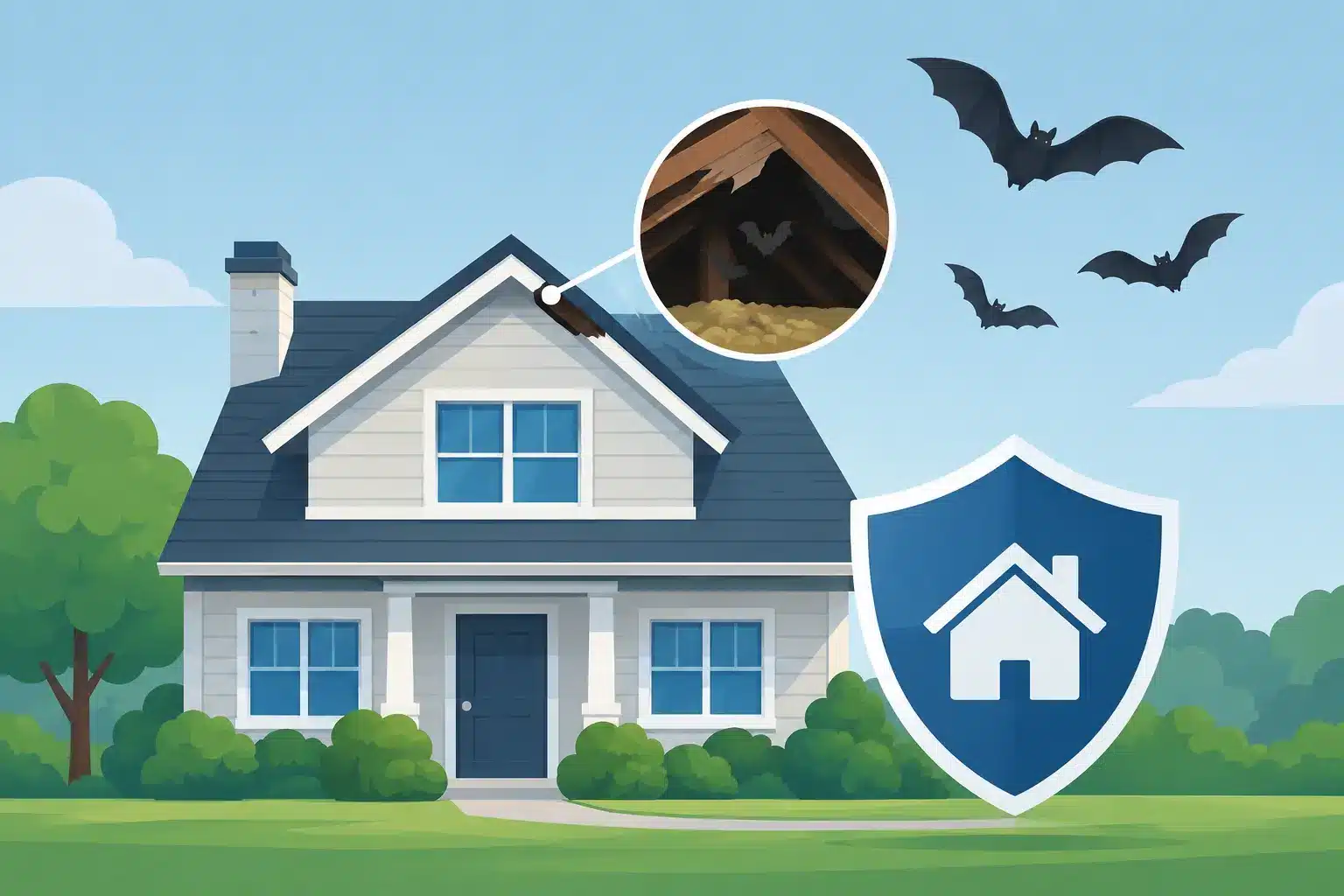
A bat in the attic can become more than a wildlife issue. Droppings may accumulate in insulation, odors can spread through living spaces, and small entry gaps can allow rain, insects, or additional animals into the structure. That is why homeowners often ask whether bat damage insurance will pay for removal, cleanup, or repairs. The honest answer is: sometimes, but coverage depends heavily on the cause of the damage and the language in your policy.
What Bat Damage Insurance May Cover
Most standard homeowners insurance policies are designed for sudden, accidental losses such as a fire, windstorm, burst pipe, or fallen tree. Bat activity is usually treated differently because an infestation often develops gradually. Insurers may classify damage from bats, rodents, birds, insects, or other wildlife as a maintenance issue rather than a covered event.
That does not mean every claim will be denied. If bats enter after a covered event damages your roof, soffit, siding, chimney cap, or vents, the policy may cover repairs to the storm-damaged area. For example, hail could damage a roof vent, leaving an opening bats later use. The insurer may cover the hail damage, while bat removal and guano cleanup may remain the homeowner’s responsibility.
Coverage can also depend on the type of policy, its endorsements, the age of the damage, and the documentation available. A local insurance agent or claims representative can explain your specific policy, but they cannot inspect the building the way a bat specialist can. A professional inspection gives you a clear record of active entry points, contamination areas, and building conditions that need attention.
Why Bat Removal Is Often Excluded
Insurance policies frequently exclude damage caused by pests, vermin, nesting animals, or repeated water intrusion. The reason is not that the damage is unimportant. It is that insurers generally expect property owners to maintain the building envelope and address wildlife access before a small opening becomes a larger problem.
Bats can enter through gaps as small as 3/8 of an inch. Common access points include loose fascia, gaps at rooflines, attic vents, damaged screens, chimney flashing, utility penetrations, and separations around older siding. Once a colony finds a reliable roost, it may return year after year unless every viable entry point is professionally sealed after the bats have safely exited.
Guano cleanup is another area where coverage is often limited. A small amount of droppings near an exterior entry point is different from widespread attic contamination. Larger accumulations can compress insulation, stain ceilings, create persistent odors, and require controlled removal to avoid spreading dust through the home. Even when an insurance policy does not pay for cleanup, addressing it promptly can prevent more expensive restoration work later.
The difference between repairs and prevention
A useful distinction is this: insurance may pay for a covered source of physical damage, while exclusion and preventive sealing are usually considered maintenance. Replacing storm-damaged roof materials may be covered. Installing bat-proof screens, sealing construction gaps, and performing a full exclusion typically are not.
Still, prevention is where the long-term value lies. Patching one visible hole without identifying every active access point can trap bats inside or simply move the problem to another part of the building. Proven exclusion methods allow bats to leave without returning, then close the openings that made the infestation possible.
Steps to Take Before Filing a Claim
If you suspect bats have been in your attic, walls, church steeple, warehouse, or other structure, do not start by sealing holes or cleaning up droppings yourself. Those actions can make the problem harder to document and may create a bigger issue if bats are trapped indoors.
Start with a professional bat inspection. The inspection should identify likely entry points, signs of current activity, the approximate extent of contamination, and any conditions that may have allowed access. Take clear photos of exterior damage, staining, droppings, damaged vent covers, and affected insulation before repairs begin.
Then review your policy and contact your insurer if there is a reasonable connection to a covered loss. Be direct about the timeline. Explain what you observed, when you noticed it, and whether a storm, fallen limb, roof failure, or other event may have created the opening. Do not guess about the cause or describe ordinary wear as sudden damage. Accurate documentation protects you during the claims process.
Keep copies of inspection findings, estimates, invoices, photos, and all communication with the insurance company. If the claim is denied, those records still help you make informed repair decisions and show future buyers, property managers, or lenders that the issue was professionally resolved.
What Homeowners Should Ask Their Insurance Agent
A quick conversation with your agent can prevent assumptions about coverage. Ask whether your policy excludes damage from bats or wildlife, whether guano cleanup is covered under any contamination provision, and whether roof or attic repairs are covered when an insured event caused the opening.
You should also ask about ordinance or law coverage if you own an older commercial property, church, or multifamily building. Repairs may reveal ventilation, fire, or construction requirements that were not apparent before work began. These upgrades are not always covered under a basic policy.
For commercial property owners, confirm whether business interruption coverage applies if a bat-related issue forces a closure. That coverage usually requires a direct physical loss from a covered cause, so it should never be assumed. Restaurants, healthcare facilities, schools, and food-related businesses may face additional operational concerns when bats are discovered inside occupied areas.
Protecting Your Property After Bat Activity
Whether insurance contributes or not, the best next step is a complete solution: humane removal, exclusion, repairs to bat-accessible gaps, and cleanup when contamination is present. Temporary repellents, ultrasonic devices, mothballs, and amateur trapping do not solve a structural entry problem. They can also create avoidable risks for occupants and for bats.
Timing matters as well. Bat exclusion must be handled responsibly around maternity season, when young bats may be unable to fly. A qualified specialist understands how to plan work around local bat behavior and legal protections while still protecting the building. Every Bat Deserves a Home, Just Not Yours.™
A proper exclusion process is designed to keep bats out for good, not merely send them to another corner of the attic. It begins with a careful exterior assessment, uses one-way devices where appropriate, and seals secondary gaps only after the bats have exited. When cleanup is needed, contaminated material should be handled carefully and the affected space restored to a sanitary condition.
When a Professional Inspection Pays Off
Even if you are unsure whether you will file an insurance claim, an inspection can save money by separating urgent repairs from cosmetic concerns. A specialist can tell you whether the sounds you hear are likely bats, whether the droppings appear fresh, and whether the building has active entry points that need immediate attention.
This is especially valuable for properties with high ceilings, complex rooflines, aging masonry, or difficult-to-reach soffits. Churches, commercial buildings, apartment complexes, and rural homes often have multiple access areas that are easy to miss from the ground. A partial repair may look finished while leaving the actual route of entry untouched.
CP Bat Mitigation provides specialized bat inspections and humane exclusion for property owners who want a permanent answer, not a temporary patch. With more than 30 years of experience, the focus is on finding how bats entered, allowing them to exit safely, and protecting the structure from repeat activity.
If you are seeing droppings, hearing scratching or chirping near dusk, noticing staining around vents, or finding a bat inside your living or work space, act before the damage expands. Document what you see, review your insurance policy carefully, and have the property evaluated by a bat exclusion professional who can protect both your building and the bats’ need to roost elsewhere.