

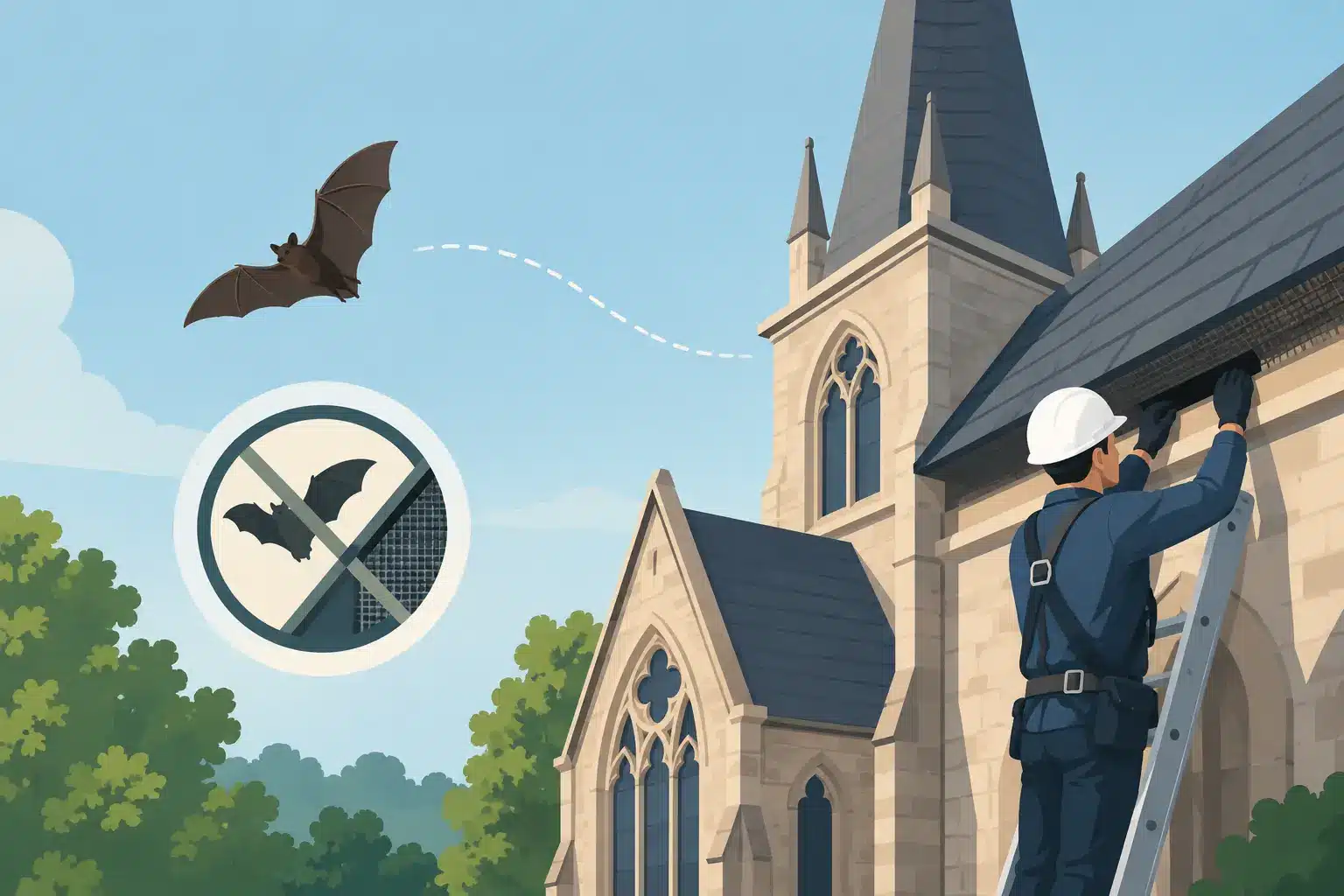
A bat flying through a sanctuary before Sunday service is alarming. A colony living above a vaulted ceiling, behind a bell tower louver, or inside aging stonework is a property protection issue that requires more than a quick patch. Bat exclusion for historic churches must protect people and preserve the character of a building that may have served its community for generations.
Churches provide ideal roosting conditions: high, quiet spaces; complex rooflines; warm attics; and small gaps created by decades of settling, weather, and repairs. The right solution is safe, humane bat removal followed by careful repairs that stop re-entry without damaging original materials or trapping bats inside.
Why Historic Churches Need a Different Exclusion Plan
A modern building may have straightforward siding joints and accessible roof penetrations. A historic church can have a slate roof, timber framing, masonry towers, stained-glass openings, decorative trim, and a maze of inaccessible voids. Bats do not need a large opening. A gap as small as 3/8 inch can be enough for some species to enter.
That means one visible opening is rarely the whole problem. Bats may leave from a gap at a dormer, then use a separate void behind a cornice or louver to reach the main roost. Sealing only the place where they are seen can push them deeper into the structure, create a new exit point, or leave bats trapped indoors.
Historic buildings also create preservation concerns. Expanding foam, broad caulk lines, poorly matched flashing, and aggressive demolition may close an opening, but they can harm masonry, woodwork, and the building’s appearance. A proper plan considers where bats travel, how the building is constructed, and which repair methods will last through Midwest weather.
How Bat Exclusion for Historic Churches Works
Humane exclusion allows bats to leave their roost but prevents them from returning. It is not trapping, poisoning, or sealing every hole while bats are still inside. The work begins with a detailed inspection, usually performed around dusk when active exit points can be identified.
A bat specialist should inspect the roofline, steeple, bell tower, louvers, attic vents, chimneys, flashing, soffits, masonry joints, ridge areas, and transitions where different building materials meet. Droppings, staining, odor, and rub marks can help identify long-used pathways. On older churches, the inspection should also account for areas that are not visible from the ground and voids that may connect multiple sections of the building.
Once the active exits are confirmed, exclusion devices are installed at those points. These one-way devices let bats leave at night to feed but block their return. At the same time, secondary entry points are professionally sealed so the colony cannot simply move a few feet down the roofline and come back inside.
After the bats have exited, the one-way devices are removed and the final openings are sealed. This sequence matters. A permanent repair completed too early can trap bats in a wall, attic, or sanctuary ceiling, leading to odor, insect activity, and an even more difficult cleanup.
The goal is not to disturb bats unnecessarily. Every Bat Deserves a Home, Just Not Yours.™ A humane process moves the colony out of the church while protecting the congregation, staff, visitors, and the building itself.
Timing Can Determine Whether the Job Is Successful
Bat exclusion is not a one-size-fits-all service. Timing depends on the bat species, weather, whether the colony includes flightless pups, and applicable wildlife regulations. During maternity season, adult bats may be able to leave while young bats cannot. Excluding at the wrong time can trap pups inside and create serious welfare and sanitation problems.
A qualified bat professional evaluates the site and recommends the appropriate timing for exclusion. In some cases, preparatory sealing and repair planning can move forward while final exclusion must wait for a safe window. In other cases, an active colony can be excluded promptly. The right answer depends on conditions at that church, not a generic calendar date.
If a bat is found in an occupied area, especially a room where someone was sleeping or where a child or vulnerable person was unattended, follow local public health guidance before attempting to handle it. Never handle a bat with bare hands.
Protecting Architecture While Closing Entry Points
The best church bat control work does not look like a patchwork repair when it is finished. It respects the building’s design while addressing the practical vulnerabilities that bats use.
For masonry churches, damaged mortar joints, openings around utility penetrations, and gaps where stone meets trim may require carefully selected repair materials. For wood-sided churches and steeples, attention often turns to fascia boards, rake edges, soffits, louvers, and areas where decades of paint failure have opened narrow gaps. Bell towers deserve special attention because they are high, dark, ventilated, and often difficult to inspect safely.
The repair method should fit the structure. A material that works well behind a modern vinyl soffit may be inappropriate for a visible historic façade. Where preservation requirements apply, property leaders may need to coordinate with a preservation committee, architect, or local authority before repairs begin. That coordination can add time, but it helps avoid choices that compromise historically significant materials.
Access is another trade-off. Some entry points can be reached with ladders, while tall steeples, steep slate roofs, and fragile roof sections may require lifts, specialized access equipment, or coordination with roofing professionals. Cutting corners on access can lead to missed openings. A bat exclusion is only as dependable as the inspection behind it.
Guano Cleanup Is Part of Protecting the Church
Bat guano is more than an odor issue. Accumulated droppings can stain ceilings, damage insulation, attract insects, and create airborne dust when disturbed. In a church, contamination can affect classrooms, fellowship halls, choir lofts, storage rooms, mechanical areas, and spaces used by the public.
Cleanup should happen after the colony is excluded and the entry points are secured. Removing guano before the bats are gone may mean doing the same work twice. Depending on the amount and location of material, cleanup may include controlled removal, HEPA-filtered vacuuming, sanitation, odor treatment, and replacement of damaged insulation or building materials.
Church volunteers should not be asked to sweep heavy guano accumulations from attics or towers without proper protection and a site-specific plan. A professional assessment helps leadership understand the scope of cleanup, the areas affected, and the appropriate next steps.
What Church Leaders Should Expect From a Specialist
A professional bat exclusion plan should be clear enough for trustees, facility managers, and preservation committees to evaluate. It should identify active and potential entry points, explain the proposed exclusion timing, describe how repairs will protect the building, and outline any guano cleanup needs.
Ask whether the company specializes in bats, how it handles maternity-season restrictions, what materials it plans to use, and what guarantee applies to the work. General pest control approaches can miss the behavior and building-detail knowledge needed for a large, aging church structure.
CP Bat Mitigation brings more than 30 years of bat-focused experience to inspections, humane exclusion, and long-term prevention. For churches across the Midwest, the priority is straightforward: protect the people who gather there, preserve the structure entrusted to their care, and keep bats from returning.
A historic church should not have to choose between preserving its character and solving a bat problem permanently. With a careful inspection, humane exclusion, and repairs designed for the building, the congregation can keep its doors open to the community – and closed to bats.