

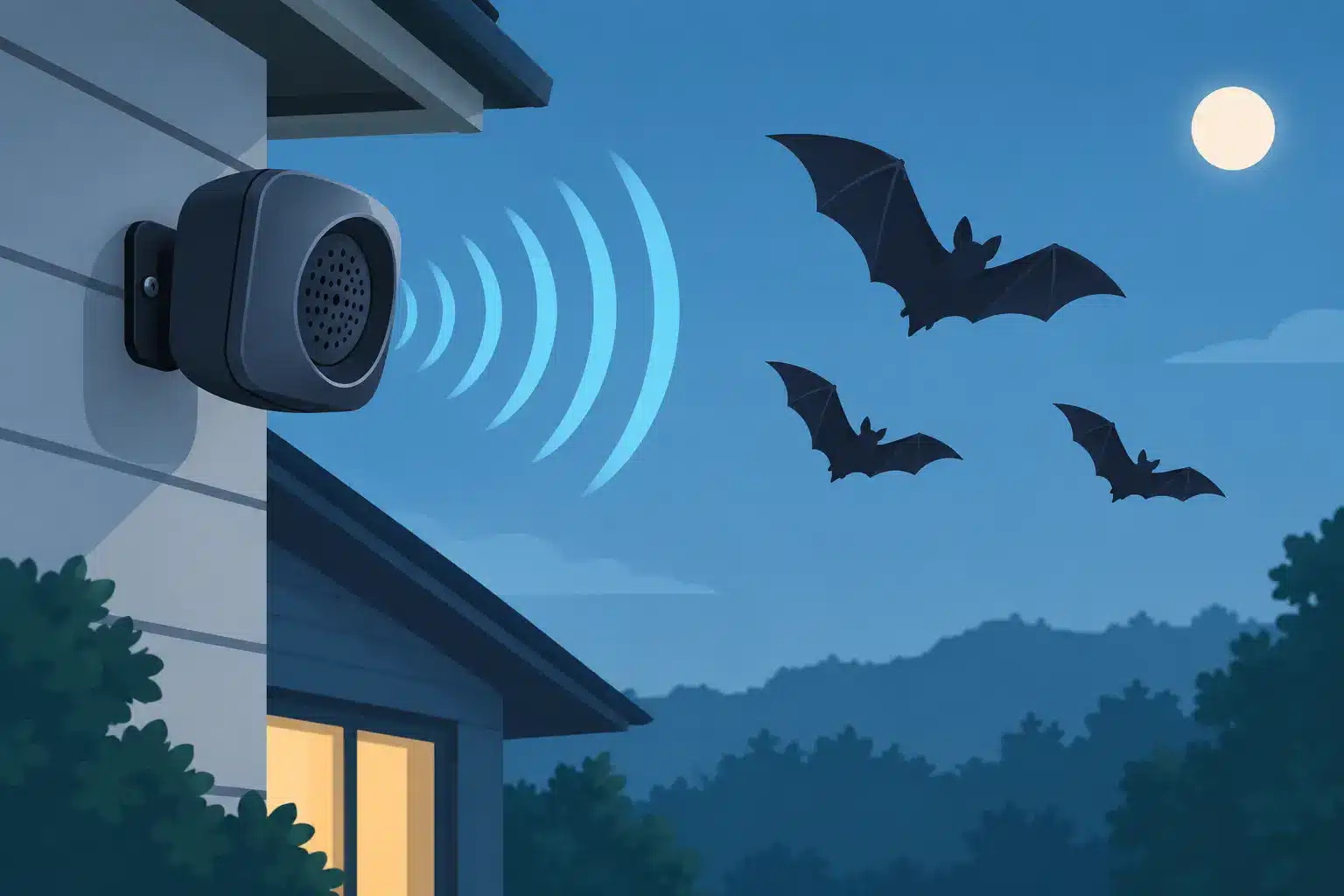
That clicking or fluttering above the ceiling can make an ultrasonic device sound like an easy answer. Ultrasonic bat deterrents are often marketed as a plug-in solution that sends bats away without repairs, ladders, or a professional visit. For a homeowner or property manager dealing with noises in an attic, wall, church steeple, or commercial roofline, that promise is understandable. It is also where many bat problems get more expensive.
The short answer is that ultrasonic devices are not a dependable way to remove bats from a building or keep them from returning. A permanent, humane solution requires finding where bats enter, allowing them to leave safely, and sealing the structure so they cannot re-enter.
Why ultrasonic bat deterrents are unreliable
Bats use sound in remarkable ways, but that does not mean any high-frequency sound will drive them out of a structure. Most consumer devices produce a limited range of sound, often with a fixed pattern and limited coverage. Bats may avoid an unfamiliar sound briefly, ignore it entirely, or become accustomed to it over time.
There is another practical issue: sound does not travel through a building the way product packaging may suggest. Attics, wall voids, insulation, framing, roof decking, and stored belongings interrupt and absorb sound. A device placed in an open attic may have little to no effect on bats tucked behind siding, inside a chimney chase, or in a narrow gap along the roofline.
More importantly, a deterrent does not address the opening that allowed bats inside. A little brown bat can enter through a gap as small as 3/8 inch. If a bat leaves because of a disturbance but the entry point remains open, it may return later. Another bat may use the same gap. The result is not exclusion. It is an unresolved opening in the building envelope.
The risk of pushing bats deeper into the structure
When bats are roosting in an attic or wall, disturbing them without a planned exit route can create a new problem. Instead of leaving the property, they may move farther into inaccessible areas. Homeowners sometimes notice increased activity in bedrooms, living spaces, or basements after trying to repel bats with sound, bright lights, strong odors, or other DIY methods.
That is especially concerning when there are young bats present. During maternity season, adult females may be able to leave while flightless pups remain behind. If the adults are blocked from returning, the pups can die inside the structure. This creates odor, sanitation concerns, insect activity, and a situation no responsible property owner wants.
Humane bat control is not simply about getting bats out quickly. It means choosing the right method at the right time of year so bats are not trapped inside and the building is protected afterward.
What works better than a bat deterrent
Professional bat exclusion is based on bat behavior, building construction, and careful timing. The goal is straightforward: bats can leave, but they cannot get back in.
A proper inspection begins at the exterior. A bat specialist looks for staining, droppings, rub marks, gaps at fascia and soffits, loose siding, roof intersections, chimney gaps, vents, and other access points. Activity often occurs at dusk, so observing the building during an emergence can help confirm the active entry locations.
Once the primary exits are identified, one-way exclusion devices are installed where appropriate. These devices let bats leave naturally to feed but prevent re-entry. Secondary openings are sealed with durable materials, not temporary foam or a patch that will fail after one Midwest winter.
After the bats have had time to exit, the remaining exclusion devices are removed and the final openings are sealed. This is the step ultrasonic products cannot provide: a physical barrier that prevents the same colony from using the building again.
Timing matters for safe, humane removal
Bat work should never be treated as a one-size-fits-all job. Species, weather, roost conditions, and the presence of young bats all affect when exclusion can be performed safely. In the Upper Midwest, seasonal timing is particularly important because bats may use structures differently during spring, summer maternity periods, fall movement, and colder months.
A qualified bat professional should explain the timing of the work rather than offering a quick fix that could create trapped bats or leave the building vulnerable. If exclusion must wait, an inspection can still identify active areas, assess the level of risk, and create a plan for the correct exclusion window.
What about bats flying in a living space?
A single bat in a room is different from an attic colony. Do not assume an ultrasonic device will guide it outside. Close interior doors to limit where the bat can travel, keep people and pets away, and contact a bat removal professional for guidance.
If a bat was found in a room where someone was sleeping, where a young child was unattended, or where a person may not be able to report contact, treat the situation seriously. Do not handle the bat. Follow local public health guidance and speak with the appropriate health professional or agency about possible exposure.
For a recurring bat problem, the concern is larger than the occasional sighting. You may be dealing with an established roost and a building entry issue that will continue until it is professionally addressed.
Guano cleanup is part of protecting the property
Even after bats are excluded, droppings may remain in attic insulation, on framing, or in wall cavities. Bat guano can produce odor, attract insects, and create airborne dust when disturbed. A small amount near an entry point may be manageable with appropriate precautions, but heavy accumulation should be evaluated by a trained cleanup team.
Avoid sweeping, vacuuming, or blowing dry guano with household equipment. Disturbing contaminated material can spread dust into the air and to other parts of the property. The right cleanup approach depends on the amount of material, where it is located, the condition of the insulation, and whether contamination has reached occupied areas.
For commercial properties, churches, apartments, and other buildings with multiple occupants, a documented inspection and professional cleanup plan can also help protect operations and reduce liability concerns.
When a professional inspection makes sense
It is time to schedule an inspection if you hear scratching or chirping around dusk and dawn, see bats entering or exiting the same area, find droppings below a roofline or attic opening, notice an ammonia-like odor, or have had bats appear indoors more than once.
A free inspection gives you more useful information than another plug-in device. It can identify whether the activity is actually bats, locate likely entry points, determine whether exclusion is currently appropriate, and outline the repairs needed for long-term prevention. CP Bat Mitigation focuses exclusively on safe, humane bat removal and proven exclusion methods because bat problems require specialized work, not a temporary pest-control treatment.
A better standard than “making them go away”
Bats are valuable wildlife and important insect eaters. They simply do not belong in the attic, walls, or occupied spaces of your home or business. “Every Bat Deserves a Home, Just Not Yours.™” is more than a slogan when it guides the method: let bats leave safely, prevent their return, and protect the structure from contamination and repeat infestations.
If ultrasonic bat deterrents have not changed the activity around your property, do not keep waiting for a sound device to solve a construction problem. A careful inspection and humane exclusion plan can give you a clear path back to a quiet, protected building.