

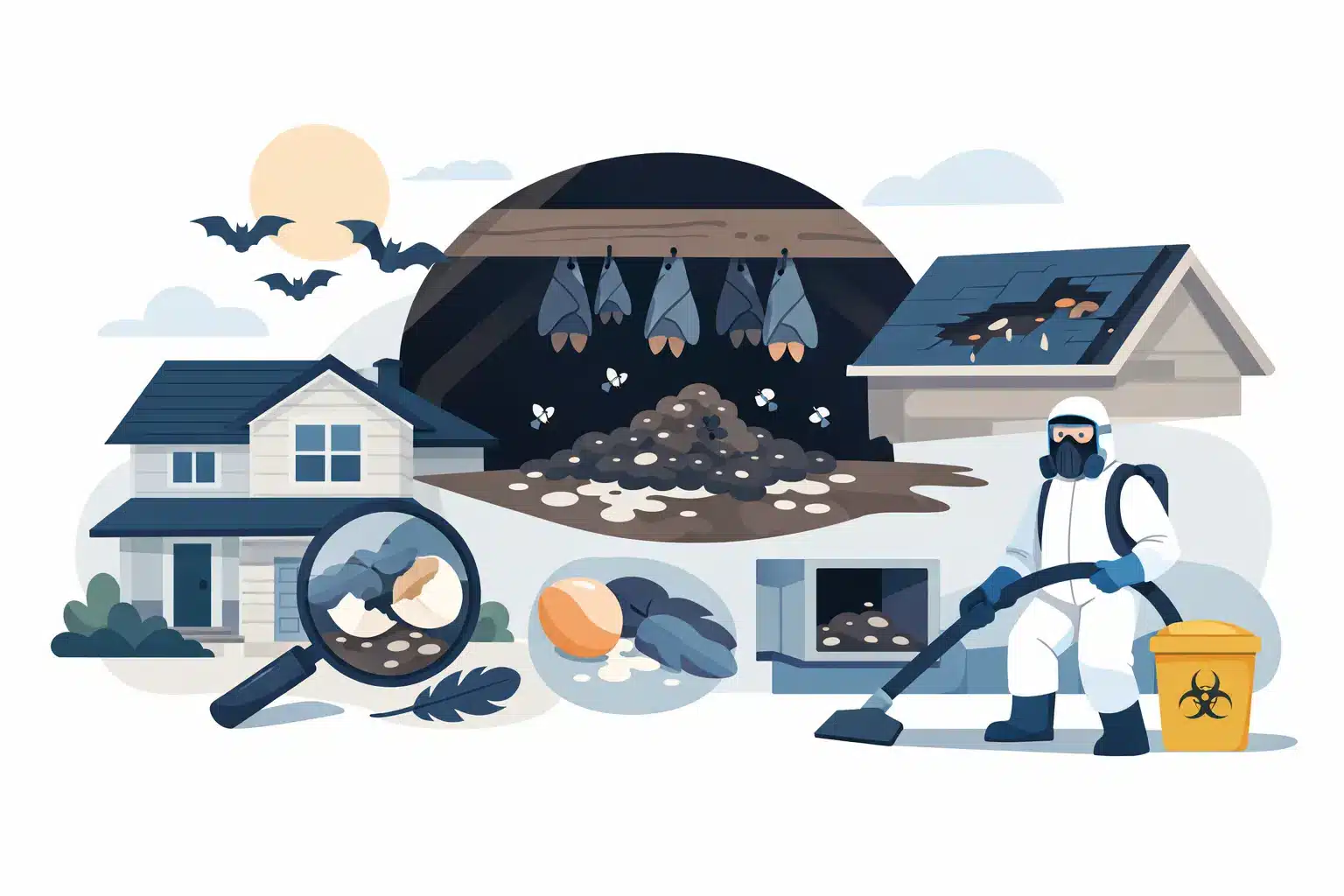
A few droppings near a chimney, attic hatch, or exterior wall can become a much larger property issue faster than most owners expect. The top signs guano cleanup is needed are not limited to what you can see on the floor. Odor, staining, insulation damage, insect activity, and airborne dust risks can all point to a bat colony that has been active for longer than it appears.
Bat guano should never be treated as ordinary dirt or swept up as part of a weekend cleanup. A proper response starts with identifying the source, safely excluding bats from the structure when appropriate, and removing contamination without spreading it into occupied areas. Every Bat Deserves a Home, Just Not Yours.™
Top Signs Guano Cleanup Is Needed
Droppings are collecting below a roofline, vent, or entry point
Fresh bat droppings often appear in small piles below a gap where bats enter and exit. Common locations include beneath roof edges, around gable vents, beside chimneys, behind shutters, and below damaged soffits. The pellets are usually dark, elongated, and may look shiny when fresh.
A growing pile is a clear sign of ongoing activity, not simply an old issue left behind by a single animal. Bats can use openings as small as 3/8 of an inch, so the visible droppings may be below an entry point that is difficult to spot from the ground. On commercial buildings, guano may accumulate on ledges, near loading areas, under signs, or around mechanical penetrations high on the exterior.
Your attic smells musty, sharp, or ammonia-like
Odor is often one of the first signs homeowners notice, especially during hot, humid Midwest summers. As guano and urine build up in an attic, wall void, church steeple, or utility space, the smell can become strong enough to drift into living and working areas.
The odor may worsen after rain or when the attic heats up. That does not always mean the entire attic needs restoration. It depends on how long bats were present, the size of the colony, the condition of insulation, and whether moisture has reached framing or ceiling materials. An inspection can separate a limited cleanup from a deeper remediation project.
You hear scratching, chirping, or fluttering overhead
Bats are most active around dusk and dawn, but people may hear them shifting in an attic or wall cavity during the day. Light scratching, faint chirping, or fluttering near upper walls can accompany a guano problem because the colony is still occupying the building.
Cleanup alone will not solve an active bat issue. Removing droppings before exclusion can leave the same entry points open for bats to return and contaminate the space again. Proven exclusion methods allow bats to leave without trapping them inside, followed by permanent sealing of qualifying entry points and cleanup of affected materials.
Attic insulation looks flattened, matted, or discolored
Guano and urine can compress insulation and reduce its ability to perform. In more established infestations, insulation may look darkened, clumped, or crusted beneath roosting areas. You may also see staining on rafters, sheathing, drywall, or around an attic access panel.
Property owners sometimes assume that a few inches of affected insulation can simply be covered with new material. That can hold odor and contamination in place. In minor cases, targeted removal may be enough. When the contamination is widespread, removing affected insulation and treating the area is often the more responsible long-term option.
Stains or residue are appearing on walls, ceilings, and exterior surfaces
Brown or dark streaks around an exterior opening may be a mixture of oils, urine, and droppings carried from a bat roost. Inside, ceiling stains can develop when waste and moisture accumulate above drywall. These signs deserve attention before they become a repair issue.
Staining does not automatically prove bats are the cause. Birds, rodents, roof leaks, and insects can create similar-looking evidence. That is why accurate identification matters. A bat specialist can determine whether the material is guano, locate active access points, and recommend cleanup based on the actual conditions rather than guesswork.
Insects are showing up near the attic or affected rooms
Guano can attract insects, including flies, beetles, and other scavenging pests. If you notice an unusual number of insects around an attic hatch, upper-level windows, light fixtures, or a room below a suspected roost, accumulated waste may be part of the problem.
This is especially relevant for apartments, offices, schools, churches, and other shared buildings. A contamination issue in an upper void can affect areas far beyond the original entry point. Facility managers should act early to protect occupants, prevent complaints, and avoid turning a contained wildlife issue into a larger sanitation concern.
You find dry, dusty droppings when opening a rarely used space
Old guano can become dry and break apart easily. This is the point where well-meaning cleanup attempts can create unnecessary exposure. Avoid vacuuming with a household vacuum, dry sweeping, using a leaf blower, or disturbing piles without the correct containment and protective equipment.
Bat droppings may contain fungal spores, and dust from accumulated waste can be a health concern when inhaled. Risk varies based on the amount of material, ventilation, disturbance, and individual health factors, but the practical guidance is straightforward: do not create dust. Professional guano cleanup uses controlled removal methods, appropriate personal protection, and careful disposal practices designed to limit spread through the property.
Why Bat Exclusion Should Come Before Cleanup
A clean attic is not a protected attic if bats can still enter. The order of work matters. First, a qualified professional identifies likely entry points and confirms bat activity. Next, humane one-way exclusion devices are installed so bats can exit but cannot return. Once the colony has cleared and exclusion work is complete, guano cleanup and repairs can move forward.
Timing also matters. Bat work must account for local conditions and the maternity season, when non-flying pups may be present. Sealing a building at the wrong time can trap young bats inside and create a more serious animal welfare and property problem. A specialist will recommend a plan that protects your building while treating bats humanely.
What Professional Guano Cleanup Should Address
A proper cleanup is more than picking up visible droppings. The scope should reflect the level of contamination and the areas affected. On a small exterior ledge, the work may be limited to safe removal and sanitizing. In a heavily used attic, it may involve containment, removal of impacted insulation, surface treatment, odor control, and recommendations for restoring insulation performance.
The goal is not to oversell a full attic replacement when targeted work will solve the problem. It is also not to leave contaminated material behind simply because it is out of sight. Experienced evaluation is what helps property owners make that distinction with confidence.
When to Schedule an Inspection
Schedule an inspection promptly if you see droppings, smell persistent attic odor, hear bat activity, or find staining near upper structural gaps. The earlier the issue is identified, the more options you typically have for limiting cleanup costs and avoiding damage to insulation, finishes, and building systems.
For homeowners, prompt action protects the spaces your family uses every day. For property managers and commercial operators, it helps protect occupants, maintain a professional environment, and prevent a small maintenance concern from becoming an operational disruption. CP Bat Mitigation provides specialized bat inspections, humane exclusion, and guano cleanup for properties that need a permanent answer.
If you suspect bats or guano at your property, leave the area undisturbed and have it evaluated before cleaning, sealing, or renovating around the suspected roost. A careful inspection is the best first step toward a bat-free building and a clean, protected space.