

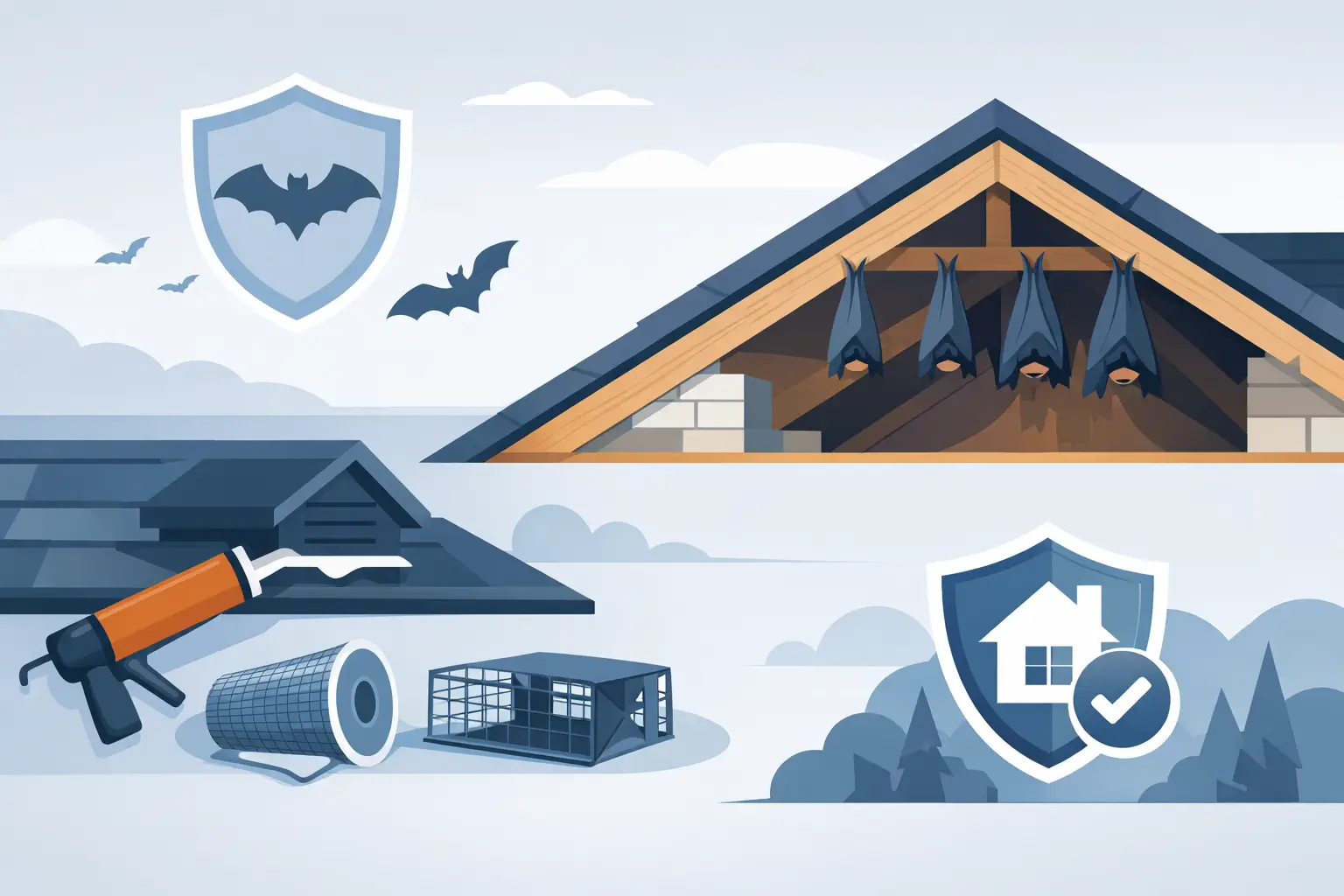
A bat can enter an attic through an opening as small as 3/8 of an inch. That means a gap that looks harmless from the ground can become a regular access point for a colony. The top attic bat prevention tips are not about spraying repellents or making the attic unpleasant. They are about finding every active and potential entry point, using humane exclusion at the right time, and making repairs that hold up through Midwest weather.
For homeowners, churches, apartment properties, and commercial buildings, prevention protects more than quiet sleep. It helps prevent guano buildup, odors, insulation damage, and the stress of discovering bats inside occupied areas. Every Bat Deserves a Home, Just Not Yours.™
Start With an Exterior Inspection, Not the Attic
Most successful bat prevention begins outside. Bats usually enter along rooflines, at construction transitions, and through narrow gaps that are difficult to see without a close inspection. Looking only inside the attic can reveal where bats have been, but it often does not reveal every route they use to get in.
Inspect the building in daylight, then watch it again near sunset. A professional inspection is especially valuable on steep roofs, tall commercial buildings, older homes, and structures with multiple additions. Bats may exit from one visible gap while using several other openings that become active once the first route is closed.
Pay special attention to areas where materials meet or shift. Common entry locations include roof-to-wall joints, fascia gaps, soffits, ridge vents, gable vents, chimney flashing, loose siding, warped trim, and openings around pipes or utility lines. Brick and stone buildings can also have accessible weep holes, mortar gaps, or cracks near the roofline.
Look for evidence, but do not rely on it alone
Small dark droppings below a gap, staining on siding, oily rub marks, and chirping around dusk can indicate active bat use. However, a clean-looking opening is not proof that it is unused. Weather can wash away droppings, and bats can enter high on a structure where evidence is hard to spot.
A thorough inspection considers the whole building envelope. This matters because sealing only the most obvious hole is one of the main reasons bat problems return.
Never Seal an Active Bat Entry Point Without Exclusion
Closing a hole while bats are still inside can trap them in the attic, wall voids, or living space. Trapped bats may die, create odor problems, or seek another way out through vents, light fixtures, or gaps around interior trim. A rushed repair can turn an attic issue into an indoor wildlife issue.
Humane exclusion is the proven alternative. It allows bats to leave through one-way devices while blocking their return. Once the bats have exited, the remaining access points can be permanently sealed with appropriate materials.
This process is more involved than installing a single device over one hole. Before exclusion devices go up, all secondary gaps must be identified and sealed. Otherwise, bats simply leave through the one-way device and re-enter through another opening.
Timing is part of humane prevention
Bat exclusion should not be performed during the maternity season when flightless young may be inside. In the Upper Midwest, timing varies by species and weather, but summer is often a sensitive period. Excluding adult bats when pups cannot fly leaves young bats trapped behind, which is neither humane nor effective.
Winter also requires judgment. Some bats may hibernate in buildings, while others may move during warmer periods. A bat specialist can identify the activity pattern and recommend a safe, legal plan based on the season and the property.
Seal Gaps With Durable, Building-Appropriate Materials
After safe exclusion is complete, permanent sealing is the work that keeps bats from returning. Caulk alone may work for a very narrow, stable crack, but it is not a one-size-fits-all repair. Buildings expand, contract, settle, and face wind-driven rain, snow, and ice. The repair method needs to match the location and material.
For gaps along rooflines and construction joints, durable flashing, metal mesh, high-quality sealant, and properly fitted trim may be needed. Damaged soffits, loose fascia, or deteriorated siding should be repaired rather than covered over. On commercial properties, larger gaps around utility penetrations and roof transitions may require coordinated work with roofing or maintenance teams.
Avoid foam as the only line of defense. Some materials can deteriorate, pull away, or be damaged by weather and wildlife. A lasting bat-proofing repair should be secure, cleanly installed, and appropriate for the structure.
Protect Vents Without Blocking Ventilation
Attic ventilation is necessary for moisture control and roof performance, but unprotected vents can provide direct access to bats. The solution is not to block ventilation. It is to screen and secure it correctly.
Gable, roof, and soffit vents should be checked for torn screens, missing louvers, warped frames, and gaps around the outside edge. Chimneys should have a properly fitted cap that allows exhaust to function while preventing wildlife access. Dryer vents require special care because they must remain operational and should never be covered with standard mesh that creates a lint and fire hazard.
The right screening material and installation method depend on the vent type. Fine mesh may restrict airflow or collect debris in some applications, while larger mesh may not stop bats. This is one reason professional prevention is more reliable than a quick hardware-store fix.
Keep Roof and Exterior Maintenance From Becoming Bat Access
Many attic bat issues begin with ordinary maintenance problems that get worse over time. A lifted shingle edge, a loose piece of fascia, deteriorated mortar, or a small separation at a dormer can create enough space for bats to enter.
Add an exterior check to your seasonal maintenance routine, especially after hail, high winds, heavy snow, or roof work. Look up at the roofline from different angles, and inspect areas that are often overlooked, such as behind gutters, around dormers, and where an addition meets the original structure.
Trees should also be managed thoughtfully. Branches touching a roof do not create an entry hole by themselves, but they can make exterior inspections and repairs harder, allow moisture to damage roofing components, and give other wildlife easy access to the structure. Trim branches back with the health of the tree and local conditions in mind.
Do Not Depend on Repellents, Lights, or Noise
Ultrasonic devices, mothballs, bright attic lights, and strong odors are often marketed as simple bat deterrents. They do not solve the actual problem: access to a sheltered roost. At best, these measures may create a short-term disturbance. At worst, they can push bats deeper into inaccessible parts of the building while leaving the entry point open.
Mothballs and chemical products also create unnecessary exposure concerns in areas connected to living spaces. Bats should not be poisoned, and trapping is not a practical long-term prevention strategy for a colony using a building.
The dependable approach is exclusion followed by comprehensive sealing. It addresses why the bats chose the structure and removes their ability to return.
Address Guano and Contamination After the Bats Are Out
Once bat activity has been resolved, inspect the attic for guano, urine staining, damaged insulation, and odor. Small, isolated droppings may be manageable with appropriate personal protective equipment and careful cleaning. Larger accumulations, contaminated insulation, or droppings spread through multiple areas call for professional guano cleanup.
Do not sweep or vacuum dry guano with ordinary household equipment. Disturbing it can put dust into the air. Cleanup should be planned around the amount of material present, the attic’s ventilation, and whether contamination has reached insulation, ductwork, or occupied areas below.
Removing guano is not only about appearance. It helps reduce lingering odor, protects the condition of attic materials, and allows future signs of wildlife activity to be identified more easily.
Know When a Free Professional Inspection Makes Sense
If you see bats leaving at dusk, hear chirping or scratching near the roofline, find droppings in the attic, or notice a bat inside the building, it is time to have the property assessed. This is particularly urgent for buildings with high rooflines, multiple roof sections, historic construction, or repeated bat activity.
CP Bat Mitigation provides specialized bat inspections and safe, humane bat removal for properties throughout South Dakota, Nebraska, Iowa, and Minnesota. A bat-focused inspection can identify active entry points, vulnerable areas, seasonal restrictions, and the repairs needed for long-term protection.
The best prevention work is quiet once it is finished. Bats leave safely, the building is sealed correctly, and your attic returns to being what it should be: protected space above your property, not a home for wildlife.