

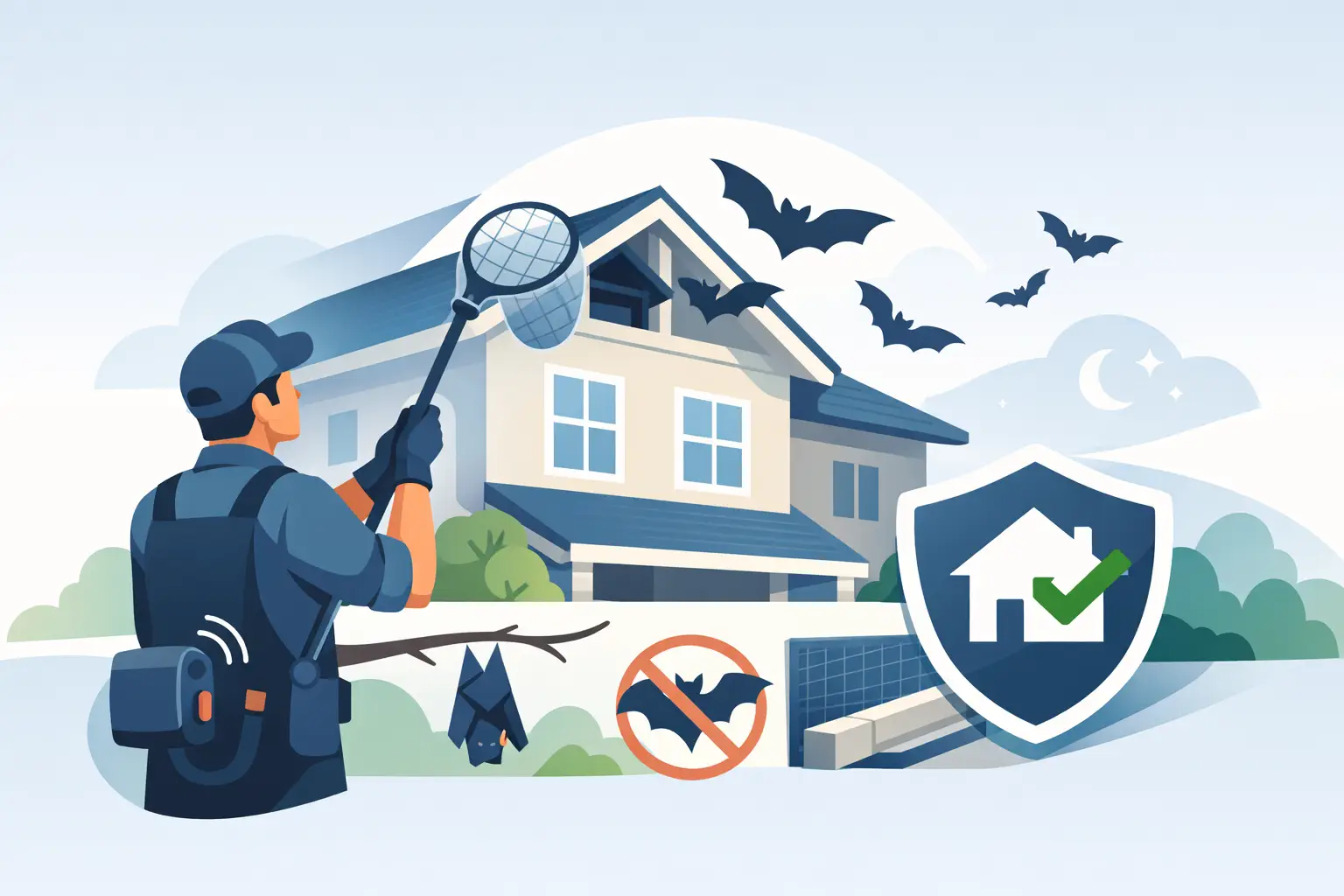
You usually know something is wrong before you ever see a bat. It starts with scratching in the walls at dusk, stains near the roofline, or a sharp ammonia smell in the attic. That is when bat removal and prevention stops being a wildlife question and becomes a property protection issue.
For homeowners, churches, apartment buildings, and commercial properties, the real concern is not just getting bats out. It is getting them out safely, legally, and in a way that keeps them from coming back next season. A quick fix might quiet the problem for a few days. A proper exclusion plan protects the building long term.
What bat removal and prevention actually involves
People often use the word removal to mean trapping or catching bats one by one. In most situations, that is not the right approach. Professional bat removal is usually done through exclusion. The idea is simple: identify how bats are entering, let the colony leave safely, and then seal the structure so they cannot re-enter.
That matters because bats do not infest a building the same way insects or rodents do. They use narrow gaps along fascia boards, ridge vents, roof intersections, soffits, louvers, and masonry joints. Many of those openings are easy to miss unless you work with bats regularly. Missing even one secondary entry point can turn an expensive service call into a repeat problem.
Prevention is the second half of the job, and it is the part that makes the first half worthwhile. Once the colony has exited, vulnerable gaps need to be professionally sealed with materials that hold up to weather, heat, and building movement. If that work is incomplete or poorly matched to the structure, bats often return to the same site because it already served as a successful roost.
Why humane exclusion is the right method
A bat in the attic is stressful. Still, the answer is not poisoning, fumigating, or sealing holes overnight and hoping for the best. Those methods can create a bigger mess, including dead bats in walls, strong odor, and separated pups during maternity season.
Humane exclusion is the proven standard because it works with bat behavior instead of against it. Bats leave the structure to feed, and one-way devices allow them to exit without getting back in. Once activity has stopped, the building can be sealed correctly.
There is also a practical reason to take the humane route. Bats are beneficial animals outdoors, and many species are protected by laws or seasonal restrictions. Removal timing can depend on whether a maternity colony is present. That is one reason true specialists inspect the structure carefully before any work begins. Safe, humane bat removal is not just about ethics. It is about doing the job in a way that avoids preventable damage, health risks, and legal trouble.
Signs you may need professional bat removal and prevention
Some property owners do not realize they have a colony until the contamination becomes hard to ignore. Others spot the issue early because they see bats exiting at dusk. Either way, a professional inspection is the fastest way to confirm what is happening.
Common signs include dark rub marks around gaps, guano accumulation on insulation or exterior surfaces, chirping or scratching sounds, and a persistent odor in upper levels of the building. In commercial spaces, churches, and multifamily buildings, the clues may show up in utility rooms, attics, wall voids, and around roof penetrations.
One bat in a living space does not always mean a full colony is present, but it should never be brushed off. A single bat indoors can point to an attic roost, an open construction gap, or a bat that entered through an interior pathway. It depends on the layout of the building and the time of year.
Why DIY bat control usually falls short
Most failed bat jobs start with good intentions. A property owner finds a gap, sprays foam into it, hangs a bright light in the attic, or tries a store-bought repellent. The problem is that bats are persistent, small entry points are easy to miss, and gimmick products rarely address the source.
Sealing holes before the bats are out can trap them inside. Ignoring high rooflines or hidden construction details leaves active access points open. Even when a do-it-yourself effort seems to work, bats may simply shift to another part of the building.
There is also the cleanup issue. Guano can damage insulation, stain surfaces, and create strong odor. In larger accumulations, it can affect indoor air quality and attract other pests. If the contamination is left in place after exclusion, the building may still smell and feel compromised even though the bats are gone.
How a specialist approaches the job
A proper inspection does more than confirm that bats are present. It maps the colony’s behavior against the structure itself. That means finding primary exits, identifying secondary openings, checking the condition of vents and trim, and looking for contamination in attics or voids.
From there, the exclusion plan should be customized to the property. A single-family home with dormers and ridge vents requires a different strategy than a church steeple, warehouse, or apartment complex. That is where specialization matters. General pest control companies may handle a wide range of nuisance wildlife, but bats require a narrower skill set and a stronger understanding of structure-specific exclusion.
Experienced bat professionals also factor in seasonality. If flightless young are present, exclusion may need to wait until the timing is appropriate. That can be frustrating for property owners who want the issue solved immediately, but rushing the process can create bigger problems. The right plan balances urgency with what will actually hold up.
Prevention is where long-term value shows up
Good prevention work is not flashy, but it is what keeps the phone from ringing again six months later. Every vulnerable construction gap must be addressed, not just the hole where activity is most obvious. On many homes and commercial buildings, that means a detailed sealing program along roof edges, soffits, fascia transitions, vent systems, and other bat-prone areas.
Material choice matters too. Temporary patching may look fine from the ground and fail after one freeze-thaw cycle or a stretch of summer heat. Prevention should be built around the age, material, and design of the structure.
This is also where an industry-leading guarantee has real meaning. A guarantee only matters if the company understands bats well enough to stand behind its exclusion work. That confidence typically comes from experience, high project volume, and a process refined over many years in the field.
What to expect after removal
Once exclusion is complete, cleanup may still be necessary. Guano removal, insulation replacement in severe cases, odor reduction, and sanitation are often part of restoring the space. The level of cleanup depends on how long the colony was present and where waste accumulated.
Some buildings need only targeted cleanup near an entry point. Others have widespread attic contamination that should be handled promptly to protect the building and the people inside it. For property managers and commercial owners, this is not just about cleanliness. It can affect tenant satisfaction, maintenance planning, and liability concerns.
Monitoring can also be useful after the work is done, especially on larger or more complex buildings. A follow-up check helps confirm the structure remains secure and that no overlooked gap is supporting new activity.
Choosing the right bat professional
If you are comparing companies, ask a simple question: do they specialize in bats, or are bats just one line on a long pest control menu? That answer tells you a lot. Bat work requires careful inspection, humane methods, seasonal awareness, proper cleanup, and durable prevention. It is a specialty service.
Look for clear communication, proof of experience, and a process centered on exclusion rather than shortcuts. Free inspections are valuable because they give property owners a clearer picture before committing to work. So are strong reviews, regional experience, and a company that understands the buildings common across the Midwest.
For many property owners, the right partner is one that can move quickly without treating the problem casually. CP Bat Mitigation has built its reputation around that kind of focused service – safe, humane bat removal backed by proven exclusion methods and long-term prevention.
Bats belong in the environment, not in your attic, walls, or steeple. If you are hearing activity, seeing staining, or dealing with guano, the smartest next step is not to wait and see if it gets better. The sooner the structure is inspected, the sooner you can protect the property and keep it that way.