

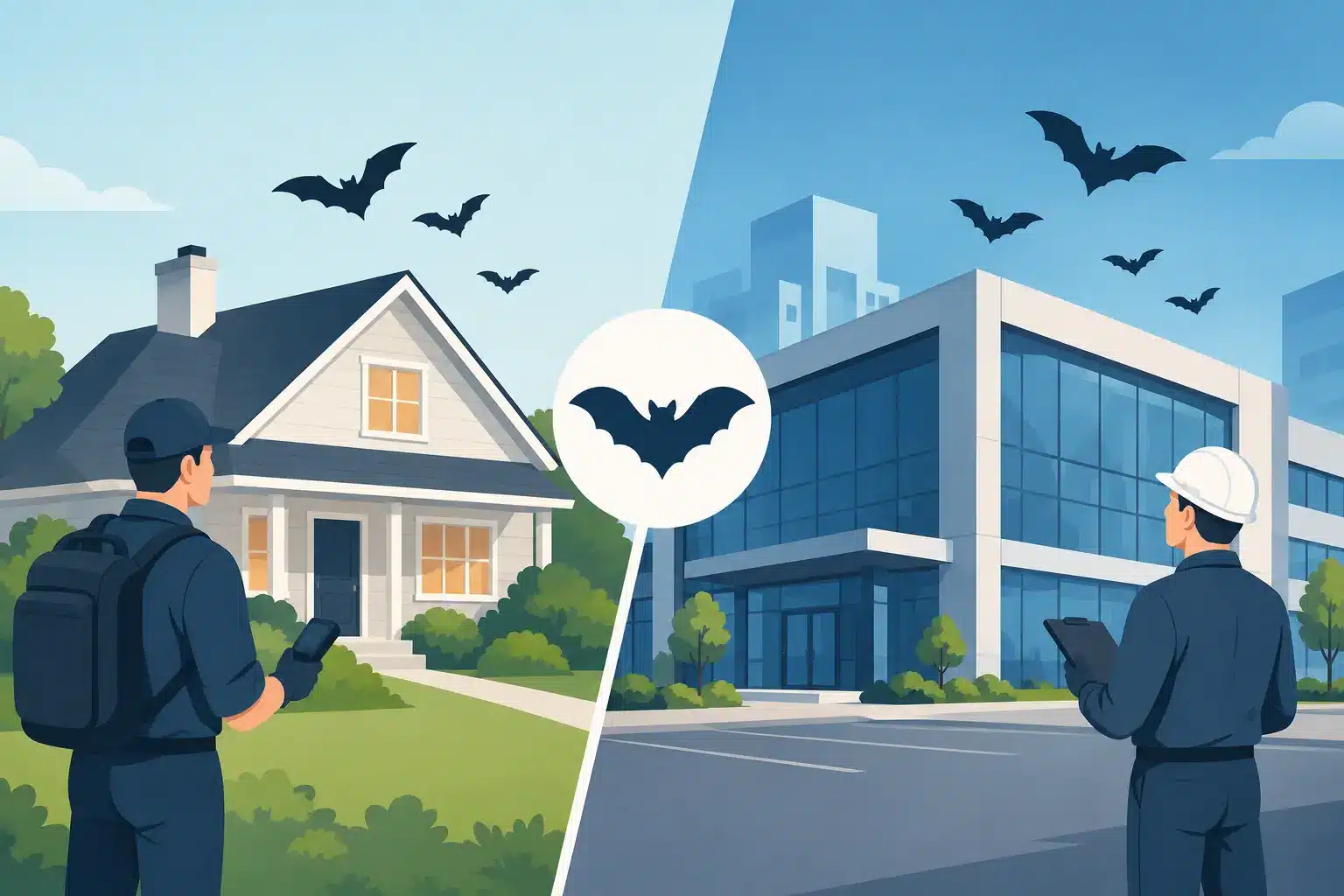
A bat slipping through a gap above a home’s roofline is a serious problem. A colony using a church steeple, apartment complex, warehouse, or school is a property-management event. Residential versus commercial bat services share the same humane goal – get bats out safely and keep them out – but the planning, access, safety procedures, documentation, and cleanup can be very different.
The right solution is not simply a bigger version of a home exclusion job. It starts with understanding how bats are using the structure, who occupies the building, and what must be protected while the work is underway. Every Bat Deserves a Home, Just Not Yours.™
What Both Residential and Commercial Bat Services Require
Whether the property is a single-family home or a large commercial facility, effective bat control depends on exclusion, not trapping or poisoning. Bats should be allowed to exit through properly installed one-way devices while trained specialists seal the secondary entry points around the structure. Once the bats have left, the final exits are closed to prevent a return.
A careful inspection is the foundation of the work. Bats can enter through small construction gaps around rooflines, chimneys, vents, siding transitions, utility penetrations, masonry joints, and areas where different building materials meet. Finding one visible opening is not enough. If the rest of the structure is not addressed, bats may simply relocate to another gap.
Timing matters, too. Bat pups cannot fly during part of the summer maternity season. Excluding adult bats when nonflying pups remain inside can create an animal-welfare issue and leave property owners with odor and cleanup concerns. A bat specialist evaluates the season, the species, colony activity, and local conditions before recommending the proper course of action.
Residential Bat Services: Protecting the Home From the Top Down
For homeowners, the concern is usually personal and immediate. Scratching or chirping in the attic, staining near the eaves, droppings on a deck, or a bat found in a living space can make a home feel unsafe fast. The goal is to protect the family, preserve the house, and prevent a repeat problem without harming the bats.
Residential exclusions are often focused on attics, roof returns, gable vents, chimneys, dormers, and intersections between roofing and siding. Even on a modest-sized home, the work may require detailed ladder access, roof-level inspection, and precise sealing of multiple small gaps. The visible exit point is often only one part of the problem.
Guano cleanup may be needed after exclusion, especially when bats have been present for an extended period. Accumulated guano can stain materials, create odor, attract insects, and affect insulation performance. Cleanup should be handled with appropriate protective practices and containment so contaminated material is not spread through the home.
A residential project is generally more contained than a commercial job, but that does not mean it is simple. Older homes, steep roofs, historic construction, and heavily compartmentalized attics can make access and sealing more involved. A free inspection helps establish whether the issue is a single entry point or a larger colony using multiple areas of the structure.
Commercial Bat Services Require a Wider Plan
Commercial buildings create a different level of responsibility. A bat issue at a warehouse, church, hotel, multifamily property, office building, school, agricultural facility, or healthcare-related site can affect employees, tenants, visitors, operations, and the organization’s reputation. Property managers must consider more than the building envelope. They may also need to coordinate access, safety protocols, scheduling, records, and communication with occupants.
Commercial properties are often larger and more complex. A single facility may have several roof elevations, mechanical rooms, loading docks, expansion joints, parapet walls, decorative facades, utility chases, and long runs of inaccessible soffit or siding. Bats may use more than one area, particularly in buildings that have been renovated or expanded over time.
The exclusion plan needs to account for how the building operates. Work near a customer entrance may need to occur outside business hours. A project involving lifts, roof access, or restricted areas requires site-specific safety coordination. In a multifamily property, tenant communication may be necessary so residents understand what to expect and know whom to contact if they see bat activity during the process.
Commercial service also tends to involve more formal documentation. Building owners and managers may need a clear inspection report, identified areas of concern, recommended scope of work, cleanup recommendations, and a defined warranty or guarantee. This documentation supports informed decisions and helps maintenance teams address future repairs before they become another wildlife entry point.
Why Building Size Is Not the Only Difference
A small commercial building can be more challenging than a large house. A historic church with a tall bell tower, for example, may require specialized access, careful treatment of older materials, and close attention to areas that cannot be easily inspected from the ground. A large modern warehouse may have fewer potential entry points but require lift equipment and a coordinated work plan.
Likewise, a large residence with multiple rooflines and attic sections can require a detailed exclusion strategy. The real difference is not square footage alone. It is the combination of building design, bat activity, occupant exposure, access, contamination level, and operational demands.
Comparing Residential Versus Commercial Bat Services
The most important distinction in residential versus commercial bat services is the scope of risk management. Homeowners usually need a direct path from discovery to permanent protection. Commercial clients need that same permanent protection while also managing building operations, occupant expectations, site safety, and sometimes multiple decision-makers.
Residential service commonly centers on a homeowner and a single structure. Communication is straightforward, and the project can often be completed around the family’s schedule. Commercial service may involve an owner, property manager, maintenance supervisor, tenants, facilities staff, and outside contractors. Clear coordination prevents delays and keeps everyone working from the same plan.
Cleanup requirements can differ as well. A small attic accumulation may call for targeted removal and sanitation. A long-standing colony in a large attic, wall cavity, steeple, or industrial space may require a more extensive mitigation plan. The condition of insulation, ventilation, finishes, and mechanical systems should all be considered before cleanup begins.
Cost also depends on the work required, not simply the property category. A straightforward home exclusion may be less involved than a multi-story commercial project requiring lifts and extensive sealing. But a complicated home can require substantial work, while a small retail building may have a relatively simple entry issue. An inspection provides the information needed for an accurate recommendation rather than a guess based on building type.
What a Permanent Bat Solution Should Include
Whether you own a home or manage a commercial property, be cautious of quick fixes that address only the bats you can see. Sprays, noise devices, temporary patches, and general pest-control approaches rarely solve the building-access issue. If bats can still enter, the problem can return with the next season.
A professional bat mitigation plan should include a full exterior inspection, identification of likely entry and exit areas, humane exclusion methods, durable sealing of secondary gaps, and guidance on guano cleanup when needed. It should also explain timing restrictions and any conditions that could affect the schedule.
For commercial properties, ask how the provider will manage site access, employee or tenant communication, safety requirements, and documentation. For residential properties, ask how the team will protect landscaping, roofing, siding, attic areas, and daily household routines during the project. Good service is not just about removing bats. It is about leaving the property protected and the owner confident about what was done.
When to Schedule an Inspection
Do not wait for a bat to enter a living area or for guano buildup to become obvious. Staining near roof edges, dark rub marks at gaps, persistent chirping near dusk, droppings below eaves, and repeated sightings around a structure all warrant a professional evaluation. On commercial sites, reports from tenants, custodial teams, or overnight staff should be documented and addressed promptly.
CP Bat Mitigation provides specialized, safe, humane bat removal for homes and commercial properties, backed by proven exclusion methods and an industry-leading guarantee. A thorough inspection can clarify the extent of the issue, the appropriate seasonal timing, and the path to long-term protection.
The best next step is simple: treat the first sign of bat activity as a building-envelope concern, not a nuisance to ignore. Early action gives you more options, protects the people who use the property, and gives the bats a chance to move on safely.