

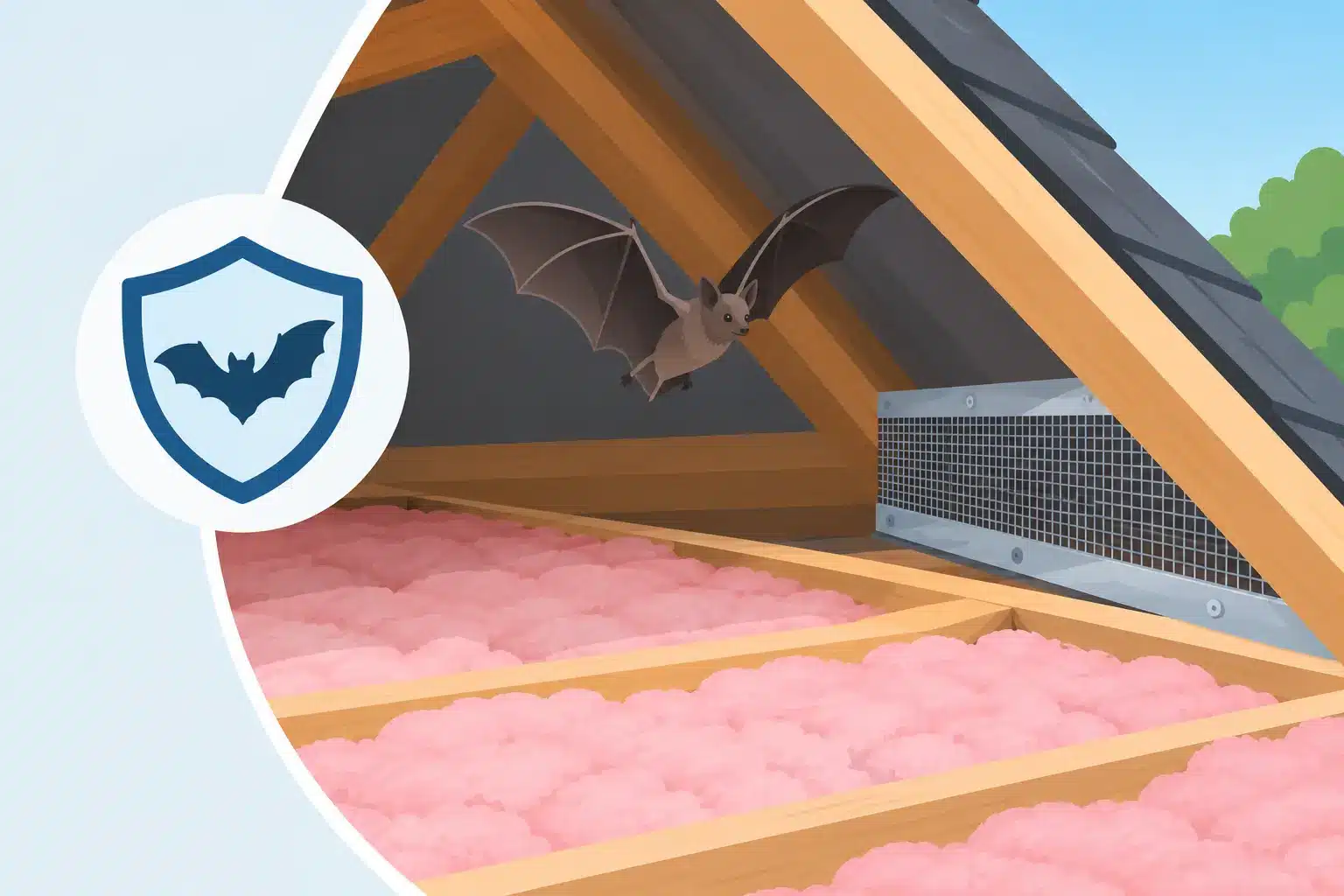
A bat colony can turn an otherwise healthy attic into a sanitation and repair issue faster than many property owners expect. To protect insulation from bat damage, the real priority is not simply getting bats out for one night. It is finding every active entry point, using a humane exclusion process, cleaning contamination safely, and sealing the structure so the colony cannot return.
Bats do not chew through insulation the way rodents do, but their presence can still cause serious damage. Droppings, urine, nesting activity, and repeated traffic across attic materials can flatten insulation, create odor, stain ceilings, and reduce energy efficiency. For homes, churches, apartment buildings, and commercial properties across the Midwest, a permanent solution starts with the building envelope.
How Bats Damage Attic Insulation
Most insulation damage begins below an active roost site. Bats often settle in attic voids, wall cavities, rooflines, chimneys, and gaps around vents. As the colony enters and exits night after night, guano accumulates below its resting area. In a large or long-standing colony, that accumulation can become substantial.
Guano compresses loose-fill and fiberglass insulation, reducing the material’s ability to hold air and control indoor temperature. Urine can create persistent odors and moisture staining. When contamination is widespread, simply removing the visible droppings is rarely enough. Insulation may need to be removed, the attic surfaces treated, and new insulation installed after the building has been secured.
Damage is not always obvious from the attic hatch. Property owners may first notice a sharp odor on hot days, discoloration on a ceiling, scratching or chirping near dusk, or higher heating and cooling costs. These signs warrant an inspection, especially if bats have been seen leaving the structure.
Protect Insulation From Bat Damage With Exclusion
The most effective way to protect insulation from bat damage is humane bat exclusion. This is a controlled process that allows bats to leave the building but prevents them from getting back inside. It is very different from trapping, poisoning, or sealing a hole while bats are still inside.
A trained bat specialist begins by inspecting the entire exterior. Bats can enter through gaps as small as about three-eighths of an inch, including openings at roof intersections, fascia boards, ridge vents, chimney flashing, siding transitions, and utility penetrations. One obvious gap is rarely the whole story. A proper inspection identifies the primary exits as well as the secondary gaps bats may use once the main route is blocked.
One-way exclusion devices are placed at active exit points, while other accessible gaps are sealed with durable, building-appropriate materials. The devices let bats leave to feed but make reentry difficult or impossible. Once the colony is confirmed out, the final entry points can be sealed.
Timing matters. Bat exclusion must account for the species present, local regulations, and maternity season. During periods when nonflying pups may be inside, exclusion can separate young bats from their mothers. That is inhumane and can create odor and sanitation problems inside the structure. An experienced specialist will determine the appropriate approach and timing rather than treating every bat problem the same way.
Why a quick seal-up can make the problem worse
Closing a visible hole without a full inspection may trap bats inside. They can then move deeper into wall cavities, find another route into occupied spaces, or die in inaccessible areas. It may also leave enough secondary gaps for the colony to return after the repair.
A temporary patch can be useful in limited situations, but it should not replace a complete exclusion plan. The goal is to keep bats out without harming them. Every Bat Deserves a Home, Just Not Yours.™
Do Not Clean Guano Before the Bats Are Gone
Cleaning insulation while a colony remains active is usually wasted effort. New droppings and urine will continue to accumulate, and workers may disturb bats or spread contaminated dust through the space. The sequence matters: exclude the bats, confirm the building is secure, then evaluate cleanup and insulation restoration.
Guano cleanup should be handled carefully. Disturbing dry droppings can release dust and fungal spores, and an attic may also contain parasites or other contaminants. The right level of cleanup depends on the amount of guano, the type of insulation, the location of contamination, and whether odor has migrated into living or working areas.
For a small, isolated amount, careful spot removal may be possible. For widespread contamination, professional removal is the safer choice. This often involves controlled removal of damaged insulation, HEPA-filtered vacuuming where appropriate, surface treatment, odor control, and replacement insulation after the attic is clean and dry.
Avoid sweeping dry guano, using a leaf blower, or vacuuming it with ordinary household equipment. Those methods can spread fine particles rather than contain them. If you must enter a suspected bat-contaminated attic before professional service, limit disturbance and do not handle droppings with bare hands.
Know When Insulation Can Stay and When It Should Go
Not every bat issue requires full insulation replacement. If bats were present briefly and contamination is confined to one small, accessible area, the insulation may be salvageable after targeted cleanup. A thorough inspection can help distinguish a minor cleanup from a larger restoration project.
Replacement is more likely when insulation is heavily compressed, saturated with urine, mixed with a large volume of guano, or carrying an odor that persists after exclusion. Loose-fill insulation is particularly difficult to clean thoroughly once contaminated. In commercial facilities and multi-unit properties, cleanup decisions may also be influenced by occupant safety standards, maintenance policies, and the need to document the condition of the space.
The trade-off is straightforward: replacing insulation costs more upfront, but leaving contaminated material behind can lead to recurring odors, reduced efficiency, and questions from future buyers, tenants, or inspectors. A qualified bat mitigation professional should explain what is necessary, what is optional, and why.
Keep Bats From Reaching Your Insulation Again
Long-term prevention depends on sealing the structure, not on repellents. Bright lights, ultrasonic devices, mothballs, and strong-smelling products do not provide dependable exclusion. They can also drive bats farther into the building instead of out of it.
After humane exclusion, maintain the areas bats commonly use to gain access. Watch for loose soffits, gaps around rooflines, damaged vent screens, failing caulk, separated siding, and open construction joints. If roofing, siding, chimney, or ventilation work is planned, ask the contractor to preserve any professional bat-proofing already in place.
Property managers should also pay attention to repeat reports from tenants. A bat seen in a hallway, top-floor unit, or stairwell may indicate an opening into a wall or attic void, not just a single bat that wandered indoors. Acting early can prevent a small issue from becoming a colony and cleanup project.
Get the Order of Work Right
Protecting your insulation is a three-part job: remove bats humanely, seal every meaningful entry point, then clean or replace contaminated material. Skipping any one of those steps invites repeat damage or leaves the property with the same odor and sanitation concerns after the bats are gone.
CP Bat Mitigation brings more than 30 years of bat-focused experience to inspections, proven exclusion methods, and guano cleanup planning for residential and commercial properties. If you hear activity in the attic, see bats at dusk, or notice signs of contamination, schedule an inspection before another season of activity turns a manageable repair into a larger restoration.