

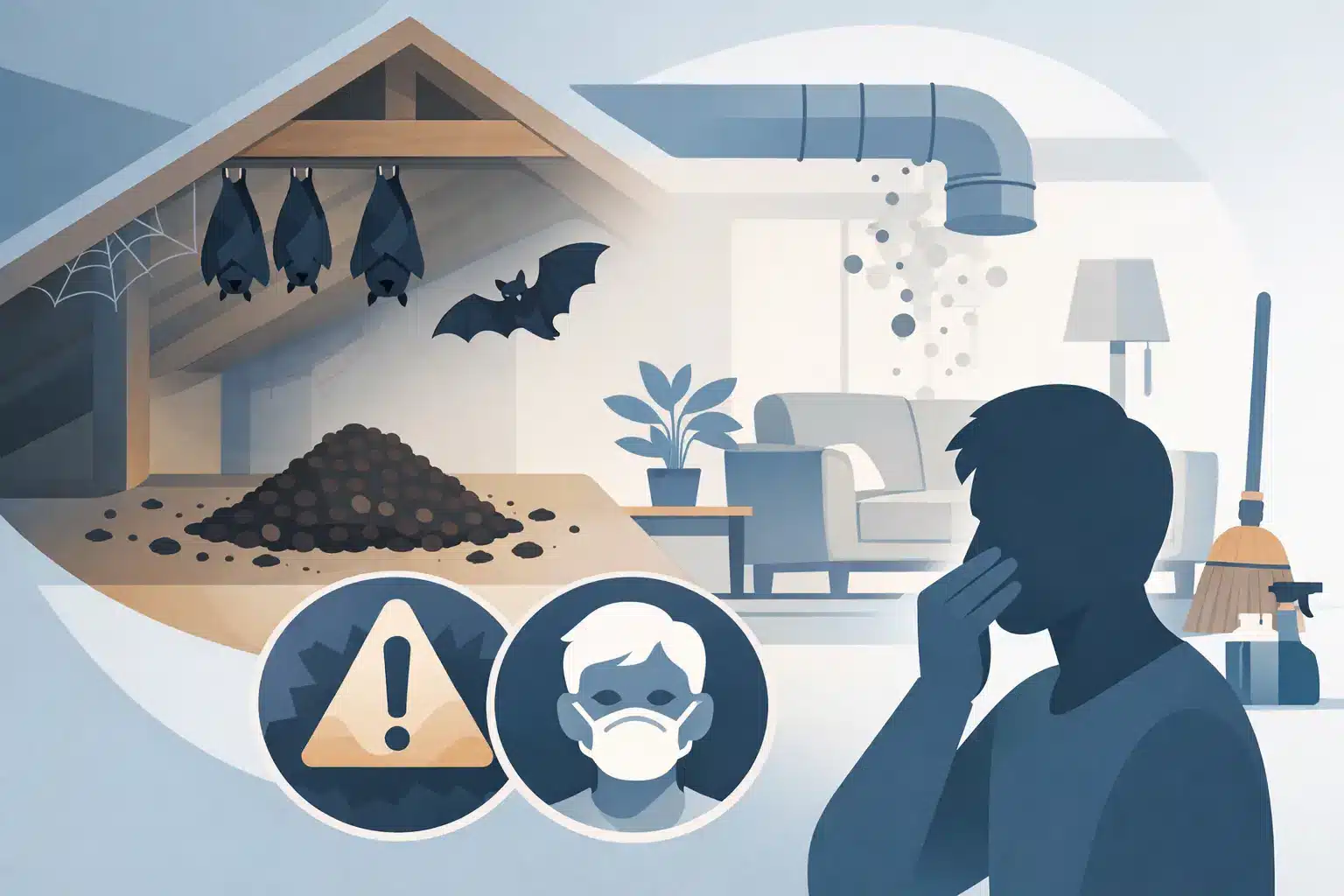
A few droppings beneath an attic roost can turn into a much larger property concern than most homeowners realize. So, is bat guano hazardous indoors? It can be, particularly when droppings have accumulated in an enclosed area and are disturbed during cleaning, remodeling, or attic access. The right response is not panic. It is to keep people out of the affected space, identify where bats are entering, and arrange for safe, humane removal and proper cleanup.
Bat guano is not simply an odor problem or a cosmetic mess. In homes, churches, apartment buildings, and commercial properties, it can affect air quality, damage materials, attract insects, and create sanitation concerns that grow with the size and age of the colony. A small, fresh deposit on a porch is not the same situation as years of accumulation in insulation or wall cavities. The location, quantity, moisture level, and whether the material has been disturbed all matter.
Why Bat Guano Can Be Hazardous Indoors
The primary health concern associated with bat droppings is a fungus that can grow in soil and accumulated bird or bat droppings. When contaminated material dries out and is disturbed, microscopic particles can become airborne. People can breathe those particles into their lungs, potentially exposing them to histoplasmosis, a respiratory illness.
Most exposures do not automatically lead to illness, and symptoms can range from mild to more serious. However, risk is more concerning for people with weakened immune systems, infants, older adults, and anyone with chronic lung conditions. Because it is impossible to judge a cleanup area safely by sight alone, treating a significant guano accumulation with caution is the sensible approach.
Guano can also create problems beyond fungal exposure. Droppings and urine can soak into insulation, ceiling materials, wood, and stored belongings. That contamination can produce lingering odor, staining, moisture-related deterioration, and insect activity. In a commercial setting, the consequences may include tenant complaints, restricted areas, cleanup costs, and concerns about sanitation standards.
It is also worth separating two common bat-related worries. Rabies is associated with direct contact with an infected bat, not with guano. If a bat was found in a room with a sleeping person, young child, or someone unable to reliably report contact, contact a healthcare professional or local health authority promptly for guidance. Guano cleanup is a separate issue that requires appropriate containment and protective procedures.
When Indoor Bat Guano Becomes More Serious
A few droppings in an open, ventilated outdoor location are handled very differently than a large attic accumulation. Indoor conditions can allow contamination and odor to remain concentrated, especially in confined spaces with poor airflow.
The situation deserves prompt professional evaluation when droppings are found in an attic, crawl space, wall void, chimney, suspended ceiling, mechanical room, or occupied living area. It is also more urgent if material falls through light fixtures or ceiling gaps, if insulation is visibly matted or stained, or if a musty odor is spreading through the building.
Watch for these signs that the issue may be more extensive than it first appears:
- Repeated droppings below rooflines, vents, chimneys, or attic access points
- Chittering or scratching sounds around dusk and dawn
- Brown or dark staining near exterior gaps and entry points
- Strong odor, insect activity, or droppings appearing inside after ceiling or wall work
Bats can enter through surprisingly small gaps around roof intersections, fascia, siding transitions, vents, and utility penetrations. Cleaning visible droppings without addressing those access points only treats the evidence, not the cause. If the colony remains active, new contamination can begin immediately.
Do Not Sweep, Vacuum, or Blow It Around
The most common cleanup mistake is disturbing dry guano with ordinary household methods. Sweeping, brushing, shop-vacuuming, or using a leaf blower can send dust into the air and spread material into areas that were previously unaffected. Opening an attic hatch beneath a heavy accumulation can also release odor and particles into the home.
Avoid entering a heavily contaminated space without proper respiratory protection, disposable protective clothing, gloves, and a plan to contain waste. Standard dust masks and ordinary household vacuums are not designed to manage this type of contamination safely. Trying to save money with a rushed DIY cleanup can leave residue in insulation, HVAC pathways, or hard-to-reach cavities that continue to cause odor and concern.
If you discover a limited amount of droppings in a living space, keep children and pets away from the area and avoid handling any bat that may be present. Take a photo from a safe distance if possible, then arrange an inspection. A specialist can determine whether the droppings are from bats, rodents, or another animal and identify the actual source.
The Right Order: Exclusion First, Cleanup Second
A lasting solution begins with bat exclusion. This is the humane process of allowing bats to leave the structure through purpose-built one-way devices while sealing the secondary gaps they could use to get back inside. Once the bats have exited, the remaining primary access points can be secured to prevent reentry.
Timing matters. Bats are valuable wildlife, and exclusion should be planned around local maternity periods when flightless young may be present. Sealing an active roost at the wrong time can trap bats inside the building or separate pups from their mothers. That is bad for the animals and can make the property problem worse.
After a proper exclusion, cleanup can be completed without the risk of fresh guano accumulating behind the crew. The exact scope depends on the property. A light surface cleanup may be enough in one situation, while another may require removal of contaminated insulation, detailed cleaning of framing and surfaces, odor treatment, and repairs to damaged materials.
At CP Bat Mitigation, the focus is on solving the entire bat problem through safe, humane bat removal, proven exclusion methods, and targeted guano cleanup. With more than 30 years of specialized experience, the goal is not simply to make an attic look cleaner for a day. It is to protect the building from continued bat entry and help restore a sanitary, usable space.
What Professional Guano Cleanup Should Address
A qualified bat mitigation team should inspect both the contamination and the building conditions that allowed it to develop. That includes locating entry points, estimating the affected areas, evaluating insulation and structural surfaces, and identifying whether droppings have reached occupied spaces or ventilation components.
Cleanup should be performed with containment measures that limit the movement of dust and debris into clean areas. Contaminated waste should be removed and handled appropriately, rather than pushed deeper into insulation or hidden under new material. If insulation is heavily affected, replacement may be the more practical option because odor and contamination can remain embedded in the fibers.
Property owners should also expect clear communication about what can be cleaned, what may need replacement, and which repairs are necessary to keep bats out. There is no one-size-fits-all answer. A century-old church attic with a long-standing colony requires a different plan than a newer home with a recent entry point near a roof vent.
Protect the Property Before the Next Roosting Season
Once bats are out and the cleanup is complete, prevention becomes the investment that protects everything else. Durable sealing around rooflines, vents, chimneys, siding gaps, and other vulnerable transitions helps prevent a returning colony from finding its way back indoors. Seasonal exterior checks are especially useful after wind damage, roof repairs, or construction work that may open new gaps.
If you suspect bat activity or have found droppings inside your home or building, do not wait for the odor or damage to get worse. A professional inspection can establish what is happening, where bats are entering, and what it will take to resolve the issue humanely. Every bat deserves a home, just not yours.