

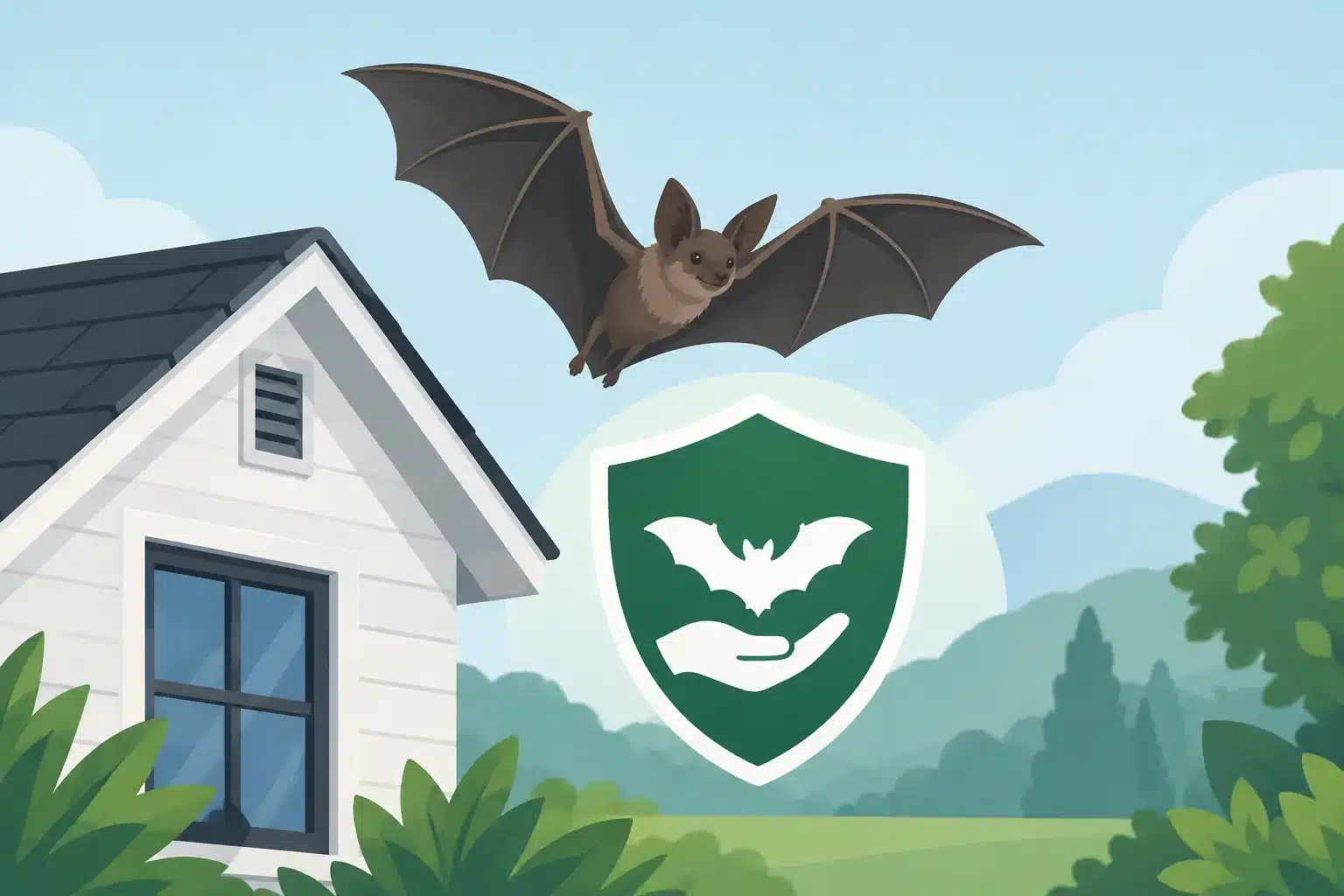
Bats in an attic are not just a nighttime noise problem. A single gap around a roofline, vent, chimney, or utility opening can give a colony access to warm shelter, then lead to odor, guano buildup, staining, and repeat activity year after year. A humane bat control guarantee gives homeowners and property managers a clear standard for what happens next: bats leave safely, access points are addressed, and the building is protected from future entry.
That is very different from a quick removal attempt. Effective bat control is a property-protection service built around bat behavior, careful inspection, timing, and exclusion work that holds up after the service truck leaves.
A Humane Bat Control Guarantee Starts With Exclusion
Humane bat removal means letting bats exit the structure without allowing them back inside. Professionals accomplish this with one-way exclusion devices installed at active exit points. When bats leave to feed at dusk, the devices allow them to get out but prevent re-entry.
This approach protects both the animals and the people using the building. Bats play a valuable role in the environment, especially through insect control, but they do not belong in attics, wall voids, churches, commercial rooflines, or living spaces. As CP Bat Mitigation says, “Every Bat Deserves a Home, Just Not Yours.™”
A meaningful guarantee should be based on this proven exclusion method, not on trapping, poisoning, or simply closing an opening while bats may still be inside. Those shortcuts can create a much larger problem, including dead animals in walls, strong odors, and bats searching for new routes into occupied areas.
The Inspection Is Part of the Promise
No guarantee is stronger than the inspection behind it. Bats can enter through openings as small as about three-eighths of an inch, and those openings are often high on the structure where an untrained eye will miss them.
A thorough bat inspection looks beyond the obvious hole. It evaluates roof intersections, fascia boards, ridge vents, gable vents, chimney gaps, utility penetrations, siding transitions, soffits, loose flashing, and areas where building materials have shifted over time. The technician should also identify staining, droppings, rub marks, and other evidence that shows where bats are actively entering and exiting.
For larger buildings, the process may require more than one observation period. A church steeple, apartment complex, warehouse, school, or agricultural building can have multiple entry points across a large exterior. The right solution depends on the structure, the extent of activity, and the condition of the building envelope.
Sealing Matters as Much as the Exit Device
One-way devices solve the immediate exit problem. Exclusion repairs solve the return problem.
A humane bat control guarantee should clearly address how the technician will seal secondary openings once the bats have an active route out. This is where broad pest-control work and specialized bat mitigation often differ. A bat specialist understands that sealing only the main opening can push bats toward another unprotected crack just a few feet away.
Permanent exclusion work typically involves durable materials and detail-focused repair at vulnerable points around the home or commercial property. The objective is not to make the building look temporarily patched. It is to close the access routes bats use while preserving ventilation and the normal function of the structure.
What the Guarantee Should Actually Cover
Guarantees can vary by company, building type, and service scope, so property owners should always ask for the terms in writing. Still, a dependable guarantee generally reflects three commitments: the bats are excluded humanely, identified entry points are sealed according to the service plan, and the company stands behind that work if bat activity returns through the treated areas.
The details matter. Ask whether the guarantee applies to the entire structure or only specific repairs. Find out how long coverage lasts, what response is provided if you see new activity, and whether certain pre-existing building conditions require separate repair. Older homes, damaged roofs, deteriorated siding, and complicated commercial structures may need additional work to create complete protection.
A professional should explain these boundaries plainly. A guarantee is not a vague marketing phrase. It is a service commitment tied to the inspection findings, exclusion design, and repairs performed.
Humane Does Not Mean Waiting and Hoping
Some property owners delay action because they do not want bats harmed. That concern is understandable, but humane service does not require accepting an infestation. Waiting can allow guano and urine to accumulate, increase odor, damage insulation, and create more opportunities for bats to spread through wall voids or upper floors.
The humane answer is prompt, properly timed exclusion. Timing is especially important when young bats are present and unable to fly. Sealing an active maternity colony at the wrong time can separate mothers from pups, which is neither humane nor effective. A qualified bat professional will evaluate seasonal conditions and recommend an approach that prevents accidental trapping.
This is one reason do-it-yourself sealing often goes wrong. Homeowners may locate one visible opening and fill it with foam or caulk, only to discover bats inside the living area later or find that the colony moved to a second opening. The materials may be inexpensive, but the cost of correcting a failed attempt can be much higher.
Guano Cleanup Is a Separate but Important Decision
Exclusion stops new activity. It does not remove the guano already left behind.
If bats have occupied an attic, bell tower, wall cavity, or commercial structure for an extended period, cleanup may be necessary to restore sanitation and reduce odor. The amount of cleanup needed depends on the size of the colony, how long it was present, the accessibility of the affected area, and whether insulation has been contaminated.
A proper assessment should distinguish between a few scattered droppings and a substantial accumulation requiring specialized removal. Property owners should avoid disturbing heavy guano deposits without appropriate protection, since dust and contaminants can become airborne. Addressing the source first through exclusion is essential. Cleaning before the bats are out simply invites a repeat mess.
Questions to Ask Before You Hire a Bat Control Company
The best time to understand a guarantee is before work begins. Ask whether the company specializes in bats, how it confirms active entry points, and whether it uses one-way exclusion devices rather than lethal methods. Ask what repairs are included, how seasonal timing is handled, and what happens if bat activity returns.
Also ask who will perform the work. Bat exclusion often requires careful exterior access and repair skills, not just a general pest-control visit. A company with deep bat-specific experience can recognize the subtle evidence and structural vulnerabilities that lead to repeat infestations.
For commercial managers, include questions about occupant scheduling, roof access, safety requirements, and documentation. A bat issue at a daycare, multifamily property, retail center, church, or warehouse needs a plan that protects occupants while minimizing disruption to the property.
Protection That Respects Wildlife and Your Property
A bat-free building should not depend on luck, temporary repellents, or repeated emergency calls. It should come from a careful inspection, safe one-way exclusion, complete sealing of relevant access points, and a guarantee that gives you confidence in the work.
If you are hearing scratching above the ceiling, seeing bats near the roofline at dusk, or noticing droppings around an exterior opening, act before a small entry point becomes a larger sanitation and property problem. Humane exclusion lets bats return to the outdoors where they belong while helping your home or business stay protected for the long term.