

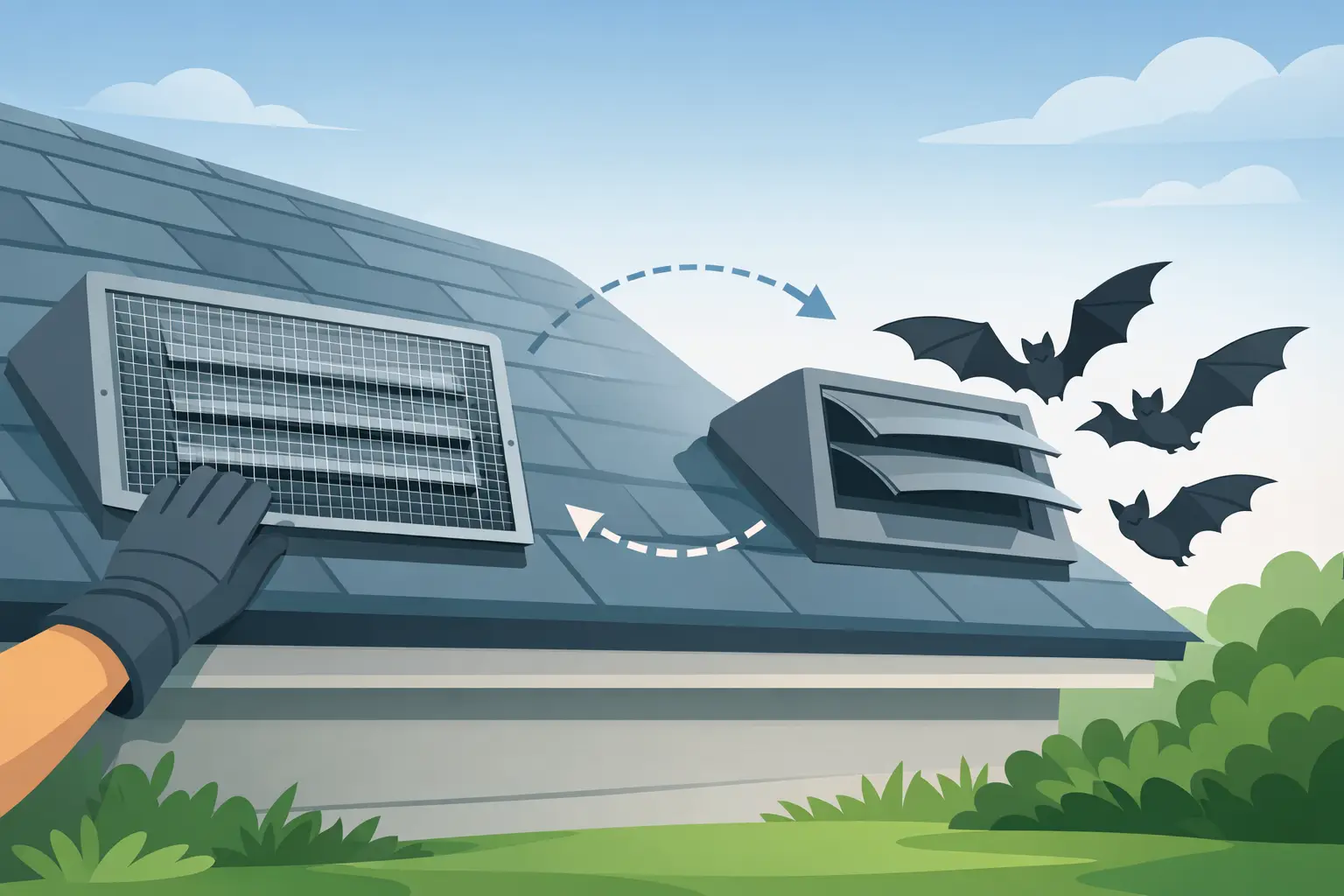
A bat slipping through a roof vent can turn a small exterior opening into an attic colony, complete with scratching sounds, odor, and guano contamination. Knowing how to bat proof vents starts with one rule that protects both your property and the bats: never seal a vent until you know bats have safely exited and no young are trapped inside.
Bats are valuable wildlife, but they do not belong in your attic, wall cavity, church steeple, or commercial building. Proper bat-proofing closes the access points they use while preserving the ventilation your building needs. The goal is permanent prevention through safe, humane bat removal – not a quick patch that creates a larger problem.
Why Vents Attract Bats
Bats do not need a large hole to enter a structure. Many species can fit through gaps as small as 3/8 of an inch. A loose vent screen, open louver, damaged soffit vent, or gap around a roof exhaust cap can provide exactly the protected, warm space a bat is seeking.
Attic vents are especially common entry points because they connect directly to quiet, dark cavities. Ridge vents, gable vents, turbine vents, soffit vents, roof exhaust vents, and damaged chimney caps all deserve attention during an inspection. On larger buildings, bats may also use wall louvers, mechanical-room vents, decorative vents, and gaps where vent piping meets siding or masonry.
The challenge is that many vents must remain open to perform their intended function. Blocking airflow can contribute to moisture problems, heat buildup, roof damage, or unsafe appliance operation. Effective bat-proofing means reinforcing the opening with the right material and configuration, not simply covering every vent with whatever is available.
Inspect Before You Seal Anything
The most common bat-proofing mistake is sealing an entry point while bats are still inside. That can trap adult bats in the building, force them into living areas, or separate flightless pups from their mothers during the maternity season. It can also leave dead animals in inaccessible voids, creating odor and sanitation issues.
Start with an exterior inspection near sunset. Watch the suspected vents and roofline for bats emerging to feed. Look for dark staining or oily rub marks around gaps, small accumulations of droppings below an opening, torn screening, warped trim, and loose flashing. Bats often use the same entry point repeatedly, so even a narrow gap with visible staining can be significant.
Do not assume the vent you notice is the only opening. A colony may leave through one gap and return through another. Roof intersections, fascia boards, dormers, chimney flashing, attic louvers, and utility penetrations should be inspected as part of the same process.
For homeowners, this is where a specialized bat inspection can prevent expensive mistakes. A bat professional can identify the species, locate primary and secondary entry points, assess whether young bats may be present, and determine the correct timing for exclusion.
Use Exclusion, Not Trapping or Poison
The humane way to remove bats from vents is through exclusion. An exclusion device allows bats to leave the structure but prevents them from getting back inside. Once all bats have exited, the opening can be permanently sealed or protected.
This approach matters because bats are not handled like insects or rodents. Poison is not a humane or effective bat-control solution, and it can create dead-animal odor and contamination inside walls or attic spaces. Trying to trap bats at a vent can cause injury, create legal concerns, and fail to address the rest of the colony.
A properly installed exclusion device is usually placed over the primary active opening. Depending on the vent type and construction, it may be a one-way tube, netting system, or another professionally designed exit method. All secondary gaps must be sealed at the same time. If they are not, bats may simply move to another opening and continue using the building.
The device needs enough time to allow the colony to leave under favorable weather conditions. The exact duration depends on the species, temperatures, weather, building layout, and activity level. This is not a situation where one universal timeline fits every property.
Maternity Season Changes the Plan
Timing is one of the biggest reasons bat exclusion should be handled carefully. During maternity season, young bats may be unable to fly. Excluding adult females at that point can leave pups trapped inside, which is inhumane and can lead to odor, insects, and continued bat activity as mothers try to reenter.
A responsible plan accounts for the local season and the stage of the colony. In the Midwest, conditions can vary by location and year, so an inspection should guide the timing. When exclusion must be delayed, a specialist can help protect the building and plan the work for the first appropriate window.
Choose Materials That Keep Bats Out and Air Moving
After successful exclusion, vents need durable bat-proofing that maintains their purpose. The right material depends on the type of vent, its location, and whether airflow, exhaust clearance, or appliance requirements apply.
For many gable, soffit, and attic ventilation openings, professional-grade hardware cloth or rigid metal screening is more reliable than lightweight window screen. Fine mesh can restrict airflow or clog with debris, while flimsy plastic screen may weather, tear, or be pulled loose. Galvanized or stainless metal materials generally offer better long-term protection when installed correctly.
Roof vents require special attention. The protective screen must be secured so bats cannot squeeze around the edges, but it cannot interfere with the vent cap, damper, drainage path, or roof warranty requirements. Dryer vents are another exception that should not be treated like a standard attic vent. Dryer exhaust needs a functioning exterior damper and regular lint maintenance. Adding an improper screen can collect lint and create a fire hazard.
Chimney flues, furnace vents, and other combustion appliance exhausts should never be screened or modified without qualified guidance. Those systems have safety and clearance requirements that are not optional. When in doubt, protect the surrounding access gaps rather than obstructing the exhaust path itself.
Seal the Gaps Around the Vent
Bat-proofing is often less about the center of the vent and more about its perimeter. A vent may have a sound cover but still leave gaps where it meets the siding, roof deck, fascia, brick, or trim.
Once exclusion is complete, seal those gaps with building-appropriate materials. Depending on the surface, that may include metal flashing, high-quality exterior sealant, repaired wood trim, mortar repair, or properly fitted metal screening. Expanding foam alone is rarely a reliable long-term bat barrier. It can deteriorate in sunlight, pull away from surfaces, and does not provide the durable physical exclusion needed for an active bat entry point.
Pay close attention to corners and uneven surfaces. Bats can use openings hidden behind loose trim or under lifted roof edges. The repair should look clean, preserve drainage, and hold up through wind, snow, summer heat, and seasonal expansion of building materials.
Do Not Forget Guano and Interior Cleanup
Closing the entry point stops future access, but it does not remove the contamination left behind. Bat guano can accumulate in insulation, on attic framing, behind walls, or beneath roosting areas. Besides odor, heavy deposits can attract insects and create sanitation concerns.
Avoid sweeping or vacuuming dry guano without proper protective measures. Disturbing droppings can send dust into the air. The scope of cleanup depends on how long bats were present and where the material collected. A minor amount near an exterior opening is different from a long-term attic colony that has contaminated insulation.
Professional cleanup may include controlled removal of droppings, treatment of affected surfaces, removal and replacement of damaged insulation, and deodorizing where appropriate. The best time to assess cleanup needs is during the bat inspection and again after exclusion is complete.
When to Call a Bat Specialist
DIY repairs can work for an inactive, obvious gap on a small exterior vent. But if you see bats entering or leaving, hear activity in walls or attics, find guano, or have a tall or complex roofline, professional exclusion is the safer choice. The same is true for churches, apartments, warehouses, schools, and other commercial properties where access points can be widespread and occupant safety matters.
CP Bat Mitigation specializes exclusively in safe, humane bat removal and long-term prevention. A detailed inspection can identify the entry points you can see, as well as the ones that are likely to cause a repeat infestation after an incomplete repair.
Every bat deserves a home, just not yours. Protecting vents the right way gives bats a path out, keeps your building functioning properly, and helps ensure they do not return.