

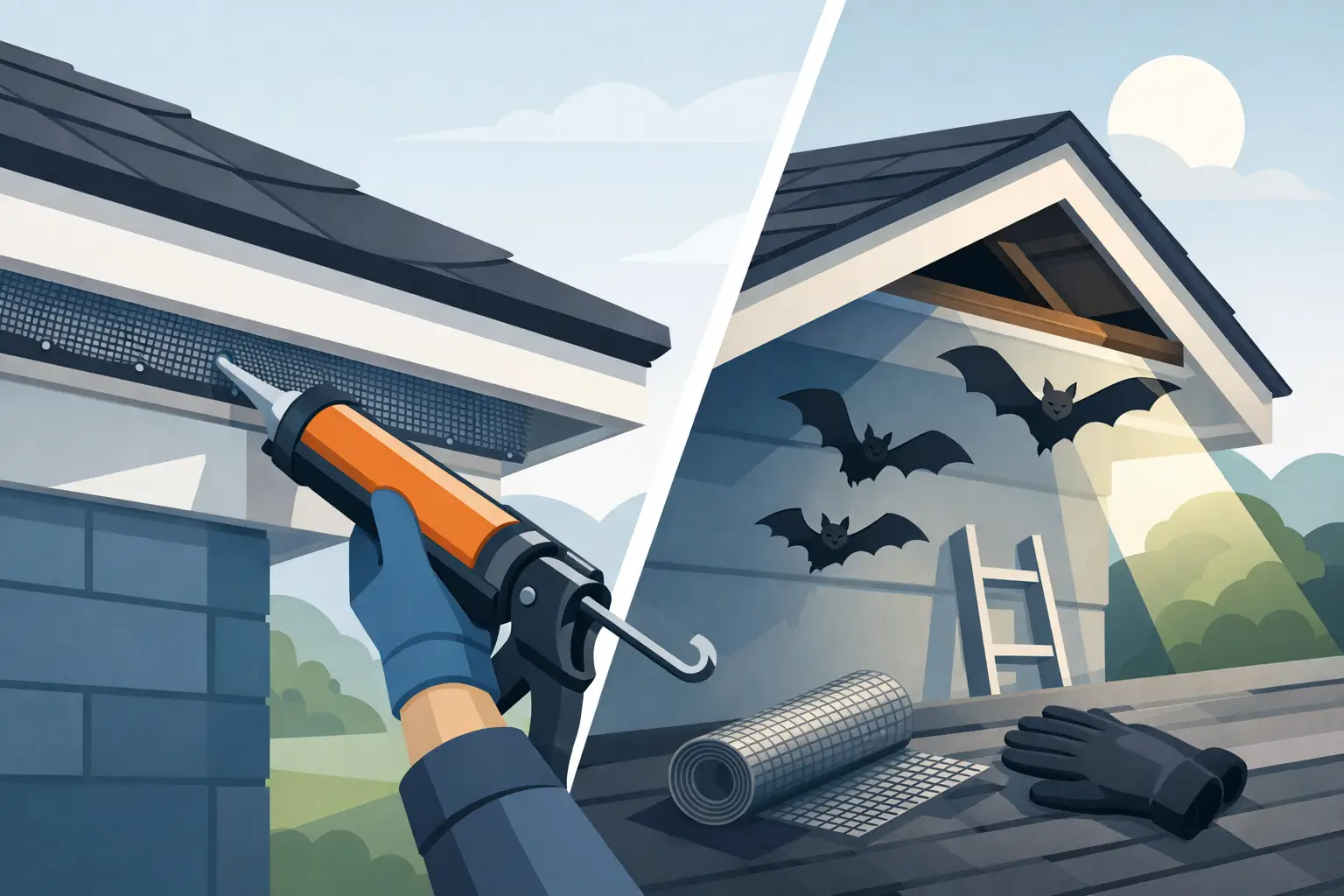
A faint rustling near the roofline at dusk usually means one thing – bats have found a gap you did not know was there. If you are searching for how to bat proof soffits, the goal is not just to block a hole. It is to stop a recurring entry problem without trapping animals inside, damaging the structure, or creating a bigger cleanup issue later.
Soffits are one of the most common bat entry zones on homes, churches, apartment buildings, and commercial properties. They sit right at the intersection of roofing, fascia, vents, and trim, which means they often hide narrow gaps that look harmless from the ground. To a bat, that small separation can be all it takes.
Why soffits attract bats
Bats are looking for dark, sheltered spaces with stable temperatures and minimal disturbance. A loose soffit panel, an open construction gap, or a warped section near the eaves gives them a protected route into attics and wall voids. On older buildings, weathering and settling can widen those openings over time. On newer buildings, poor fitment or incomplete sealing can leave access points from day one.
This is why soffit problems are rarely isolated. A visible gap in one section may be connected to hidden access around gable vents, ridge transitions, fascia returns, or roof intersections. If you only patch what you can see, bats may simply shift a few feet over and keep using the structure.
How to bat proof soffits without making the problem worse
The first rule is simple: never seal soffit openings while bats may still be inside. Humane bat control depends on exclusion, which means letting bats exit and preventing them from getting back in. If a colony is active in the attic or wall void, closing the entry point too early can trap bats indoors. That often leads to dead animals in structural cavities, odor issues, and desperate bats appearing in living spaces.
Timing matters too. In many cases, there are legal and ethical restrictions during maternity season, when flightless young may be present. This is one reason bat exclusion is not a standard handyman job. It depends on species behavior, seasonal timing, and a full inspection of the structure.
If you suspect active bat use, the safest path is to confirm where they are exiting at dusk and identify all possible secondary gaps before any sealing starts. One-way exclusion devices are then installed on the main entry points so bats can leave naturally. Once activity has stopped, the soffits and all related gaps can be sealed permanently.
Inspecting soffits the right way
A proper inspection starts with the roofline, not just the soffit panel itself. Bats do not care what the component is called. They care about edges, separations, and sheltered transitions. That means the inspection needs to include soffit seams, corners, fascia joints, drip edge areas, roof-to-wall intersections, vent penetrations, and any construction gap large enough for bat access.
From the ground, some signs are easy to miss. Staining near a seam, small accumulations of droppings on siding or below the eaves, and repeated dusk activity near one corner of the structure can all point to a bat entry point. On taller homes and commercial properties, lift access is often needed to inspect safely and thoroughly.
This is also where experience matters. Not every gap should be treated the same way. Some soffit openings are cosmetic. Others are connected directly to attic voids. Some need reinforcement because the original material is too thin or too deteriorated to hold a long-term seal.
Materials that work for bat-proofing soffits
When people ask how to bat proof soffits, they often jump straight to caulk or spray foam. Those products have their place, but they are not complete solutions by themselves. Spray foam in particular is often overused. It can look sealed from a distance while still leaving chewable, weather-prone, or incomplete coverage around a gap.
Long-term soffit protection usually depends on durable exclusion materials paired with proper repairs. That can include metal screening, sealants designed for exterior building movement, flashing, replacement soffit sections, or reinforced trim details. The right choice depends on the construction type, the width of the gap, exposure to weather, and whether the area is visible from the ground.
A good repair does two jobs at once. It blocks bat entry and restores the building envelope so wind, moisture, and temperature changes do not reopen the same problem. If the soffit is sagging, rotted, or poorly fastened, exclusion alone is not enough. The underlying failure has to be corrected.
What not to use
Repellents, ultrasonic devices, mothballs, and bright lights are not reliable ways to keep bats out of soffits. They do not solve the access problem, and they often waste valuable time while contamination grows inside the structure. Loose mesh or makeshift stuffing can also fail quickly, especially in exposed roofline areas.
Bat-proofing is successful when it is physical, complete, and species-aware. Anything less tends to become a temporary patch.
Common soffit weak points that get overlooked
Many repeat infestations happen because one obvious gap was sealed while nearby weak points were left open. In the field, common trouble spots include soffit-to-fascia joints, corners where trim has separated, loose vinyl or aluminum panels, utility penetrations near the eaves, and transitions where roofing materials meet vertical walls.
Multi-unit buildings and churches often have another layer of complexity. Height, decorative architecture, steeples, and long rooflines create multiple hidden voids. A bat issue in one soffit section may actually be part of a much larger access pattern across the structure. That is why commercial and institutional properties need a building-wide approach instead of isolated repairs.
Why DIY soffit sealing is risky
Homeowners are often capable of basic exterior maintenance, but active bat exclusion is different. The biggest risk is sealing during occupancy. The second is incomplete work. Missing even one active secondary gap can cause bats to relocate deeper into the structure or re-enter after the main opening is closed.
There is also the safety issue. Soffit work usually involves ladders, roof edges, dusk monitoring, and possible exposure to guano or contaminated insulation. If bats have been present for a while, cleanup may be needed after exclusion to address odor, staining, and sanitation concerns.
For property managers and commercial operators, there is an added liability concern. A failed exclusion job can affect tenants, customers, staff, and maintenance schedules. Doing it once and doing it correctly is almost always the less expensive path.
How professionals bat proof soffits for long-term results
Professional bat exclusion starts with identifying the full extent of activity, not just the first visible gap. A specialist will inspect the exterior, track exit behavior, locate primary and secondary access points, and determine whether timing allows immediate exclusion. Then one-way devices are placed where needed, and all non-active gaps are sealed to prevent rerouting.
After the bats have exited, the final repairs are completed using proven exclusion materials suited to the structure. If guano is present in the attic or wall-adjacent spaces, cleanup and sanitation may be recommended as part of the overall solution. The best result is not just a bat-free soffit. It is a bat-free structure with a clear plan to keep it that way.
For buildings in the Midwest, this also means accounting for freeze-thaw cycles, wind exposure, and seasonal material movement. A repair that looks fine in mild weather may open back up after one hard winter if the wrong materials were used.
How to know when it is time to call a bat specialist
If you have seen bats entering near the eaves, found droppings below the roofline, heard rustling above ceilings, or noticed staining around soffit seams, it is time for a professional inspection. The same is true if you sealed a gap before and the problem came back. Repeat activity usually means there are additional entry points that were not addressed.
At CP Bat Mitigation, this is exactly the kind of issue we see every day across homes, churches, apartment buildings, and commercial properties. Safe, humane bat removal and proven exclusion methods matter most at the soffit level because small mistakes near the roofline often turn into large recurring problems.
The good news is that soffit-related bat issues can be solved. With the right inspection, proper exclusion timing, and durable repairs, you can protect the structure, avoid repeated infestations, and keep bats where they belong – outside.