

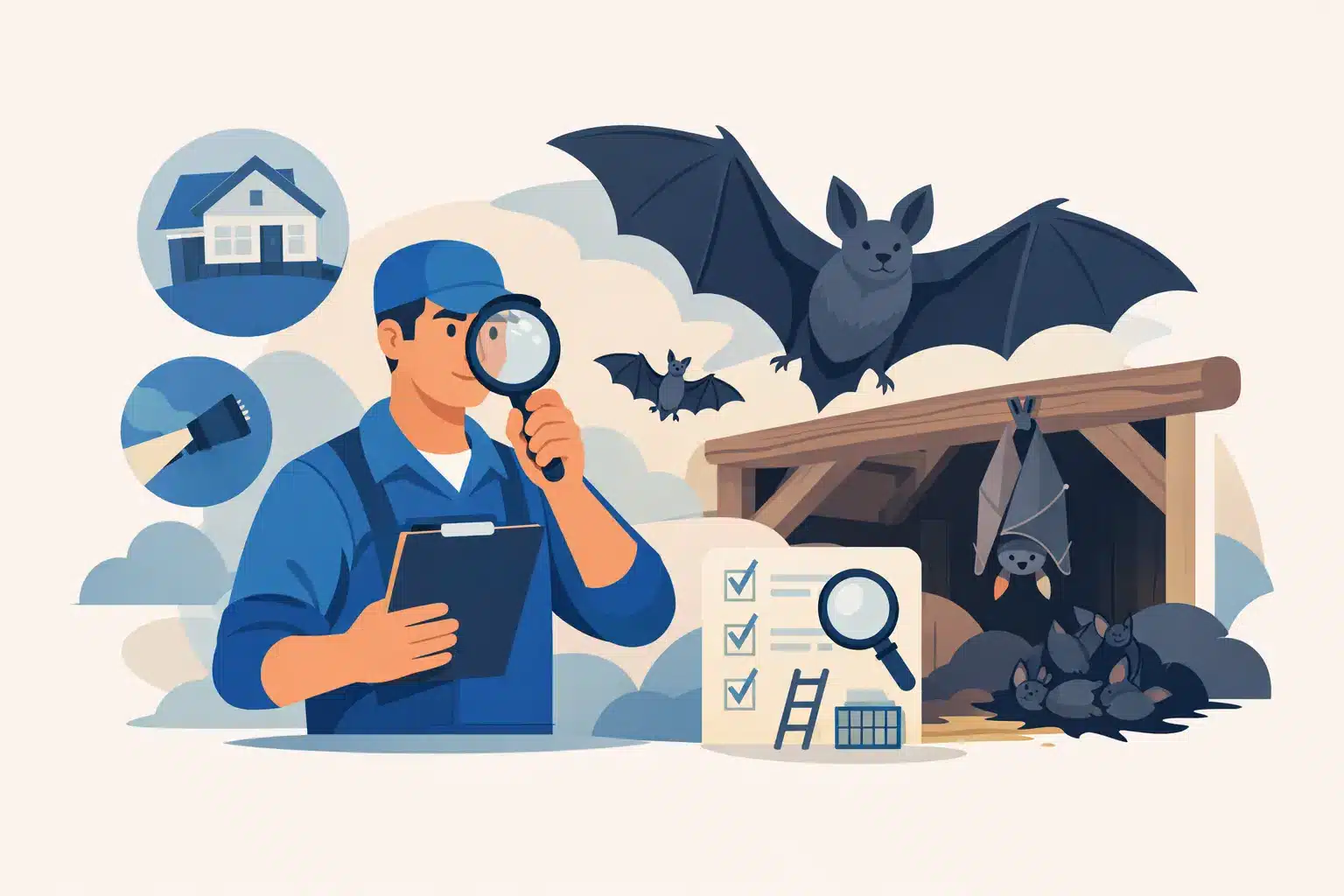
A bat flying through a living room gets attention. The quieter signs are often more revealing: scratching above a bedroom ceiling near dusk, dark staining at a roofline, droppings below a gable vent, or a sharp odor in an attic. A free bat inspection service gives property owners a clear answer before they commit to work. It should identify whether bats are present, where they are entering, what conditions are attracting them, and what it will take to keep them out humanely.
For homeowners, property managers, churches, and commercial building operators, that clarity matters. Bat problems rarely improve when ignored. A small gap at a soffit, chimney intersection, ridge vent, or utility penetration can allow a colony to access protected spaces for years. The right inspection turns uncertainty into a practical plan for safe, humane bat removal and long-term protection.
What a Free Bat Inspection Service Should Cover
A useful inspection is more than someone looking up at the roofline from the driveway. Bats can enter through openings as small as about 3/8 inch, and many of those openings are difficult to see without experience, proper access, and an understanding of how bats use a structure.
The inspection should begin with a conversation about what you have seen or heard. Timing is helpful. Noises shortly before sunset, bats seen exiting from one area of the home, stains on siding, or droppings found in a particular room can point an inspector toward active entry areas. For commercial properties, reports from maintenance staff, tenants, customers, or worshippers can help establish where activity is occurring and whether it affects occupied spaces.
Next comes a close exterior evaluation. A qualified bat specialist examines the roofline, fascia, soffits, vents, chimneys, siding transitions, dormers, attic louvers, and other likely access points. The goal is not simply to find one hole. It is to identify all primary and secondary openings that could allow bats to enter once the main exit is closed.
When conditions allow, the inspection may also include an attic, wall void, crawl space, or other interior review. This helps determine whether bats are roosting inside the building and whether guano, urine staining, odor, or damaged insulation has created a cleanup concern. Not every property can be fully accessed during an initial visit, especially steep-roofed commercial buildings or areas with limited clearance. A professional should explain those limits plainly and outline any additional access needed before work begins.
Why Accurate Bat Entry-Point Identification Matters
Finding an opening is only the first part of the job. A permanent solution depends on knowing how bats move through the building and which gaps must be sealed after exclusion. Closing an active entry point without a proper exit route can trap bats inside. That can create new problems in walls or living spaces and does not meet the standard for humane removal.
Proven exclusion methods allow bats to leave but prevent them from getting back in. Once the bats have exited, technicians seal the remaining potential entry points with materials suited to the structure. This is why general pest control approaches often fall short. Bats require species-specific knowledge, careful timing, and a detailed exclusion plan rather than a quick patch or repellant.
The timing of work can also depend on the season. During maternity periods, young bats may not yet be able to fly. Excluding adult bats at the wrong time could leave pups inside, creating an inhumane outcome and a sanitation issue. An experienced specialist will evaluate the situation, explain the seasonal considerations, and recommend the safest path forward for both the property and the bats.
Every Bat Deserves a Home, Just Not Yours.™ Humane exclusion respects that principle while protecting the people who live, work, and gather inside the building.
Signs an Inspection May Reveal an Active Colony
Bat activity is not always obvious from indoors. During an inspection, technicians look for visual and physical evidence that helps distinguish an active colony from an occasional bat that entered by accident. Fresh guano below an opening, rub marks around a gap, oily staining, audible movement near dusk, and bats observed exiting at sunset are all meaningful clues.
Guano deserves special attention. Bat droppings can accumulate in attics, wall cavities, bell towers, warehouses, and behind exterior features. The amount of contamination, the location, and the condition of surrounding insulation or building materials affect the cleanup plan. A responsible inspector should discuss the concern without exaggeration, then explain whether specialized guano removal and sanitation are recommended after exclusion is complete.
Questions You Should Get Clear Answers To
A free inspection should leave you better informed, not pressured. Before scheduling exclusion work, property owners should understand the proposed process, the areas being addressed, and what the service is designed to prevent.
Ask whether the company specializes in bats or handles them as one service among many. Ask how they confirm activity, how they prevent re-entry, what exclusions are included, and whether their work is backed by a written guarantee. For a larger building, ask how they will coordinate access, protect occupants, and communicate with facility staff throughout the project.
It is also reasonable to ask about repairs. Bat exclusion is focused on sealing entry points, but older properties may have broader issues such as failing soffits, loose siding, deteriorated flashing, or roof damage. A specialist should be clear about which gaps can be secured as part of bat mitigation and which building repairs may require a roofer, carpenter, or facility maintenance team.
Price is another important conversation. A free inspection does not mean every property will require the same scope of work. A single-story home with a few accessible gaps is very different from a church with high roof peaks, a historic building with multiple voids, or a commercial facility with extensive exterior joints. The inspection should produce a written recommendation that connects the cost to the work required, rather than offering a vague promise to “get rid of bats.”
What a Free Inspection Cannot Promise
An honest inspection has limits. It cannot guarantee that every bat will be visible during daylight hours, especially if activity is intermittent or roosts are concealed deep inside building cavities. It also cannot replace necessary repairs when the structure has extensive deterioration.
Weather, roof height, seasonal restrictions, and access constraints can affect what can be confirmed immediately. That does not make the inspection less valuable. It means a reputable provider documents the evidence available, explains what remains uncertain, and recommends the next appropriate step. Confidence should come from a careful process, not from a rushed diagnosis.
Be cautious of anyone who promises to solve a bat issue with poison, fogging, ultrasonic devices, or a one-time repellant treatment. These methods do not address the openings bats use to enter, and they can create a worse problem if animals die inside inaccessible areas. Effective bat control is built around exclusion, strategic sealing, and cleanup when contamination is present.
Protecting Your Property After the Inspection
Once an inspection identifies a bat issue, avoid sealing suspected holes yourself until a qualified professional has assessed whether bats are actively using them. A homeowner acting with the best intentions can accidentally trap bats indoors or drive them into another part of the structure.
Instead, keep notes on sightings and sounds, especially around sunset. If a bat enters a living space, close interior doors to limit where it can travel, keep people and pets away, and contact a professional for guidance. Any potential human or pet contact with a bat should be taken seriously and addressed promptly with appropriate local health guidance.
CP Bat Mitigation brings more than 30 years of focused experience to inspections and exclusion projects across the Midwest. That specialization matters because the best result is not merely removing bats from sight. It is closing the access points, addressing contamination when needed, and helping protect the structure from the next colony looking for shelter.
If your attic, roofline, church tower, or commercial building is showing signs of bat activity, schedule an inspection before the problem becomes more difficult to contain. A careful evaluation now can protect your property, your occupants, and the bats that belong outdoors.