

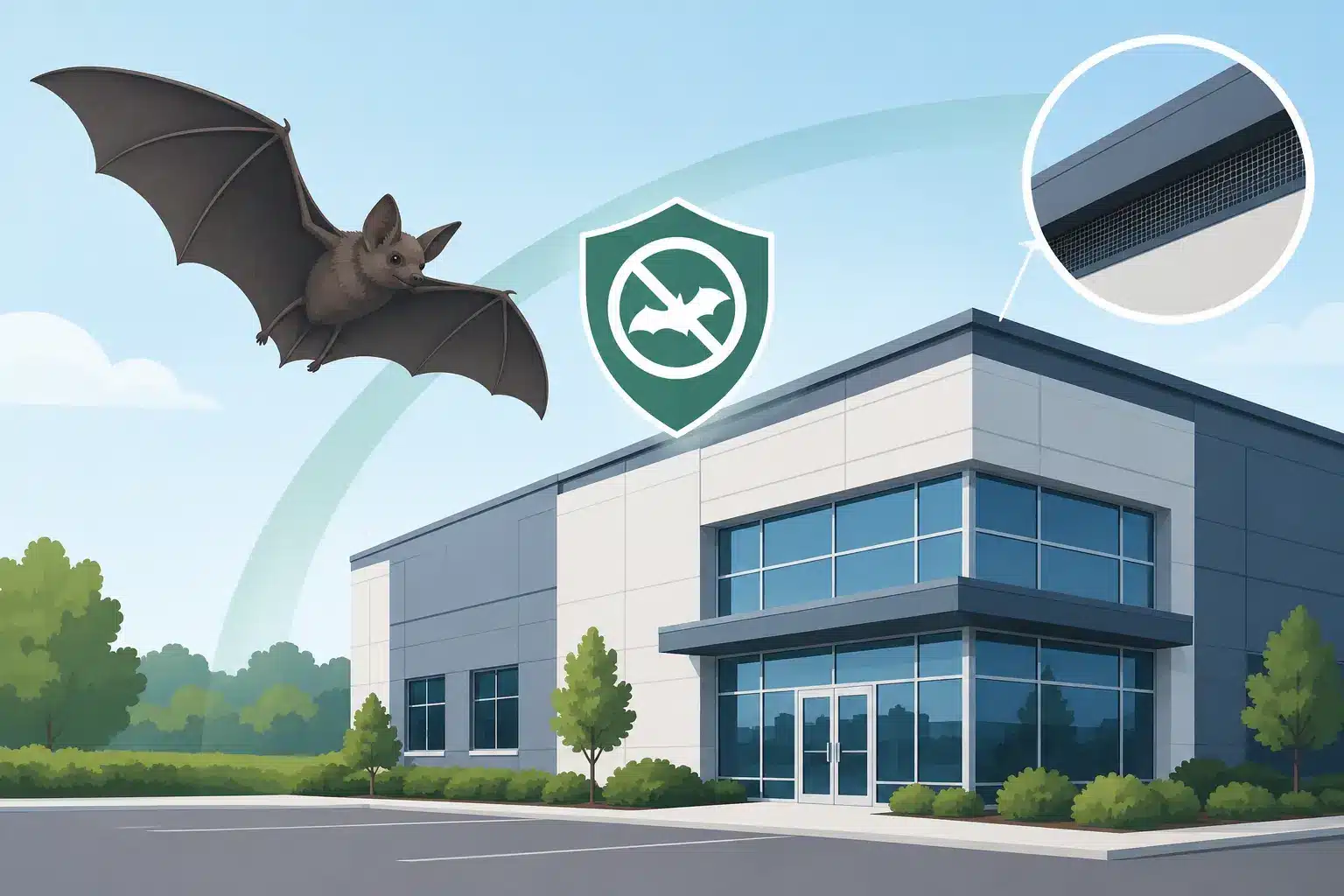
A bat flying through a warehouse, church sanctuary, apartment hallway, or office is rarely a one-time event. It often signals an established roost in the attic, wall void, roofline, or mechanical area. Commercial bat solutions address the full problem: where bats are entering, how to remove them humanely, what contamination is present, and how to keep the building protected after the work is complete.
For a business owner or property manager, the stakes are higher than an occasional nuisance. Bat activity can disrupt tenants and employees, create sanitation concerns, damage building materials, and put scheduled operations at risk. A lasting solution requires more than closing a visible hole or setting out a repellent.
Why Commercial Bat Problems Require a Different Approach
Commercial properties have more entry points than most homes. Roof transitions, loading dock gaps, utility penetrations, louvers, expansion joints, soffits, chimneys, and aging masonry can all provide access. Bats can enter through openings that appear too small to matter, then travel deep into areas that are difficult to inspect from inside the building.
The size and complexity of the structure also change the job. A multi-unit apartment building may have bats using several connected rooflines. A church may have a high bell tower and historic exterior details that require careful protection. A manufacturing facility may need work coordinated around production schedules, employee access, and safety procedures.
That is why general pest control measures often fall short. Poison, traps, and ultrasonic devices do not solve the entry-point problem and can create new issues inside the structure. Effective work begins with a detailed inspection by a bat specialist who understands bat behavior and commercial construction.
What Effective Commercial Bat Solutions Include
A professional plan should be built around humane exclusion, not shortcuts. The goal is to allow bats to leave safely while preventing them from returning to the structure.
A complete exterior inspection
The inspection should cover the roofline, siding, vents, chimney areas, dormers, wall intersections, and any points where utilities enter the building. On larger properties, this may include multiple elevations, upper roof sections, outbuildings, and areas above suspended ceilings.
Experienced technicians look for rub marks, droppings, staining, gaps, and other evidence of active use. They also identify secondary openings. Sealing only the largest visible entry point can force bats into another part of the building or leave the colony with an easy way back in.
Humane bat exclusion
Once active entry points are identified, technicians seal the appropriate secondary gaps and install purpose-built one-way exclusion devices at the active exits. These devices allow bats to leave for nightly feeding but prevent re-entry.
Timing matters. Bat exclusion cannot be handled the same way every month of the year. During maternity periods, young bats may be unable to fly. Excluding adult bats at the wrong time can leave pups trapped inside, creating odor, sanitation, and animal welfare concerns. A qualified provider will assess the species, activity, building conditions, and seasonal restrictions before selecting the proper work schedule.
Permanent sealing and repair recommendations
After bats have exited, the final phase is securing the structure. This may involve sealing gaps around rooflines, vents, fascia, siding transitions, utility lines, and other vulnerable areas. The exact repair scope depends on the building’s materials and design.
For commercial properties, durability matters as much as appearance. A quick patch may not hold up through wind, snow, heat, or normal building movement. Proper exclusion work uses materials and methods suited to the location so the property remains protected over time.
Guano cleanup and contamination control
Bat guano is more than an unpleasant mess. Accumulations can create odor, stain surfaces, attract insects, and affect insulation or stored materials. In enclosed areas, disturbing droppings without proper precautions can spread dust and contaminants.
Cleanup should be planned after the bats have been excluded. Depending on the affected area, the work may include controlled removal of guano, cleaning and sanitizing surfaces, removing damaged insulation, and addressing odor. For occupied or sensitive commercial spaces, containment and work-area coordination help reduce disruption to daily operations.
Signs Your Building Needs Bat Service
Some property managers notice bats at dusk near a roof edge or vent. Others first find droppings on a windowsill, exterior wall, equipment room floor, or attic access area. Scratching, chirping, or fluttering sounds near walls and ceilings can also point to roosting activity.
On a commercial property, watch for recurring complaints from tenants, employees, maintenance staff, or visitors. A single bat found indoors should be taken seriously, especially if it appears repeatedly in the same part of the building. It may have entered through an interior pathway from an established roost rather than from an open exterior door.
Do not ask employees or maintenance teams to handle a bat directly. Keep people and pets away from the area, avoid touching the animal, and contact a bat specialist for guidance. A professional inspection can determine whether the issue is isolated or part of a larger colony problem.
Protecting Operations While the Work Is Done
The best commercial bat service plans around the realities of your property. An apartment complex may need clear communication for residents. A restaurant, office, school, or healthcare-related facility may need work scheduled around occupancy and access requirements. Warehouses and industrial sites may need technicians to coordinate with loading schedules, fall-protection rules, and restricted areas.
The trade-off is straightforward: a faster-looking repair is not always the right repair. Proper assessment and exclusion may take more planning than simply covering a gap, but it reduces the risk of trapping bats inside or facing another infestation after the next season.
Ask prospective providers how they identify every likely entry point, how they handle seasonal timing, whether guano cleanup is available, and what guarantee supports the completed work. Clear answers are a sign that the company has a repeatable process rather than a temporary fix.
Why Humane Exclusion Protects the Property and the Bats
Bats play a valuable role in the environment, particularly through insect control. They do not belong inside occupied buildings, but humane removal recognizes that the answer is exclusion, not harm. As CP Bat Mitigation says, “Every Bat Deserves a Home, Just Not Yours.™”
Humane exclusion also makes practical sense for property protection. It addresses the source of the problem by closing access to the structure. When paired with careful cleanup and long-term sealing, it gives owners and managers a clear path back to a clean, bat-free building.
If you are seeing bats at dusk, finding guano, or hearing activity in the walls or roofline, act before the issue expands. A professional inspection can turn uncertainty into a specific plan that protects your occupants, your operations, and the building you are responsible for.