

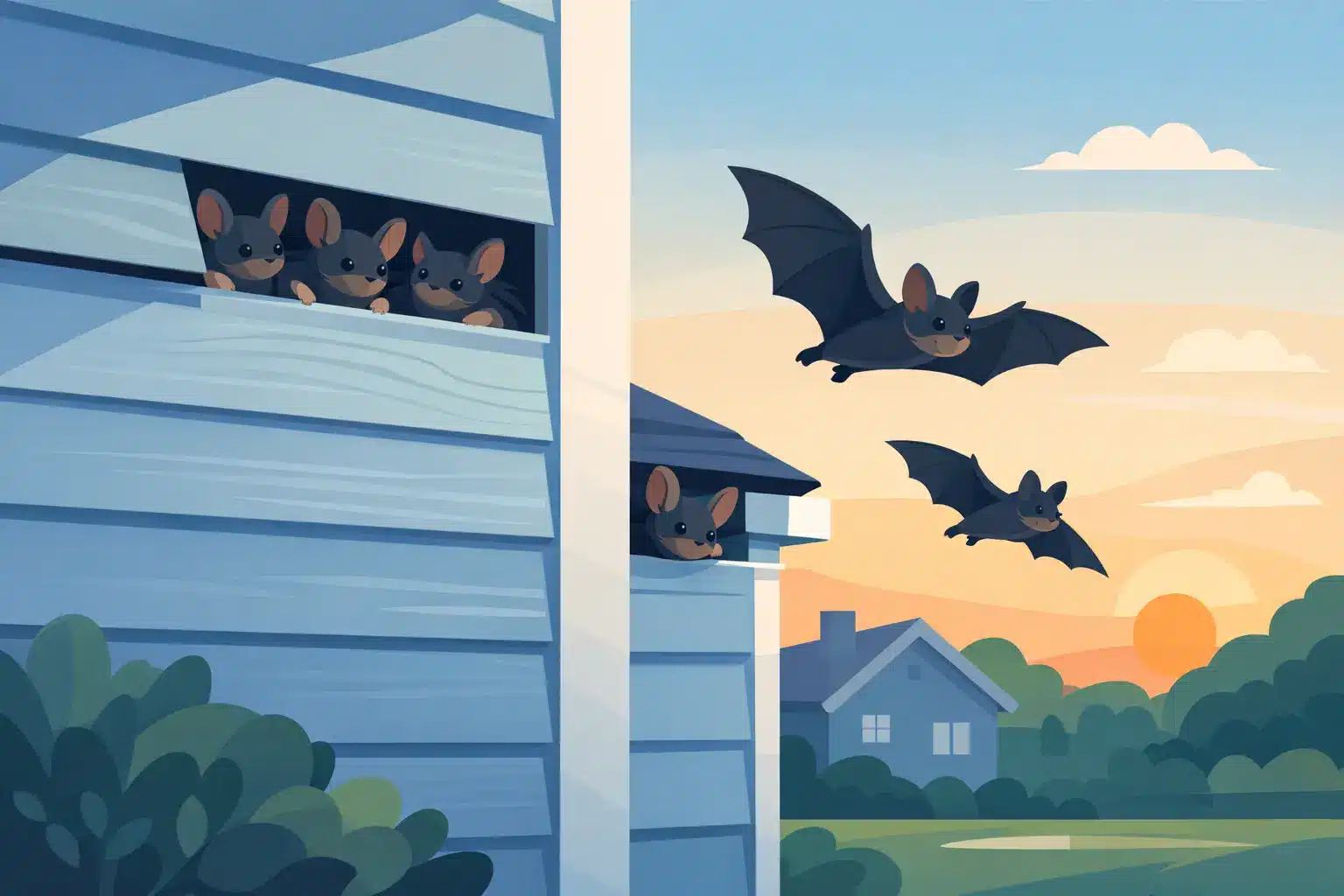
A bat does not need a large opening to get behind exterior siding. A gap as small as 3/8 inch can be enough for some species, especially where siding meets trim, a corner, a roofline, or utility penetrations. So, can bats live behind siding? Yes. The narrow, protected void behind vinyl, wood, aluminum, or fiber-cement siding can become an appealing daytime roost.
For homeowners and property managers, that answer can feel unsettling. The good news is that bats can be removed humanely without turning the problem into a repeat infestation. The key is identifying where they are entering, allowing them to leave through proper exclusion devices, and sealing the structure only after the colony is out.
Why Bats Choose Space Behind Siding
Bats seek dark, quiet spaces that are protected from wind, rain, predators, and temperature swings. Siding can provide all of that. When a panel has loosened, warped, pulled away from the wall, or was installed with an unprotected gap at an edge, it may create a long sheltered channel behind the exterior finish.
That space is particularly attractive during warmer months, when female bats may gather in maternity colonies to raise their young. A home can offer the consistent warmth they need, while the siding gives them a concealed route in and out. They may enter near a roof edge and settle several feet away behind the panels, making the roost difficult to spot from ground level.
This does not mean every bat seen near siding is living there. Bats often feed around homes because outdoor lights attract insects. A professional inspection distinguishes between normal nighttime activity and evidence that bats are actually using the building.
Signs Bats May Be Behind Your Siding
The most obvious sign is often a small number of bats emerging from the same area around dusk. Stand at a safe distance and watch the roofline, corners, window trim, fascia, and the upper edges of siding shortly before dark. Do not shine lights directly at the opening or try to block it while bats are active.
You may also hear faint scratching, chirping, or rustling from an exterior wall, especially near sunset or before sunrise. In a larger roost, droppings can collect below an entry point, on a window ledge, patio, deck, or ground-level surface. Bat guano is usually dark, crumbly, and may contain shiny insect fragments.
Odor is another warning sign. Over time, accumulated guano and urine can create a musty or ammonia-like smell. Staining below a gap, greasy rub marks around an entry point, and insect activity around deposits can also point to a roost. These clues deserve attention, but they should not be treated as a reason to start pulling siding loose yourself.
Why a Bat Roost Behind Siding Should Be Addressed Promptly
Bats provide real value by eating insects, and they should be handled humanely. Still, a bat colony belongs outdoors, not inside the building envelope. Once bats establish a roost behind siding, the issue can grow from a minor entry gap into a property protection and sanitation concern.
Guano and urine can accumulate in wall cavities, soffits, insulation, and other hidden areas. That moisture and organic material may contribute to odor, staining, damage to finishes, and conditions that attract insects. If bats are able to move farther into a structure, they can eventually appear in attics, living areas, hallways, or commercial tenant spaces.
There are health considerations as well. People and pets should never handle a bat, alive or dead. If a bat is found in a room where someone was sleeping, a child was unattended, or a person may have had direct contact, seek guidance from local public health officials or a healthcare provider. A bat removal specialist can address the building issue, but possible human or pet exposure requires its own prompt evaluation.
Can Bats Live Behind Siding Year-Round?
It depends on the species, the building, and the season. In the Midwest, bats commonly use structures as warm-weather roosts, then move to other seasonal habitats as temperatures change. Some may use protected building voids temporarily during migration or mild winter conditions.
The fact that bats may leave seasonally is not a reliable solution. If the entry point remains open, the same bats or a new colony can return when conditions are favorable. Waiting can also allow contamination to worsen and make a future exclusion more complicated.
Timing matters because bats may have non-flying pups during maternity season. Sealing openings while young bats are still inside can trap them behind the siding, creating an inhumane outcome and a more serious odor and cleanup problem. Bat exclusion must account for local timing, bat behavior, and any applicable wildlife regulations.
The Safe Way to Remove Bats From Behind Siding
A lasting solution is not simply caulk and a ladder. It begins with a detailed exterior inspection. A trained bat specialist examines siding edges, trim transitions, roof intersections, vents, chimneys, gaps around pipes and cables, and other construction joints. The goal is to locate both the active entry point and every secondary gap bats could use once the main opening is closed.
Next, the technician installs one-way exclusion devices at active exits. These devices let bats leave to feed but prevent them from getting back inside. They are far more effective and humane than trapping, poisoning, or attempting to catch bats by hand.
After the bats have had adequate time to exit, the specialist removes the devices and seals the entry points with materials suited to the structure. This step is where many do-it-yourself efforts fail. Closing only the visible hole can redirect bats to another gap. Effective exclusion means securing the entire building envelope, not just the location where a bat was first seen.
At CP Bat Mitigation, this approach is built around safe, humane bat removal and long-term prevention. The objective is straightforward: Every Bat Deserves a Home, Just Not Yours.™
What Not to Do When Bats Are Behind Siding
Avoid spraying chemicals, mothballs, repellents, foam, or ultrasonic devices into the siding. These methods do not solve the entry problem, may push bats deeper into the structure, and can create risks for occupants and the property. They can also leave you with bats trapped inside walls.
Do not seal an opening because you saw a bat fly out of it. Other bats may still be inside, and seasonal timing may mean flightless young are present. Removing panels without the right equipment can damage siding, expose you to guano, and make it harder to identify the bats’ actual travel route.
It is also wise not to rely on a single quiet night as proof the bats are gone. Weather, insect activity, and seasonal patterns affect whether bats emerge. A proper exclusion plan includes verification before final sealing.
Protecting Siding After Exclusion
Once the bats are out, property maintenance helps keep the building from becoming an easy roost again. Loose siding should be resecured, damaged trim repaired, and gaps at corners and rooflines sealed with durable, appropriate materials. Screens and covers should be checked where vents or architectural details create potential entry routes.
If guano has accumulated in an accessible cavity, attic, or exterior area, cleanup should be handled carefully. Dry sweeping or vacuuming large amounts of droppings can stir particles into the air. Professional guano cleanup addresses safe removal, affected materials, and the source of contamination so the work does not stop at surface appearance.
A free inspection is the best next step if you see bats using your siding, hear activity in an exterior wall, or find droppings below a recurring gap. A humane exclusion plan protects the animals, your occupants, and the structure – and gives your property the quiet, clean exterior it should have.