

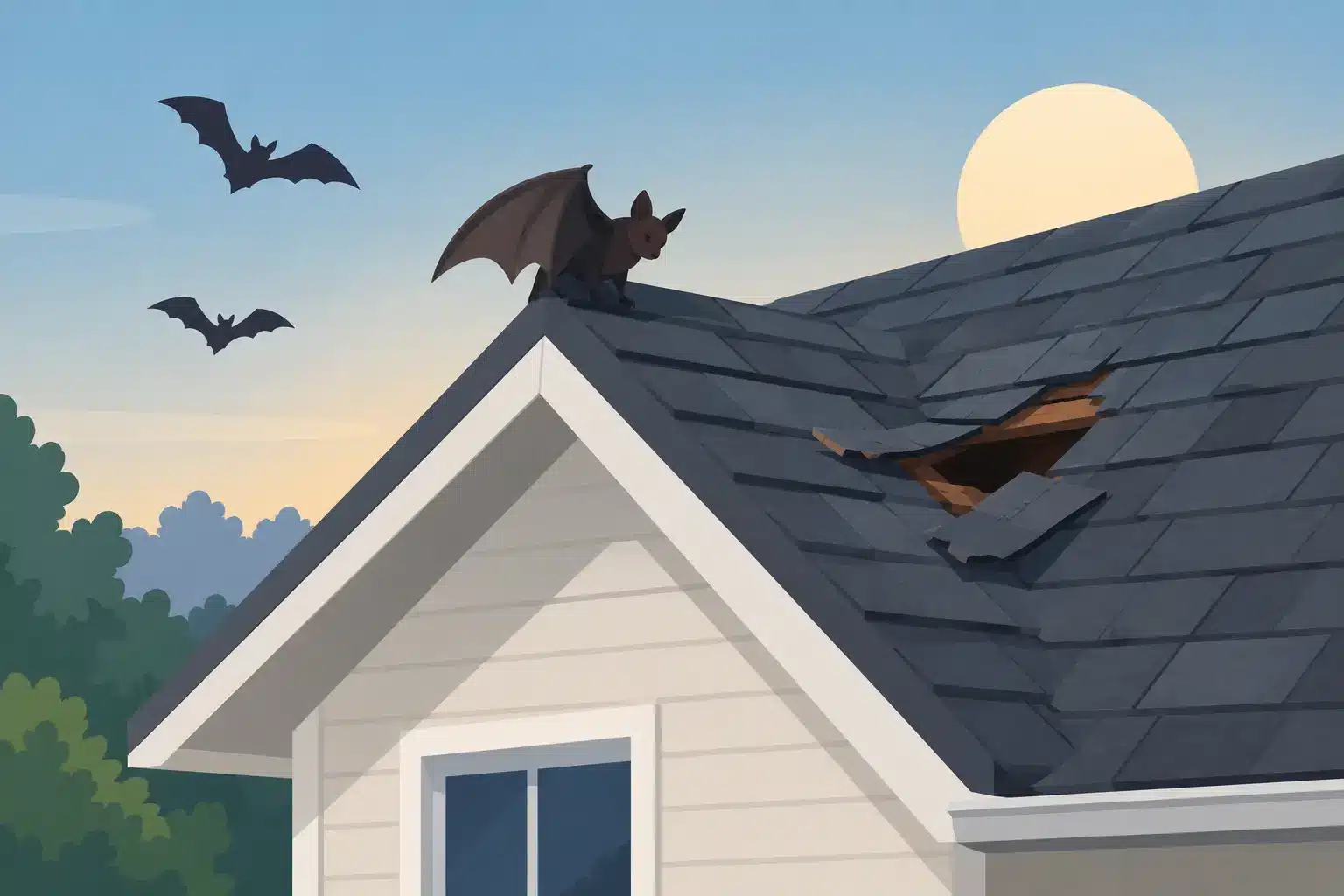
A bat does not need a large hole to get into a roofline. Many species can enter through gaps as small as 3/8 of an inch, slipping behind fascia boards, through loose soffits, around vents, or beneath damaged flashing. Once a colony settles in, the concern is not usually that bats will chew through roofing materials. The real risk comes from what happens around the openings and inside the attic over time.
Can Bats Damage Roofing?
Yes, bats can contribute to roofing damage, but it is usually indirect. Unlike squirrels, raccoons, or rodents, bats do not gnaw wood, tear shingles apart, or intentionally enlarge holes with their teeth. They typically take advantage of an existing weakness in the roof system.
That distinction matters. A roof may already have a lifted shingle, separated trim board, aging vent screen, cracked siding joint, or small gap where the roof meets a wall. Bats find these sheltered openings and return to them night after night. Their activity, droppings, urine, and nesting presence can turn a minor maintenance issue into a larger property problem.
For homeowners and property managers, the goal is not simply to make the bats leave. It is to identify every active and potential entry point, safely exclude the colony, and repair or seal the structure so the same problem does not return next season.
What Bats Do Not Typically Damage
It helps to be clear about what bats are and are not likely to do. Bats do not eat roofing materials, chew electrical wiring, or build nests from torn insulation. If shingles are missing or wood has been aggressively gnawed, another animal may be involved.
However, bats can still create serious conditions inside roof voids, attics, church steeples, commercial parapets, and wall cavities. The longer a colony remains, the more likely the property will need cleanup and repairs in addition to humane bat removal.
How Bat Activity Affects a Roof System
The damage associated with bats often starts quietly. Property owners may first notice chirping near dusk, an odor in an upstairs room, stains near a soffit, or small droppings on a deck or window ledge. By the time those signs appear, bats may have been using the structure for weeks or even years.
Guano Can Contaminate Insulation and Attic Materials
Bat guano is one of the most common sources of damage. In an attic or enclosed roof space, droppings can accumulate below a roosting area and settle into insulation. This reduces insulation performance, creates odor, and can leave a contaminated area that requires professional cleanup.
Guano may also collect on framing, ceiling surfaces, stored belongings, and mechanical equipment. Dry droppings should not be swept or vacuumed without proper precautions because disturbing them can send dust into the air. A trained mitigation team can assess the amount of contamination and determine whether insulation removal, HEPA-filtered cleanup, sanitizing, or deodorizing is appropriate.
Urine Can Cause Stains and Odors
A persistent odor in an attic, upper floor, or commercial ceiling void is often a warning sign. Bat urine can soak into porous materials, including insulation, wood, drywall, and ceiling tiles. Over time, it may cause visible staining and an ammonia-like smell, particularly during warm weather.
Urine alone does not always mean structural wood is failing. Still, repeated moisture and contamination should not be ignored. In some cases, staining around soffits or attic vents is mistaken for a roof leak when the underlying issue is an active bat colony overhead.
Existing Gaps Can Worsen With Repeated Use
Bats generally do not create entry holes, but frequent movement through a weak point can expose how badly a component has deteriorated. A loose soffit panel, warped fascia board, failed screen, or separated piece of flashing may shift further over time due to weather and normal building movement.
This is why a quick patch over one visible hole often fails. Bats may be using several access points, and sealing the obvious opening without a complete inspection can leave other routes open. It can also trap bats inside the structure, creating a more urgent problem.
Secondary Pest Problems May Follow
Bat colonies can attract bat bugs, which are close relatives of bed bugs. These pests live near bat roosts and may migrate into occupied areas when bats leave or are excluded improperly. Accumulated guano can also attract insects that feed on organic material.
The presence of insects does not always mean bats are still active, but it is a reason to inspect the roofline, attic, and wall voids carefully. Proper exclusion and cleanup address the conditions that allow these secondary issues to persist.
Roof Areas Bats Commonly Use
A professional bat inspection focuses on much more than the attic hatch. Bats often roost in places that are difficult to see from the ground, especially on taller homes and commercial buildings.
Common access areas include gaps at the roof-to-wall intersection, loose or missing soffit sections, attic vents with damaged screening, ridge vents, chimney flashing, roof returns, dormers, and spaces behind fascia boards. Churches and historic buildings may also have openings around steeples, louvers, bell towers, and decorative exterior features.
Fresh droppings below a gap, oily rub marks near an opening, staining, and bats exiting at dusk are strong indicators of an active entry point. Because bats can move between cavities, an inspection should include the entire exterior envelope, not just the spot where activity was first noticed.
Why Sealing Holes Too Soon Can Make Things Worse
When bats are discovered, the natural reaction is to seal every gap immediately. That approach can be harmful and ineffective. If bats are inside when openings are closed, they may become trapped in the attic or wall cavity. Some may find their way into living or occupied spaces while trying to escape.
Timing is also critical during maternity season. Young bats may be unable to fly for part of the summer. Excluding adult bats when non-flying pups remain inside can separate them from their young, creating an inhumane outcome and a sanitation issue in the building.
Proven exclusion methods allow bats to leave through one-way devices while preventing re-entry. Once all bats have exited, the remaining entry points can be professionally sealed with durable materials selected for the specific roofline. This is how a property receives long-term protection without harming the animals.
When Roofing Repairs and Bat Exclusion Should Happen Together
If a roof is aging, has storm damage, or is scheduled for replacement, coordinate the work carefully. Roofing contractors are skilled at roof installation, but bat exclusion requires specialized knowledge of bat behavior, seasonal restrictions, and small structural access points.
A good plan identifies active bat use before repair work begins. The colony should be excluded humanely at the appropriate time, then openings can be sealed as part of the repair process. If roofing work begins without addressing bats, construction may displace animals into new sections of the building or leave new gaps that invite them back.
For property managers, this coordination is especially valuable on multi-unit properties, warehouses, schools, churches, and commercial facilities. It limits disruption, protects occupants, and helps prevent repeat maintenance calls.
What to Do If You Suspect Bats in Your Roof
Do not handle a bat or attempt to remove it from a roof void yourself. Avoid blocking openings until the building has been assessed by a bat specialist. If a bat has been in a room with a sleeping person, young child, or someone who may not be able to report contact, contact local public health authorities or a medical professional for guidance.
Otherwise, watch from a safe distance near dusk and note where bats emerge. Take photos of visible gaps or droppings if you can do so without disturbing the animals. Then arrange a professional inspection to confirm the species, locate access points, and determine the right exclusion timing.
CP Bat Mitigation has spent more than 30 years helping Midwest homeowners, businesses, churches, and property managers solve bat problems with safe, humane bat removal and proven exclusion methods. Every Bat Deserves a Home, Just Not Yours.™
A small gap at the roofline is easier and less expensive to address before a colony has time to contaminate an attic or exploit more of the structure. Protecting the roof means resolving both parts of the problem: giving bats a way out and making sure they cannot get back in.