

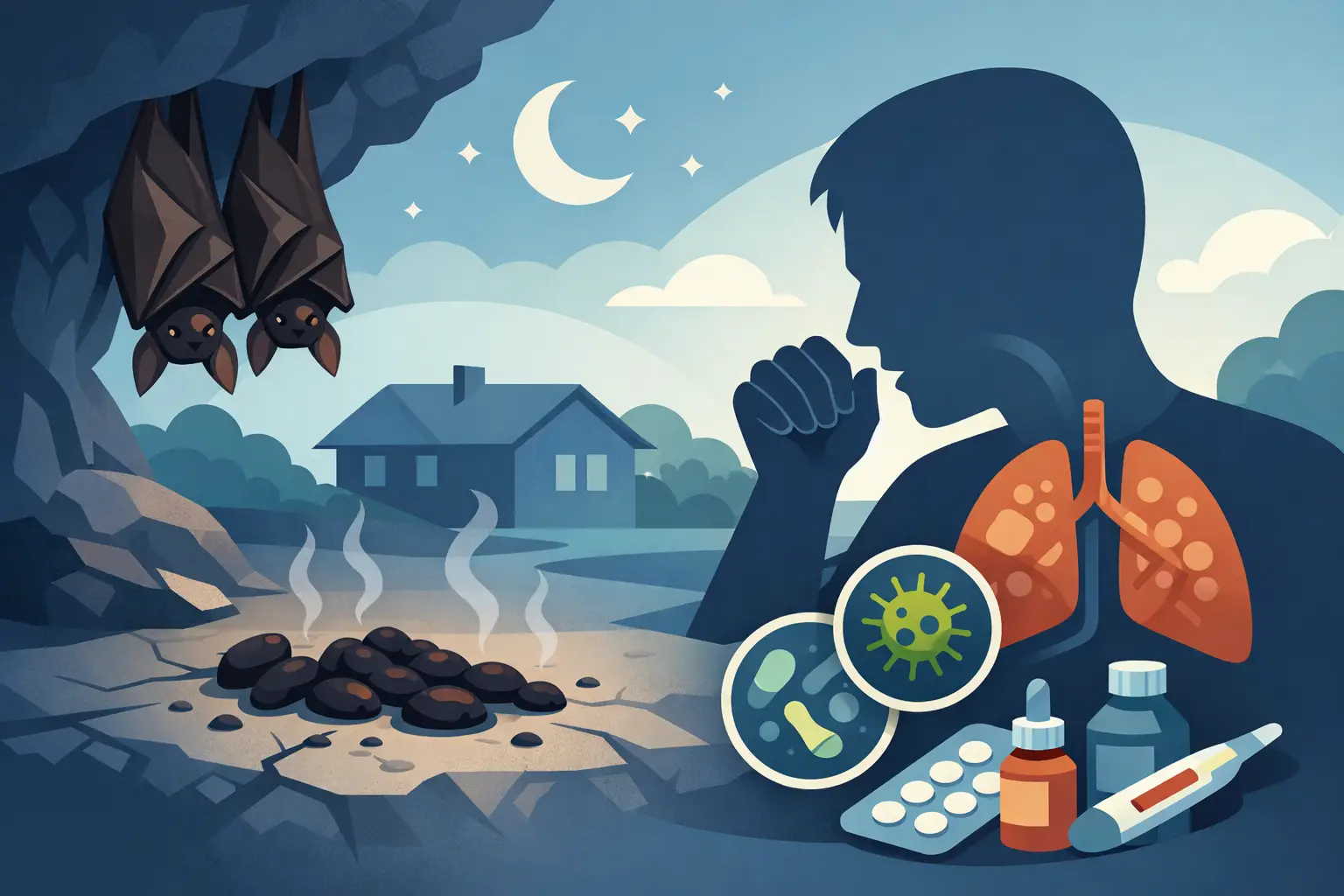
If you have found a pile of small, dark droppings in an attic, loft, church steeple, warehouse, or along an exterior wall, the question gets serious fast: can bat droppings make you sick? Yes, they can. The risk is not just the mess or odor. Bat guano can expose people to harmful fungal spores, worsen indoor air quality, and create sanitation issues that should be handled carefully.
That said, not every small pile of droppings means someone is about to get seriously ill. The real danger depends on how much guano is present, how long it has been there, whether it has dried out, and whether people are disturbing it during cleaning, renovation, or routine maintenance. Understanding that difference matters because overreaction can lead to unsafe DIY cleanup, while underreaction can leave a real health hazard in place.
Why bat droppings can be a health concern
Bat droppings, also called guano, build up wherever bats roost. In homes and commercial buildings, that often means attics, wall voids, soffits, barns, chimneys, and high interior spaces. Fresh guano is unpleasant enough, but the bigger concern usually develops over time as droppings accumulate and dry.
When dry guano is disturbed, tiny particles can become airborne. That dust may carry fungal spores, including the fungus associated with histoplasmosis. People can breathe in those spores without realizing it. This is one reason guano cleanup is very different from sweeping up dirt or vacuuming up rodent pellets with a household vacuum.
Guano can also soak insulation, stain ceilings, attract insects, and create strong ammonia-like odors. In larger infestations, the sanitation and indoor air issues can affect more than the immediate roost area.
Can bat droppings make you sick from one exposure?
Sometimes, but it depends on the conditions. A brief exposure to a small amount of guano does not always lead to illness. Many people discover a few droppings on a porch or windowsill and never develop symptoms. The higher-risk situations usually involve enclosed spaces, heavy accumulation, and activities that stir contaminated dust into the air.
For example, an attic with years of guano buildup presents a very different risk than a few scattered droppings outside. A property manager opening a contaminated mechanical room, a homeowner pulling out insulation, or a contractor drilling into a roost area may inhale airborne material before they even know bats have been present.
That is why context matters. The question is not only can bat droppings make you sick, but when and how that risk increases.
The main illness people worry about
The best-known health issue tied to bat guano is histoplasmosis. This is a lung infection caused by inhaling fungal spores that can grow in soil or debris enriched by bat or bird droppings. Symptoms can range from mild to more serious, and some people may not realize what caused them.
In mild cases, symptoms can feel like the flu. A person might have fever, cough, fatigue, chest discomfort, or body aches. In more severe cases, especially for older adults, infants, or people with weakened immune systems, the illness can become much more serious and require medical attention.
This is where a lot of online advice gets oversimplified. Not all guano contains harmful spores, and not every exposure leads to infection. But the possibility is real enough that bat guano should never be treated like harmless debris.
Who faces the greatest risk?
The people at highest risk are often the ones doing the disturbing. Homeowners cleaning attics, maintenance staff entering long-neglected spaces, insulation crews, roofers, church volunteers, and warehouse employees can all be exposed if guano is present.
Risk is also higher for people with asthma or other breathing conditions because airborne dust can irritate the lungs even aside from fungal concerns. Children, elderly adults, and anyone with a compromised immune system should be especially cautious around contaminated areas.
For commercial properties, the concern goes beyond one person. If bats are roosting above occupied spaces, contamination can affect staff, tenants, customers, or congregants depending on the building type. That is why prompt assessment matters for churches, schools, apartment buildings, and businesses as much as for single-family homes.
Signs guano may be creating a bigger problem
A few droppings outside do not always mean an emergency, but some warning signs should move the issue up your priority list. One is repeated accumulation in the same area, especially around attic access points, ridge vents, soffits, or wall lines. Another is strong odor, staining on ceilings or siding, or insect activity near the droppings.
If you hear scratching or chirping at dusk or dawn, see bats exiting the roofline, or notice guano beneath entry points, there is a good chance you have an active roost. In that case, cleanup alone will not solve the problem. As long as bats remain inside, contamination will continue.
Heavy attic contamination is often worse than people expect. What looks like a minor issue from the access hatch can turn out to be widespread guano deposits, compressed insulation, and multiple entry gaps along the structure.
Why DIY cleanup can make the risk worse
The instinct to sweep it up and move on is understandable. Unfortunately, that is often when exposure risk goes up. Sweeping, brushing, leaf blowing, or using a standard household vacuum can push contaminated particles into the air and throughout the space.
There is also the bat side of the problem. If you try to clean guano before the colony has been professionally excluded, you are dealing with the symptom rather than the source. Bats may continue roosting overhead, and fresh contamination can begin immediately after cleanup.
Another concern is timing. During maternity season, exclusion work has to be handled correctly so flightless young are not trapped inside. That is one reason bat work should be done by specialists using safe, humane bat removal and proven exclusion methods rather than general pest control shortcuts.
What safe response looks like
Start by limiting access to the area. Keep children, pets, tenants, or staff away from the contaminated space if possible. Do not sweep or vacuum the droppings, and avoid disturbing insulation or stored items until the site has been assessed.
Next, identify whether bats are still using the structure. Guano on its own tells part of the story, but the larger issue is whether there is an active entry point that needs to be sealed through proper exclusion. A specialist can inspect the structure, locate access gaps, and determine whether bats are currently roosting inside.
After exclusion, cleanup should address both sanitation and restoration. Depending on the severity, that may include guano removal, contaminated insulation removal, odor treatment, and disinfection measures appropriate to the space. The right approach depends on the amount of contamination and how far it has spread.
When you should call a bat specialist
If droppings are inside an attic, wall void, church, commercial building, or any enclosed indoor area, it is smart to get expert help. The same goes for repeated guano accumulation around entry points, visible bat activity, foul odor, or any situation where people may have been exposed in a shared building.
This is one of those problems where specialization matters. Bat removal is not the same as standard pest control. A bat specialist understands roosting behavior, seasonal restrictions, humane exclusion, and what proper guano cleanup requires after the animals are out. Companies like CP Bat Mitigation focus specifically on these situations because the long-term solution is not just removal. It is stopping re-entry and dealing with contamination the right way.
The bottom line on bat droppings and your health
So, can bat droppings make you sick? Yes, especially when guano has built up over time and becomes airborne during cleanup or disturbance. The risk is real, but it is also manageable when the problem is handled early and correctly.
If you have found bat droppings in your home or building, treat it as a health and property issue, not just a housekeeping problem. The safest path is to confirm whether bats are present, have the structure professionally excluded, and address the guano without turning a contained issue into a larger exposure. A clean attic matters, but a bat-free building is what keeps it that way.