

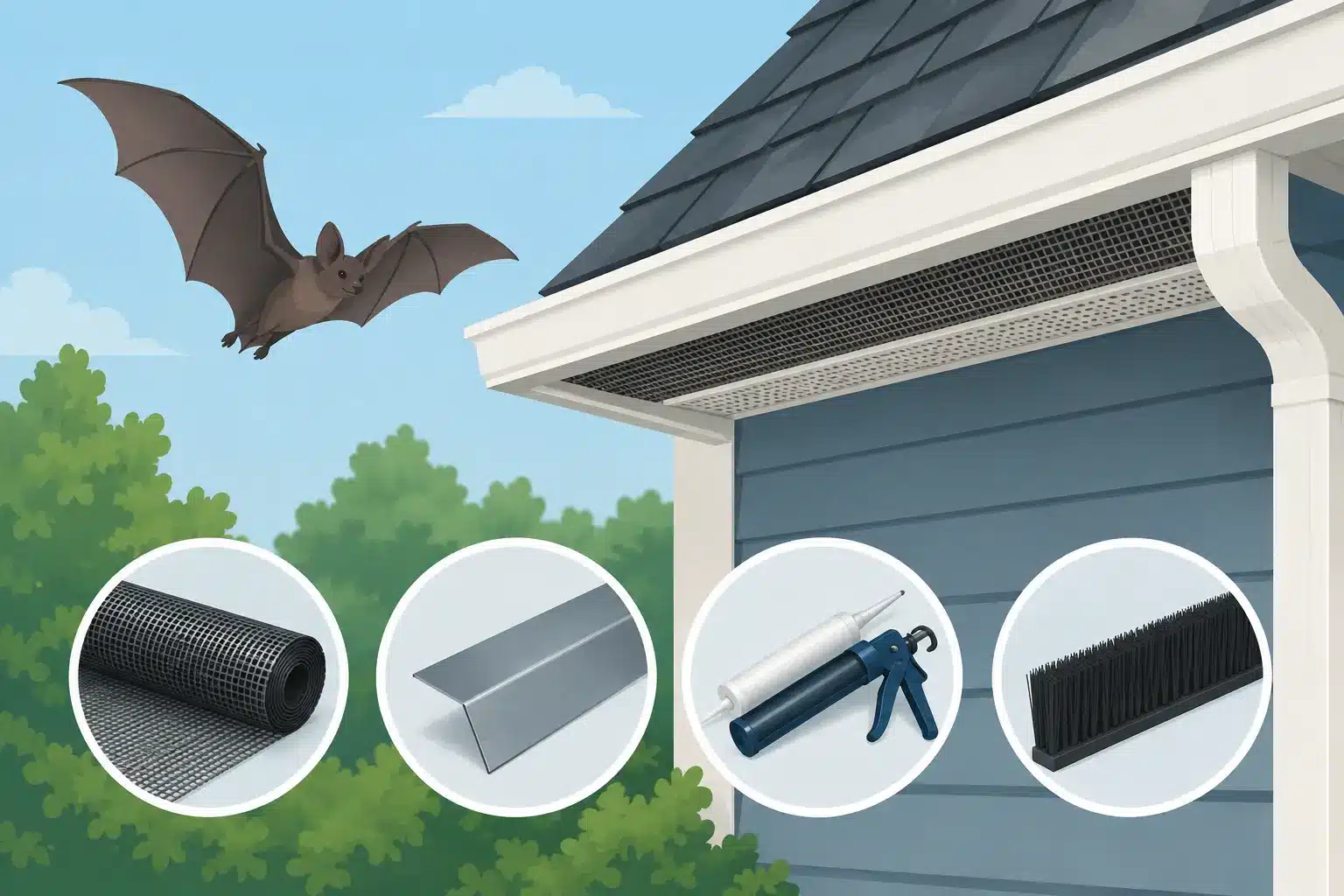
A tube of caulk can close a crack, but it cannot solve a bat problem on its own. The right bat proofing materials must do two jobs at once: prevent bats from getting back inside and allow any bats already in the structure to leave safely. That distinction matters for homes, churches, apartments, warehouses, and other buildings where a small gap can become a regular roosting site.
Bats can enter openings as small as 3/8 of an inch. Rooflines, fascia boards, attic vents, chimney gaps, utility penetrations, and aging siding are all common trouble spots across the Midwest. Effective bat exclusion is not about using the toughest material everywhere. It is about matching proven materials to the building, the entry point, and the season.
Why Material Choice Matters in Bat Exclusion
A bat infestation is not handled like a mouse or insect problem. Sealing an active entry point before the colony has exited can trap bats inside walls or attic spaces. It can also force them into living areas through light fixtures, vents, or gaps around plumbing and electrical lines.
Professional exclusion begins with a detailed inspection to identify primary exits, secondary gaps, and construction features that could become future entry points. One-way exclusion devices are installed at the active exits. Then, durable sealing materials are used to close every non-active gap bats could use when they try to return.
The material must hold up to weather, building movement, and animal pressure. A quick patch that pulls loose after one freeze-thaw cycle is not a permanent solution. That is why the best approach combines careful installation with products selected for the specific surface.
The Best Bat Proofing Materials for Common Gaps
High-quality exterior sealant
Professional-grade exterior sealant is one of the most useful materials for narrow, stable gaps around trim, flashing, soffits, siding, and utility lines. It remains flexible as temperatures change, which helps it resist cracking and separation.
Sealant works best on clean, dry surfaces where the gap is relatively small. It is not the answer for large voids, damaged construction, or openings that need structural repair. Filling a wide gap with caulk alone may look finished for a short time, but it can sag, split, or fail under seasonal movement.
For bat work, the goal is a complete seal with strong adhesion, not a cosmetic bead applied over a hidden void.
Galvanized steel mesh and hardware cloth
Steel mesh is a reliable choice for irregular holes, larger openings, and areas where sealant needs backing. It can be shaped around pipes, roofline gaps, foundation transitions, and broken sections of siding. When installed correctly, it creates a durable barrier while allowing the repair to follow the contours of the building.
Hardware cloth can also be useful for larger vents or structural openings, provided the mesh size is small enough to prevent bat entry. Larger-grid materials may keep out bigger wildlife but still leave enough room for bats to pass through.
Mesh needs secure fastening. Loose edges create a new opening and can collect debris. On visible areas, it should also be installed neatly and finished in a way that protects the property’s appearance.
Metal flashing
For recurring gaps at roof intersections, chimneys, parapet walls, dormers, and fascia transitions, metal flashing is often the longer-lasting solution. Flashing bridges areas where wood has pulled apart, trim has deteriorated, or roofing materials meet at awkward angles.
It is especially valuable when a gap is caused by a construction issue rather than a simple crack. A homeowner may seal the same opening repeatedly, only to see it reopen because the underlying problem was never corrected. Properly fitted flashing addresses the vulnerable transition itself.
Vent covers and custom screens
Attic, gable, ridge, and louvered vents need protection without blocking necessary airflow. Custom-sized metal screens or vent guards can prevent bats from entering while preserving ventilation. This is a common need in older homes and commercial buildings with large attic spaces.
The screen must be securely mounted over the full opening, including its edges. A screen placed loosely behind a vent cover can bend or pull away. Plastic screening is generally not a long-term choice for bat exclusion because sun exposure, wind, and age can make it brittle.
Expanding foam, used carefully
Expanding foam is often misunderstood. It can be useful as a filler deep inside a void when combined with mesh, flashing, trim repair, or sealant. By itself, however, foam is rarely an appropriate exterior bat-proofing material.
Foam can degrade in sunlight, become brittle, and leave an unattractive repair. It is also easy to overapply, which can interfere with moving parts, vents, or drainage paths. Most importantly, it should never be used to hastily close an opening that may still be active.
Materials That Often Fail Too Soon
Many temporary fixes are appealing because they are inexpensive and available at any hardware store. The problem is that bats are persistent, and buildings change with weather. A material that looks adequate from the ground may fail where the roofline flexes, moisture collects, or wind creates pressure.
Avoid relying on duct tape, lightweight plastic mesh, fiberglass window screen, loose steel wool, or foam alone for exterior exclusion. These materials may have limited short-term uses, but they are not dependable long-term barriers for an active bat-entry area.
Wood patches can also fail if they are not flashed, sealed, and integrated with the surrounding construction. If rot, warped siding, or damaged soffit boards created the gap, covering the opening without repairing the damage can invite another problem later.
One-Way Devices Are Not Just Another Patch Material
The most important tool in humane bat removal is not a sealant or screen. It is the one-way exclusion device installed at an active exit. These devices allow bats to leave at dusk but prevent them from re-entering.
Several device styles may be used, including fitted tubes, netting systems, or custom-built exits. The right option depends on the building material, the shape of the opening, weather exposure, and the size of the colony. A device that works well at a narrow brick gap may not be right for a wide fascia seam or a commercial expansion joint.
This is where experience matters. Improperly installed exclusion devices can let bats return around the edges, create a new gap, or trap animals if the opening is sealed incorrectly. Humane exclusion protects the building while respecting the role bats play in the environment.
Timing Affects Which Materials Can Be Installed
Bat proofing is not only about what goes on the building. It is also about when the work is performed. During maternity season, flightless young may be present inside. Excluding adult bats at that time can leave pups trapped in the structure, creating an animal welfare concern and a sanitation issue.
Weather also affects installation. Sealants need suitable surface conditions to adhere properly. Roofline repairs may require dry weather and safe access. On commercial properties, the work may need to be coordinated around tenant access, operations, and safety requirements.
A thorough inspection helps determine whether full exclusion can proceed immediately or whether certain steps should be scheduled for the appropriate season. Temporary monitoring and targeted repairs may still be appropriate while waiting for the right exclusion window.
A Strong Repair Plan Includes Cleanup
Keeping bats out is the priority, but old guano should not be ignored. Accumulations in attics, wall cavities, steeples, mechanical rooms, and lofted spaces can create odor, staining, insulation damage, and potential health concerns when material is disturbed.
Cleanup should happen after the colony has been excluded and the building is secured. The extent of the work depends on how long bats were present, the size of the roost, and whether contamination reached insulation or occupied areas. Simply sweeping dry guano can stir dust into the air and spread contamination.
For property managers and business owners, documenting exclusion and cleanup work can also support maintenance planning and help demonstrate a responsible response to tenant or occupant concerns.
When Professional Bat Proofing Is the Better Investment
A homeowner can sometimes identify an obvious gap, but bat entry points are often higher, smaller, and more numerous than expected. The visible opening may be only one part of the problem. Bats frequently use multiple routes, especially in large attics, older homes, churches, and commercial structures.
CP Bat Mitigation approaches each property with proven exclusion methods, durable repair materials, and a focus on long-term protection. A proper inspection identifies how bats are entering, where they are roosting, and which repairs will hold up after the job is complete.
If you hear chirping in the attic, see bats leaving near dusk, notice staining below a roofline gap, or find droppings around vents, do not seal the opening at random. A careful inspection and humane exclusion plan can protect your property, prevent repeat infestations, and give the bats a place to go that is not your building.