

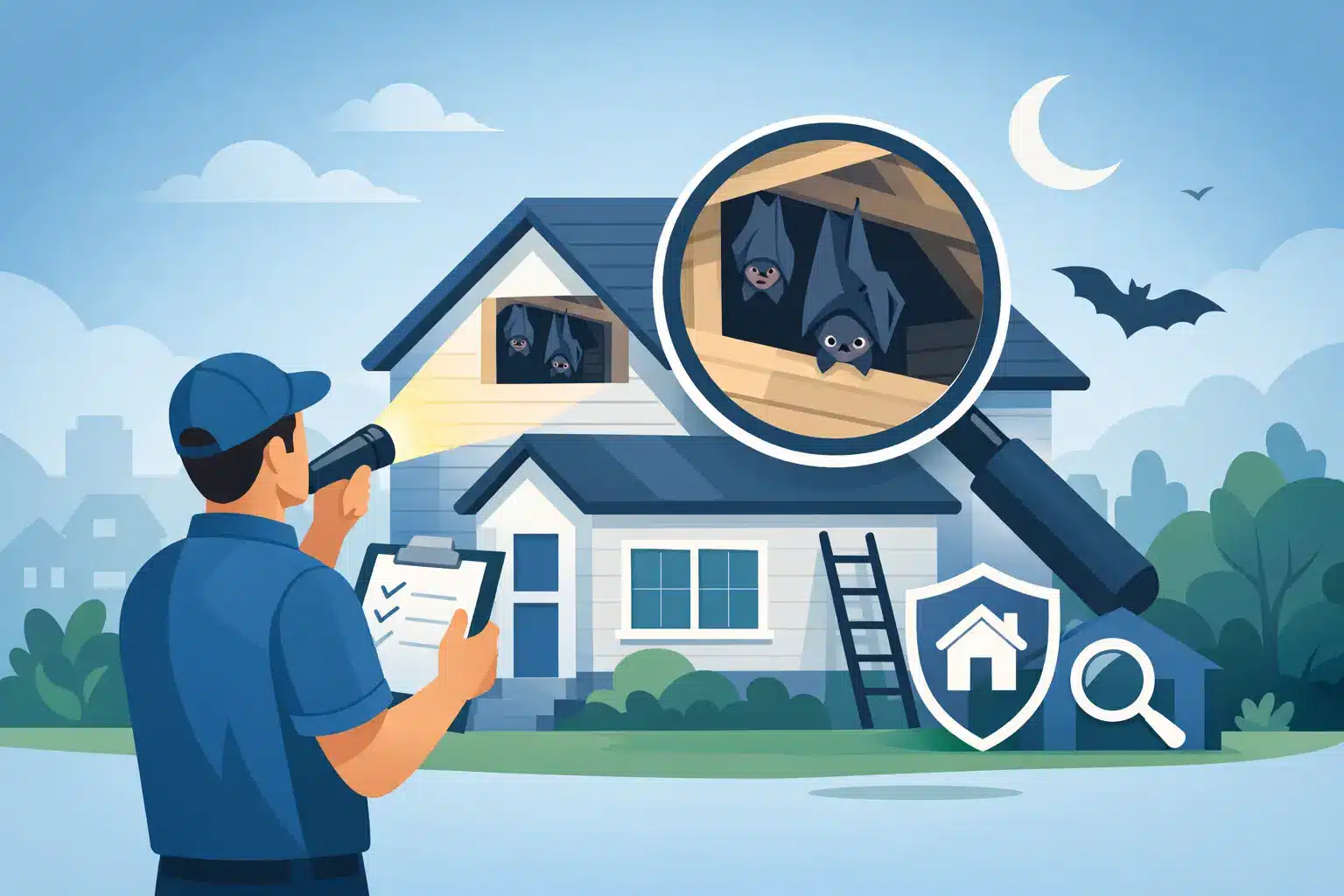
A bat inspection often begins with a sound that does not belong in a quiet house: light scratching above a bedroom ceiling, chirping near a gable vent, or fluttering behind a wall at dusk. This bat inspection homeowner guide helps you recognize what you are seeing, inspect safely from the ground, and avoid the costly mistake of sealing bats inside your home.
Bats are valuable wildlife, but a roost in your attic, walls, or commercial building can create sanitation concerns, unpleasant odors, damaged insulation, and repeat entry problems. The goal is not to harm bats. It is to identify how they are using the structure and arrange safe, humane bat removal through proven exclusion methods.
Your Bat Inspection Homeowner Guide
A useful inspection is more than a quick look at the roofline. Bats can enter through gaps as small as 3/8 inch, which means a crack that seems too narrow for other wildlife may still be an active entry point. Their most common routes are along roof intersections and areas where construction materials meet.
Start from outside during daylight. Walk the perimeter slowly and look upward at the roof, fascia, siding, chimney, vents, and utility penetrations. You are looking for gaps, staining, droppings, or a pattern of activity that suggests bats are getting in and out regularly.
Then observe the building from a safe distance around sunset. Bats leaving a roost typically emerge shortly after dusk and may use the same opening repeatedly. Watch a suspected area for 30 to 60 minutes, but do not stand directly beneath an exit point. Note the location, direction of travel, and approximate number of bats you see. This information helps a specialist confirm active entry points and plan an exclusion correctly.
Do not climb onto a steep roof, pull apart siding, or put your face near a gap to investigate. A bat inspection should protect you as well as the animals. Professional inspection equipment and experience matter most when the suspected opening is high, concealed, or connected to a complicated roofline.
Signs Bats May Be Using Your Property
One bat outdoors does not mean your home has an infestation. Bats commonly feed around streetlights, trees, ponds, and open yards. The concern rises when activity is consistently tied to your structure.
Look for several signs together rather than relying on one clue. Brown or dark rub marks near a small opening can develop as bats repeatedly pass through. Small droppings may collect on window ledges, exterior walls, porches, attic insulation, or below a roosting area. Bat droppings can resemble mouse droppings, but they often crumble into shiny insect fragments when disturbed. Do not handle them with bare hands or create dust trying to test them.
Sounds are another clue. A colony may create faint scratching, squeaking, or fluttering around dusk and dawn. These sounds are often most noticeable above upper-floor ceilings, around chimneys, or inside walls warmed by the afternoon sun.
Odor can be a later-stage warning. Accumulated guano and urine may produce a musty, ammonia-like smell, particularly in hot attics or enclosed voids. If the odor is increasing, do not assume air fresheners or a quick cleanup will solve it. The source, the entry points, and any contaminated materials all need attention.
The Areas Homeowners Most Often Miss
Most people inspect the obvious holes first, then overlook the narrow construction gaps bats prefer. A careful exterior review should include roof returns, ridge caps, soffit and fascia joints, dormers, chimney flashing, gable vents, attic vents, loose siding, and gaps around pipes or electrical lines.
Pay close attention where one material meets another. A tiny separation between siding and trim, a lifted edge of flashing, or a gap behind a gutter can be enough. Older homes and buildings with additions are especially likely to have multiple entry routes because settling, weather exposure, and past repairs create small openings over time.
Commercial properties, churches, and large multi-unit buildings present a different challenge. Their height, long rooflines, masonry details, and multiple mechanical penetrations can hide entry points well beyond the area where occupants hear activity. In those cases, a complete building inspection is far more reliable than treating the nearest visible gap.
What Not to Do After Finding Bat Activity
The temptation is understandable: find the hole and caulk it immediately. But sealing an active entry point before bats have safely exited can trap bats in walls or attic spaces. That can lead to dead animals, odors, staining, and bats entering living areas as they search for another way out.
Timing matters, too. During the maternity season, young bats may be unable to fly. Exclusion performed at the wrong time can separate flightless pups from their mothers. A knowledgeable bat specialist evaluates the season, local conditions, the species involved, and the structure before deciding when exclusion can be completed humanely.
Avoid repellents, mothballs, ultrasonic devices, bright lights, and homemade deterrents. They rarely solve a structural access problem, and they can push bats deeper into the building instead of moving them out. The lasting solution is to let bats leave through one-way exclusion devices, then seal every viable entry point once the structure is clear.
Safety Steps for Bats, Pets, and People
Never touch a bat, whether it appears healthy, injured, or dead. Keep children and pets away from it, and close interior doors to contain the area if a bat enters a living space. A grounded bat or one that is active during daylight may need assessment by trained wildlife professionals.
If a bat was found in a room with a sleeping person, an unattended child, someone who may not be able to report contact, or a pet, treat the situation seriously. Avoid releasing or discarding the bat before you have received appropriate guidance from local public health or medical professionals. Exposure decisions depend on the circumstances.
Guano cleanup also requires care. Sweeping or vacuuming dry droppings can stir contaminated dust into the air. Small, isolated droppings may be handled only with appropriate protective measures, but substantial attic contamination, soiled insulation, or odor problems are best left to trained cleanup professionals. Proper removal should address contaminated material and sanitize the affected space without spreading debris through the home.
When a Professional Inspection Is the Right Next Step
A professional inspection is the practical choice when you have seen bats exiting the building, found guano in the attic, heard recurring sounds in walls, or cannot safely reach suspected openings. It is also wise when a previous repair did not stop the problem. One sealed gap does not help if several others remain open.
The inspection should identify active and potential entry points, explain whether exclusion can be performed immediately, and outline the repairs needed for long-term prevention. Ask how the company handles timing around baby bats, what areas are included in the sealing work, and whether its guarantee covers the exclusion and repair plan.
For Midwest homeowners and property managers, weather can make small exterior gaps worse quickly. Freeze-thaw cycles, wind, and seasonal expansion can reopen vulnerable areas around trim and flashing. A specialist who works with bats every day knows where these buildings tend to fail and how to close them without creating a new issue.
CP Bat Mitigation brings more than 30 years of bat-specific experience to inspections, humane exclusion, and guano cleanup across the region. A focused bat specialist can provide the clarity that general pest control advice often misses: where bats are entering, whether pups may be present, and what it takes to keep the building protected after they leave.
Keep Your Inspection Notes Simple and Useful
Before scheduling service, write down when you first noticed activity, where you heard or saw it, and whether the activity changes at dusk or dawn. A few photos from the ground can help, provided you do not approach a bat or disturb an opening. Note any recent roof work, storm damage, loose siding, or repairs near the suspected area.
Those details can shorten the inspection and help distinguish a one-time bat encounter from an established roost. More importantly, they keep the conversation centered on a permanent fix rather than a temporary scare tactic.
A quiet attic and a protected roofline are worth addressing early. When you see the signs, resist the urge to seal first and ask questions later. A humane, properly timed inspection gives bats a way out and gives your home the protection it needs to stay bat-free.