

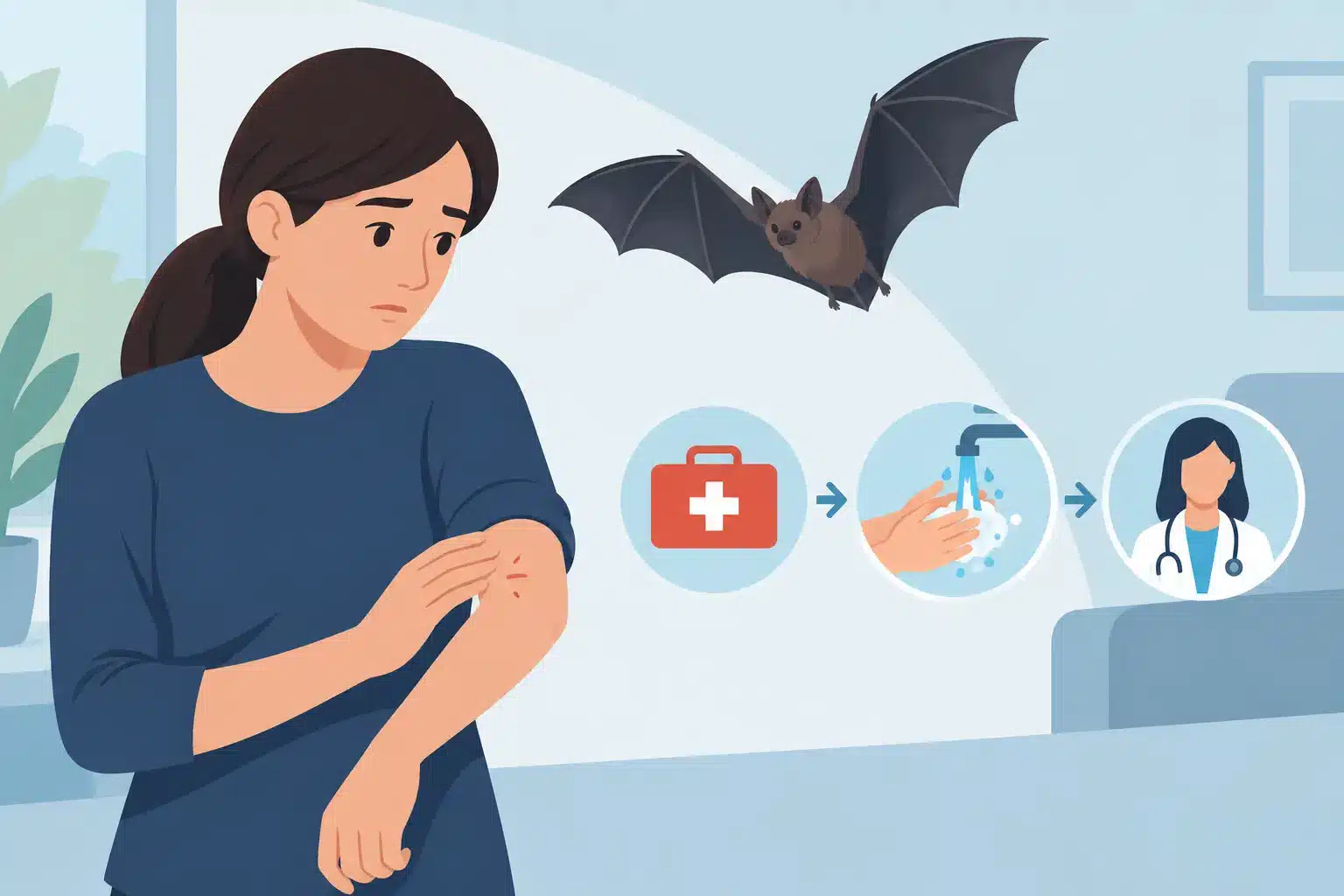
A bat circling a living room is unsettling. A bat found in a bedroom where someone was sleeping, a child was present, or a person could not reliably say whether contact occurred requires a more careful response. These bat exposure response steps are designed to protect people and pets first while preserving the option for public health officials to assess the bat.
Bats are valuable wildlife, and most do not have rabies. Still, rabies is a serious disease, and bat bites or scratches can be small enough to go unnoticed. The right response is not panic or guesswork. It is prompt, calm action followed by guidance from the appropriate medical, veterinary, and public health professionals.
Bat Exposure Response Steps for People and Pets
First, keep people and pets away from the bat. Do not touch it with bare hands, attempt to pick it up, or chase it through the home. If the bat is in one room and it is safe to do so, close the room off, keep pets outside the room, and limit traffic through that area. A frightened bat is more likely to fly unpredictably or seek another hiding spot.
If anyone was bitten, scratched, or had direct contact with a bat, wash the affected area thoroughly with soap and water right away. Contact a healthcare provider, local public health department, or emergency medical service for time-sensitive guidance. Do not wait for symptoms. A medical professional will evaluate the specific circumstances and determine whether rabies post-exposure treatment is recommended.
The same caution applies when direct contact cannot be ruled out. Contact public health or a healthcare provider if a bat was found in a room with:
- A sleeping adult
- An unattended child
- A person who was intoxicated, sedated, or otherwise unable to reliably assess contact
- A person with a condition that could limit awareness of a bite or scratch
A bat in an open part of the house, with no known contact and no possibility that it was present during sleep or with an unattended person, may present a different risk level. That is why a case-specific assessment matters. Public health officials can help determine the appropriate next step based on what happened, who was present, and whether the bat can be tested.
If a pet may have mouthed, bitten, or been bitten by a bat, separate the pet from the bat and call your veterinarian promptly. Have the pet’s rabies vaccination information available. Do not assume an indoor pet is protected simply because it rarely goes outside.
Do Not Release the Bat Before Getting Advice
When a potential human or pet exposure exists, do not release the bat until you have spoken with local public health or animal control authorities. In some situations, the bat may need to be safely captured and submitted for rabies testing. Testing can provide clear answers and may prevent unnecessary treatment.
This does not mean you should put yourself at risk trying to catch it. Never handle a bat without appropriate protection, and never use improvised methods that could result in a bite, scratch, or loss of the animal. Your local health department, animal control agency, or a qualified wildlife professional can explain the safest option for your circumstances.
If officials advise that the bat be retained, avoid damaging it. Testing procedures may require specific parts of the animal to remain intact. Place a container over a bat only if it is safe to do so without direct contact, then wait for instructions. If the bat has flown out of the home or cannot be located, tell the healthcare provider or public health official that as part of the exposure assessment.
What to Avoid During a Bat Incident
A few common reactions can make a stressful situation harder to resolve. Do not swat at a flying bat, spray it with chemicals, use glue traps, or try to trap it with towels or blankets. These actions can injure the bat, create unnecessary contact risk, and make public health testing impossible.
Do not seal suspected entry holes while there may be a bat inside the living space or while an exposure investigation is underway. A bat that cannot exit may become trapped in walls, enter another room, or die inside the structure. If multiple bats are appearing indoors, the issue may be a colony using an attic, wall void, roofline, or other concealed area.
It is also wise not to clean up bat droppings immediately if they are dry and disturbed easily. Guano cleanup requires the right containment, protective equipment, and cleaning process. Sweeping or vacuuming dry droppings can send dust into the air and spread contamination beyond the original area.
After the Immediate Health Question Is Addressed
Once public health and medical concerns are being handled, it is time to identify how the bat got inside. A single bat can enter through an opening as small as about 3/8 inch. Common entry areas include roof returns, fascia gaps, attic vents, chimney intersections, ridge vents, loose siding, utility penetrations, and gaps around eaves.
Seeing one bat indoors does not automatically mean there is a large colony. It could have entered through an open door, fireplace, or unscreened window. But repeated indoor sightings, nighttime noises in walls or ceilings, staining near roofline gaps, droppings below an exterior opening, or a strong odor in the attic are reasons to schedule a professional inspection.
A proper inspection should look beyond the obvious hole. Bats often use several access points, including secondary gaps that are easy to miss from the ground. Closing only the visible opening may force bats into another part of the building or leave the colony with a way back in.
Humane Exclusion Is the Long-Term Property Solution
The permanent answer to a bat problem is exclusion, not poison, trapping, or a one-time patch job. Humane exclusion uses professionally installed one-way devices that allow bats to leave the structure but prevent re-entry. Once bats are confirmed out, the remaining entry points are sealed with durable materials suited to the building.
Timing matters. In the Midwest, exclusion work must account for seasonal bat behavior, including maternity periods when flightless pups may be present. Sealing a colony inside at the wrong time is neither humane nor effective. It can lead to trapped animals, odor problems, and bats attempting to find alternate routes into occupied areas.
That is why homeowners, churches, apartments, warehouses, and other commercial properties benefit from a bat specialist rather than a general pest-control approach. CP Bat Mitigation focuses exclusively on safe, humane bat removal, entry-point identification, exclusion, and guano cleanup. The goal is straightforward: every bat deserves a home, just not yours.
Document What You Saw
Before the details fade, write down when and where the bat was found, whether it was alive or dead, who was in the area, and any possible human or pet contact. Note whether anyone was asleep or unable to clearly confirm that contact did not happen. If you can do so safely from a distance, a photo of the location where the bat was found or where it exited may help a wildlife professional identify likely access points.
For property managers and commercial operators, document the unit number, room, date, occupant reports, and any prior sightings. A clear record helps support a coordinated response, especially in multifamily buildings, schools, offices, and facilities with multiple access areas.
When to Call for Professional Help
Call a healthcare provider or public health authority promptly for any known bite, scratch, direct contact, or uncertain exposure involving sleep, children, or impaired awareness. Call a veterinarian promptly for a possible pet exposure. These are health decisions that should be made by qualified medical or public health professionals.
Call a qualified bat professional when the bat is safely addressed but the building still needs inspection, when bats have appeared indoors more than once, or when you suspect an attic or wall colony. The inspection should identify active and potential entry points, assess whether exclusion can be performed safely at that time of year, and provide a clear plan for prevention and cleanup.
A calm response protects everyone involved. Keep your distance, get professional health guidance when exposure is possible, and address the building with proven humane exclusion before one unexpected bat becomes a repeat problem.