

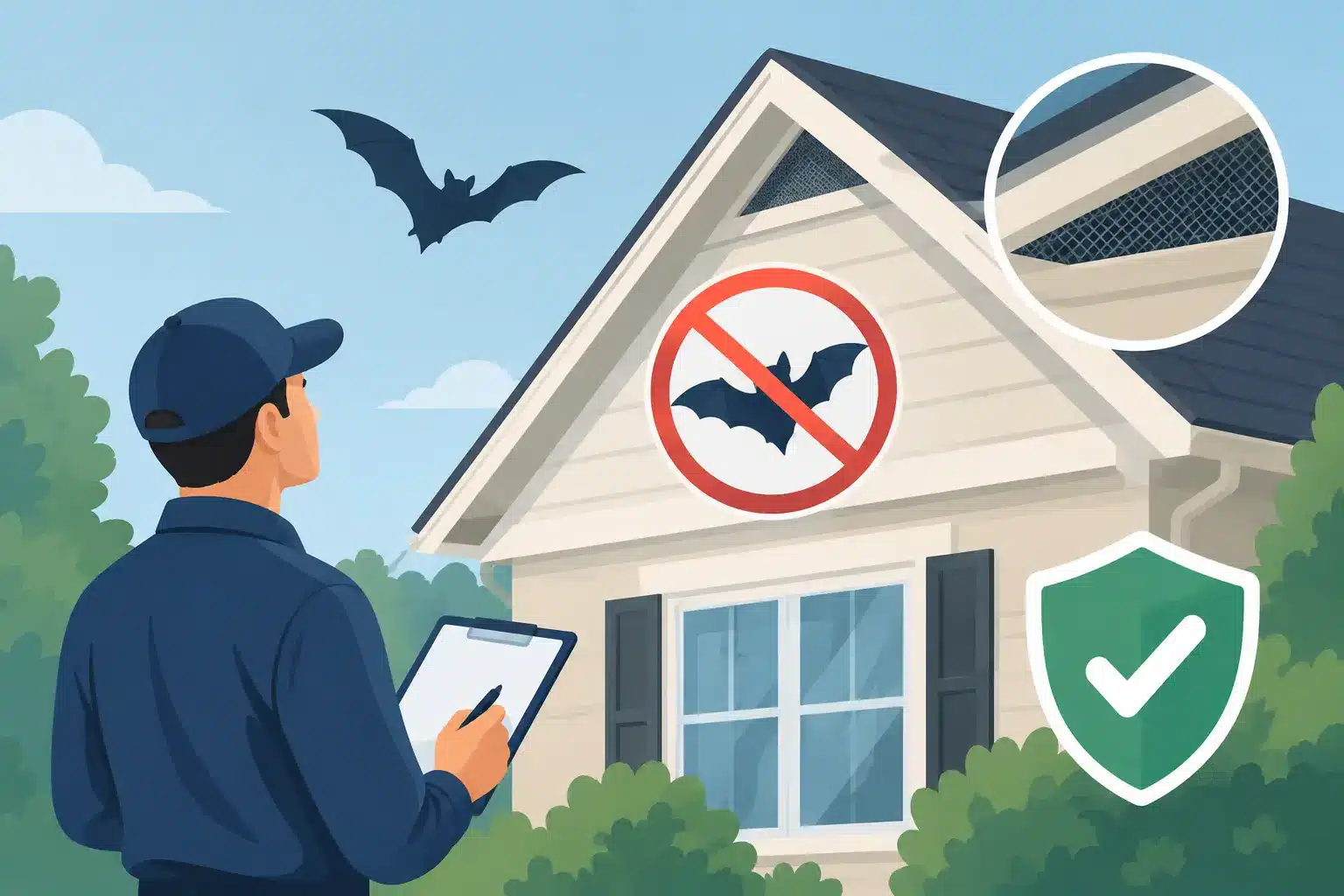
A bat problem can appear resolved the moment the noises stop, but that is not the same as knowing the building is protected. This bat exclusion warranty guide explains what a meaningful warranty should cover, what questions to ask before work begins, and why the fine print matters as much as the exclusion work itself.
For homeowners, churches, apartment managers, and commercial property operators, a warranty is more than a sales promise. It is the provider’s commitment to stand behind the areas they sealed and respond if bats regain access. The right coverage gives you confidence that the job was designed for long-term prevention, not a temporary quiet period.
What a Bat Exclusion Warranty Should Mean
A professional bat exclusion is a process, not a single repair. The specialist identifies active entry points, installs one-way exclusion devices where bats are leaving, and seals secondary gaps that could become new access routes. Once bats have exited safely, the remaining entry points are closed with materials appropriate for the structure.
A warranty should address the quality and durability of that work. In practical terms, it should explain what happens if bats reenter through an area the company excluded during the warranty period. Will the provider return to inspect? Will they make the necessary repairs? Is there a service charge? Those answers should be clear before you approve the proposal.
A strong warranty does not mean a building can never develop a new defect. Wind, hail, roof damage, shifting masonry, aging siding, and later construction can create openings that did not exist at the time of service. It does mean the company accepts responsibility for its completed exclusion work and has a defined process for resolving a covered return.
Coverage Starts With a Thorough Inspection
The value of any warranty depends on the inspection behind it. Bats can enter through surprisingly small gaps around rooflines, fascia boards, attic vents, ridge caps, chimney flashing, utility penetrations, loose soffits, and gaps where different building materials meet. On larger commercial properties, access points may be several stories above ground or concealed behind architectural features.
If an inspection is rushed, the warranty may look reassuring while the scope of work misses vulnerable areas. A qualified bat specialist should assess the full exterior, identify evidence of active use, and explain which openings are primary exits versus potential access points. The scope should match the condition of the property, not a one-size-fits-all package.
Ask whether the warranty applies to all excluded areas or only to listed repairs. A documented scope protects both sides. You know what was inspected and sealed, and the provider can distinguish between a return through covered work and damage that occurred afterward elsewhere on the structure.
Why “Bat-Free” Needs a Clear Definition
Bats do not behave like typical household pests. They may leave at dusk, return before dawn, and change roosting areas seasonally. After exclusion devices are installed, activity can continue briefly while the colony exits. That is expected. A legitimate provider should explain the anticipated timeline instead of promising instant silence.
The warranty should clarify when coverage begins. Does it begin on the installation date, after the final seal-up, or after a follow-up inspection confirms the bats are out? The timing matters because the final closure is the point at which the structure becomes fully protected against return through the addressed openings.
What Is Commonly Covered
Terms vary between providers, but a useful bat exclusion warranty often covers return visits and correction of bats reentering through the company’s completed exclusion work. It may also include evaluation of reported bat activity, provided the customer contacts the company promptly and access to the property is available.
The strongest service agreements are specific rather than vague. Look for written language addressing the covered structure, the duration of coverage, the exact work performed, and the provider’s remedy if a covered issue occurs. Verbal assurances can be sincere, but a written warranty is easier to understand and enforce months or years later.
For many property owners, the most valuable part is not simply free repair. It is knowing the same bat-focused team will return with knowledge of the building, the original entry points, and the exclusion design. CP Bat Mitigation approaches this work with proven exclusion methods and a long-term protection mindset because every bat deserves a home, just not yours.™
The Limits You Should Expect
An honest warranty has limits. Be cautious if a company claims to cover every future bat issue regardless of what happens to the property. No contractor can reasonably guarantee against openings created later by storm damage, deteriorated roofing, a fallen tree limb, new utility work, or renovation projects performed by others.
Common exclusions may include new structural damage, areas outside the original scope, inaccessible locations that were not part of the completed work, and changes made after service. A warranty may also exclude bats that gain access through an entirely new opening on another part of a large building. That does not make the warranty weak. It means the terms should be realistic.
What matters is whether the provider explains those limits plainly. If an exclusion is excluded from coverage, ask why. For example, a chimney in poor condition or a roofline damaged by weather may require repair by another trade before permanent bat-proofing can be guaranteed. Clear communication helps you decide whether to make those repairs before exclusion work begins.
Seasonal and Wildlife Considerations
Humane exclusion must account for bat biology and applicable wildlife protections. During the maternity season, young bats may be unable to fly. Sealing an active maternity colony inside can create odor, contamination, and animal welfare concerns. In some cases, the right approach is to plan the work around the season, monitor activity, and complete final exclusion when it can be done safely.
This can affect the project schedule, but it should not be treated as a delay without explanation. A bat specialist should tell you why timing matters, what temporary measures are appropriate, and when permanent exclusion can proceed. A warranty is most meaningful when the work is performed correctly, not hurried to meet an arbitrary deadline.
Questions to Ask Before You Sign
Before selecting a bat removal company, ask for the warranty terms in writing and read them alongside the inspection report. You do not need to be a construction expert to ask direct questions. A professional provider should be comfortable answering them.
Ask how long the warranty lasts, what exact areas are covered, and what constitutes a covered reentry. Ask whether inspections, labor, materials, and travel are included for a covered service call. If you manage a commercial facility or multi-building property, confirm whether each structure is included or priced separately.
Also ask what you need to do to keep the warranty valid. Some companies may require you to maintain roof, siding, or vent repairs after the work is complete. That is reasonable if those components affect the sealed areas, but the requirements should be stated clearly. Keep your proposal, paid invoice, warranty document, and any photos of completed work in your property records.
A Warranty Is Not a Substitute for Guano Cleanup
Exclusion stops new bat access, but it does not remove droppings, urine residue, odor, or contaminated insulation already present in an attic, wall void, or commercial space. Guano cleanup is a separate part of restoring the property. Depending on the amount and location of contamination, it may involve protective containment, removal of affected material, cleaning, and deodorizing.
Do not assume a bat exclusion warranty covers cleanup or future odor issues unless the agreement specifically says so. Likewise, a cleanup service alone does not stop bats from returning if the building has not been properly excluded. The best approach addresses both the entry problem and the condition left behind.
Choosing Protection That Holds Up
Price matters, but the least expensive proposal can become costly if it relies on temporary patching, skips difficult access points, or offers a warranty too narrow to be useful. Compare the scope of inspection, materials, exclusion method, seasonal plan, cleanup options, and written warranty – not just the initial number.
A dependable bat exclusion warranty reflects careful work, realistic limits, and a provider willing to return when a covered problem occurs. Before bats turn another attic, roofline, or wall void into a recurring issue, arrange a professional inspection and ask to see exactly how your property will be protected.