

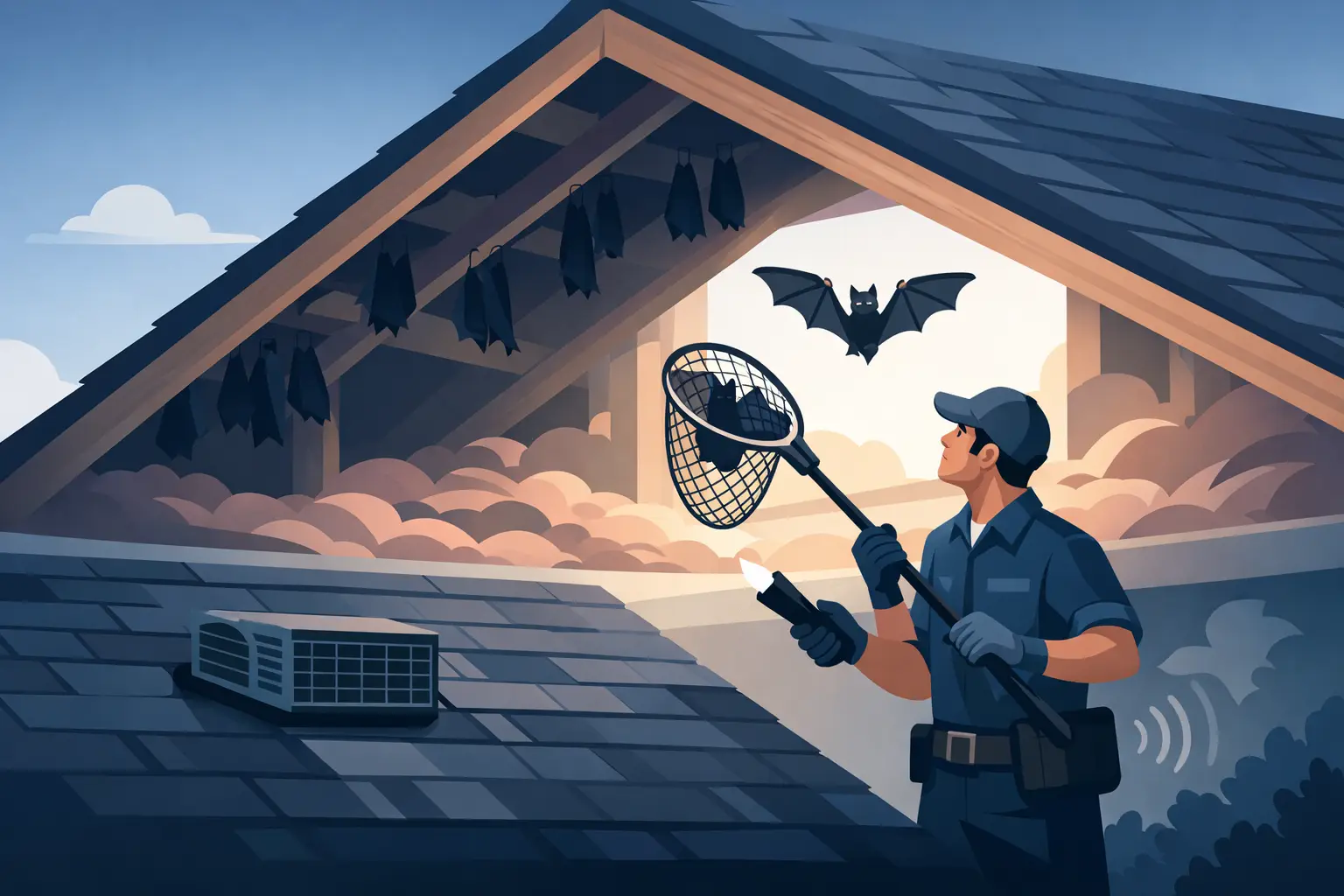
You usually hear them before you see them – light scratching at dusk, faint chirping in the walls, or a sudden bat appearing in a hallway after sunset. When that happens, bats in attic removal stops being a future maintenance issue and becomes a problem you want handled correctly, fast. The key is not just getting bats out. It is removing them humanely, protecting the people inside, and making sure they do not come back next season.
Why bats choose attics in the first place
An attic gives bats what they are looking for: warmth, shelter from predators, and tight, stable spaces for roosting. In the Midwest, homes, churches, apartment buildings, and commercial properties often provide ideal conditions without owners realizing it. A gap along the roofline, loose flashing, construction joint, or warped soffit may be all a colony needs.
Once bats find a reliable entry point, they tend to return. That is one reason this issue can feel like it appears overnight when, in reality, the colony may have been using the structure for some time. The noise becomes more noticeable during seasonal activity, and the buildup of guano and odor grows with every passing week.
What makes bats in attic removal different from standard pest control
This is where many property owners get bad advice. Bats are not rodents, and they should not be treated like squirrels, mice, or raccoons. Poison is not an acceptable solution. Trapping is often ineffective at the colony level. Sprays, bright lights, and noise devices rarely solve the problem for long.
Proper bats in attic removal depends on exclusion. That means identifying every active and potential entry point, allowing bats to leave safely through one-way devices, and then sealing the structure so they cannot re-enter. If even one secondary gap is missed, the colony may shift locations within the building or return after the devices are removed.
That is why specialization matters. A general pest company may handle a wide range of nuisance animals, but bat work requires a narrower skill set, careful timing, and a clear understanding of bat behavior.
Timing matters more than most people realize
One of the biggest factors in a successful job is seasonality. During maternity season, flightless young may be present inside the attic. If exclusion is performed at the wrong time, adult bats can be blocked out while pups remain trapped inside. That creates both a humane issue and a sanitation problem.
The right approach depends on the species, the structure, and the time of year. In some cases, immediate action is needed because a bat entered occupied living space, especially if people were sleeping in the room. In other cases, the safest long-term solution is to inspect, document access points, and schedule exclusion for the proper window.
This is one of those situations where fast service matters, but so does restraint. The best result is not the quickest shortcut. It is the method that resolves the infestation without creating a second problem.
The real risks of leaving bats in an attic
Some homeowners put this off because bats are quiet compared with other wildlife. Others hope the colony will leave on its own when the weather changes. Sometimes activity does shift seasonally, but that does not mean the problem is solved.
Guano accumulation can damage insulation, create strong odors, and support fungal growth. Staining may appear around soffits or entry holes. In commercial buildings and churches, the issue can affect sanitation standards, occupant confidence, and maintenance costs. Over time, minor entry defects can become larger structural vulnerabilities.
There is also the health side. Not every bat carries disease, but direct contact should always be taken seriously. If a bat is found in a bedroom, child’s room, or any occupied interior space, the situation should be evaluated carefully. That is not a do-it-yourself moment.
How a professional bats in attic removal process works
A real solution starts with inspection, not guessing. The first job is to identify where bats are entering, where they are roosting, and how widespread the issue has become. On some structures, the openings are obvious. On others, they are so small most owners would never notice them from the ground.
Inspection and species-aware planning
A trained bat specialist looks for active rub marks, guano deposits, staining, airflow gaps, roofline vulnerabilities, and signs of colony behavior. The inspection also helps determine whether the job should proceed immediately or be scheduled around maternity restrictions and bat activity patterns.
That planning stage is where long-term success begins. Without it, exclusion becomes guesswork.
Humane exclusion
Once conditions are right, one-way exclusion devices are installed at active exits. These let bats leave the structure but prevent them from getting back in. At the same time, all other qualifying gaps and vulnerable openings are sealed.
This is the step that most often separates a permanent fix from a recurring problem. If the structure is not fully addressed, bats simply find another route.
Seal-up and prevention
After the bats have exited, the remaining device locations are sealed permanently. Good exclusion work is not just about closing holes. It is about using durable materials and methods that match the building so weather, movement, and age do not reopen the same weak spots next season.
Guano cleanup and restoration
Not every attic needs the same level of cleanup. A small, recent roost may require limited sanitation. A larger, long-term colony can mean contaminated insulation, odor issues, and significant waste removal. This part matters because removal without cleanup can leave behind lingering odor and damage that continue to affect the property.
Why do-it-yourself bat removal usually backfires
Most DIY efforts fail for one of three reasons: the entry points are not fully identified, the timing is wrong, or the method is not true exclusion. Store-bought repellents may push activity to another part of the building, but they rarely solve the root issue. Blocking holes without understanding bat movement can trap animals inside walls or living spaces.
There is also the safety factor. Attics are already hazardous environments. Add bat droppings, poor footing, heat, and the risk of direct bat contact, and it becomes a job that can go wrong quickly.
For property managers and commercial operators, the stakes are even higher. A partial fix can turn into repeat complaints, tenant frustration, sanitation concerns, and higher costs later.
What to look for when hiring a bat removal company
Not all wildlife control is equal. Ask whether the company specializes in bats or treats them as one service among many. Ask how they handle maternity season, what exclusion methods they use, whether they inspect the entire structure, and what kind of guarantee backs the work.
You should also expect clear communication. A good contractor explains what they found, what needs to be sealed, what can wait, and why. They do not rely on scare tactics. They give you a practical plan.
That specialist approach is why many Midwest property owners turn to companies like CP Bat Mitigation when they need safe, humane bat removal backed by proven exclusion methods and long-term prevention.
A permanent result is the real goal
When people search for bats in attic removal, they are usually looking for one thing: peace and quiet again. But the best outcome is bigger than that. It is knowing the colony was handled humanely, the structure was protected correctly, and the same problem is far less likely to return.
Every bat deserves a home, just not yours. If you suspect attic activity, act early, get the structure inspected, and choose a specialist who treats the job like a permanent property protection issue, not a quick patch. That choice usually saves money, stress, and repeat infestations down the road.