

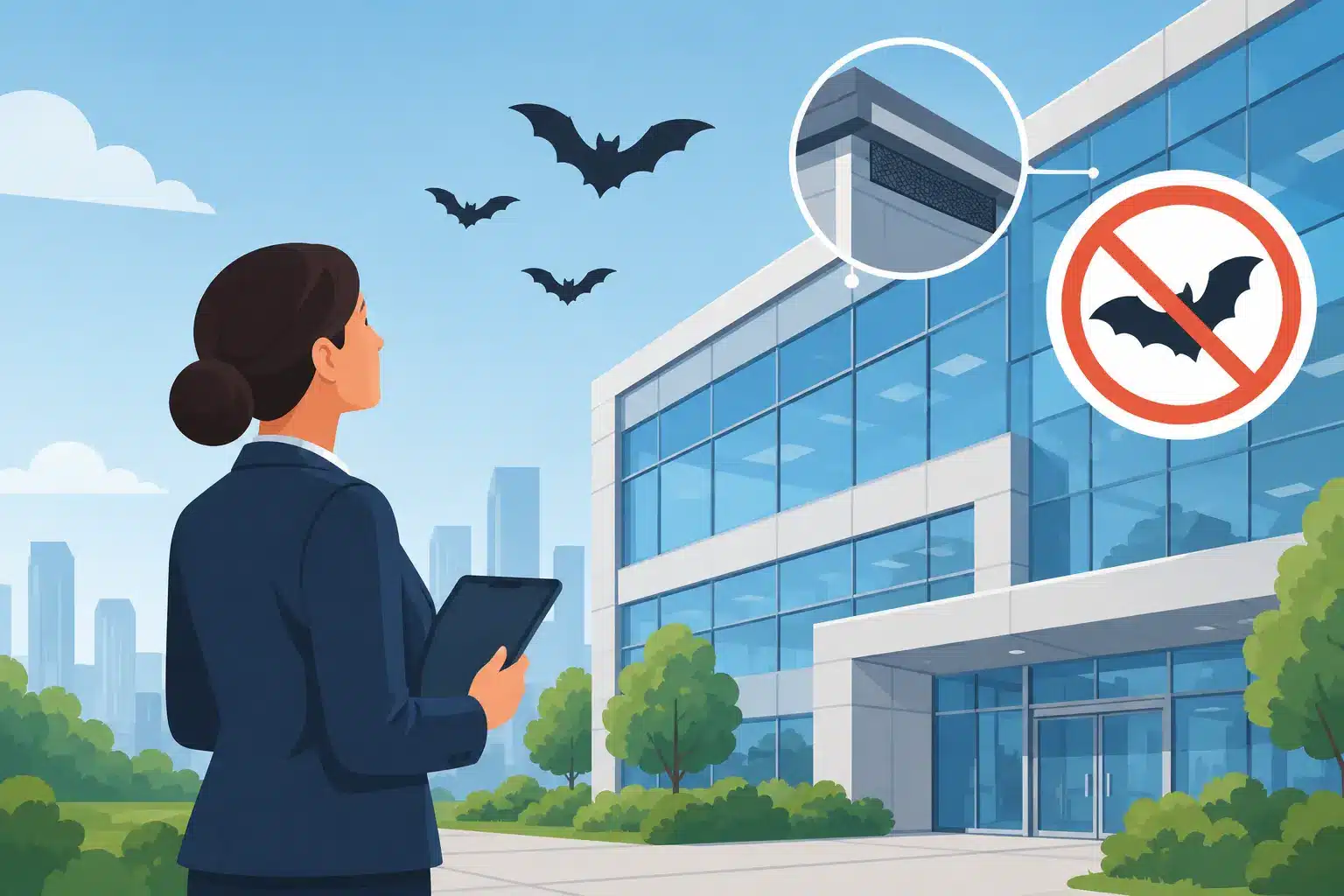
A bat sighting in an office hallway, stairwell, warehouse bay, or mechanical room is not a small maintenance issue. It can signal an active colony in the building envelope, and the longer access points remain open, the more difficult sanitation, tenant communication, and long-term prevention can become. This office building bat prevention guide gives property managers and building operators a clear path to protect people, preserve the property, and resolve the issue humanely.
Bats are valuable wildlife, but commercial buildings can offer exactly what a colony needs: protected gaps, warm upper areas, low-traffic spaces, and dependable roosting conditions. Every Bat Deserves a Home, Just Not Yours.™ The right response is not to seal holes at random or rely on a temporary removal. It is to identify how bats are entering, use proven exclusion methods at the appropriate time, and secure the entire structure against future access.
Why Office Buildings Attract Bats
Office buildings often have more vulnerable exterior transitions than managers realize. A single building may include masonry joints, rooflines, parapet walls, soffits, attic vents, expansion gaps, loading docks, utility penetrations, and decorative architectural features. Bats can use openings that appear too small to matter during a routine maintenance walk.
Older downtown properties are especially prone to bat activity because weathering can create gaps behind fascia, around flashing, and where brick or stone meets trim. Newer facilities are not immune. Construction gaps around pipes, conduits, rooftop equipment, and exterior lighting can provide access if they were not properly sealed or have shifted over time.
The first sign is not always a bat flying indoors. Employees may report chirping near a ceiling, a persistent odor in an upper-floor office, staining beneath a roofline, or small droppings near an exterior wall. A single bat inside may have entered through an open door or loading bay, but repeated sightings deserve a professional inspection.
Office Building Bat Prevention Starts With Inspection
Effective prevention begins with understanding the building’s use, layout, and bat activity. A multi-tenant office complex requires a different inspection approach than a stand-alone professional office, medical building, church, school administration building, or converted historic property. The goal is to locate active entry points while also identifying secondary gaps bats could use after the primary route is closed.
A qualified bat specialist should inspect the exterior from grade to roofline, paying close attention to areas that general maintenance teams may not be able to access safely. Evening observation can also be useful because it helps confirm where bats are exiting. That matters. Sealing an opening before confirming activity can trap bats inside, push them into occupied areas, or leave young bats separated from their mothers during sensitive seasonal periods.
For building managers, the most useful inspection record includes the likely entry points, evidence of active use, areas of guano accumulation, conditions that need repair, and a recommended exclusion timeline. This turns a stressful wildlife issue into a manageable property-protection plan.
Common commercial entry points
Bat entry points vary by structure, but the most frequent commercial vulnerabilities include:
- gaps at roof-to-wall intersections, soffits, fascia, and eaves
- loose flashing or openings around chimneys, parapets, and rooftop equipment
- unprotected vents, louvers, and utility penetrations
- cracks in masonry, siding transitions, expansion joints, and aging caulk lines
Do not assume that visible daylight through a gap is the only concern. Bats can access sheltered voids through narrow crevices that are easy to overlook from the ground.
Use Humane Exclusion, Not Trapping or Poison
The permanent solution for an established bat colony is exclusion. This process allows bats to leave the building through one-way devices or carefully designed exit systems, while the remaining access points are professionally sealed. Once the colony has exited, the temporary devices are removed and the final openings are secured.
Exclusion is different from trapping, poisoning, or blocking a single hole. Those approaches can create dead animals inside walls, strong odors, insect activity, and more costly repairs. They can also create unnecessary harm to a protected wildlife species. A humane plan respects bat behavior while preventing the building from serving as a roost.
Timing is a critical trade-off. In many areas, exclusion cannot be completed during maternity season because flightless pups may remain inside if adults are excluded. Local conditions, species activity, and regulations affect the correct window for work. A bat specialist should explain whether full exclusion can begin immediately or whether the property needs a temporary management plan until the appropriate season.
That does not mean waiting to take action. Inspection, documenting access points, protecting interior areas, and planning repairs can begin as soon as bat activity is discovered.
Protect Occupants While the Problem Is Being Resolved
Property managers should treat interior bat activity as both a safety and communication issue. If a bat is found in an occupied office, conference room, or common area, limit contact and keep people away from it. Do not ask employees to handle it, sweep it outside, or attempt a do-it-yourself capture.
If there has been possible direct contact between a bat and a person or pet, contact local public health officials or a medical professional promptly for guidance. This is especially important when someone was sleeping, a child may have touched the bat, or a person cannot reliably confirm whether contact occurred.
Clear communication reduces unnecessary alarm. Tell tenants or employees that the issue is being assessed by a bat specialist, explain which areas are temporarily restricted, and provide a simple point of contact for reporting additional sightings. Avoid promising a completion date before the inspection determines the scope and seasonal limitations.
For active roosts above occupied spaces, managers may need short-term measures such as restricting access to affected storage rooms, covering equipment, adjusting cleaning schedules, or relocating staff from areas with significant odor or droppings. The right response depends on the amount of activity and whether guano has entered occupied or HVAC-adjacent spaces.
Address Guano and Contamination Correctly
Guano cleanup is not ordinary janitorial work. Disturbing dry droppings can send dust into the air, particularly in attics, ceiling voids, mechanical rooms, and seldom-used upper levels. The contamination level, location, ventilation, and amount of material all affect the scope of cleanup.
A professional remediation plan may include controlled removal, protective equipment, HEPA-filtered vacuuming where appropriate, treatment of affected surfaces, and replacement of contaminated insulation or damaged materials. Cleanup should follow exclusion whenever possible. Removing guano before bats are fully excluded can mean paying to clean the same area twice.
Guano also tells a story about the duration of the problem. Fresh accumulations near an entry point may indicate recent activity, while deep deposits, staining, and odor can point to a longer-term colony. Documenting those conditions helps managers prioritize repairs and communicate accurately with owners, insurers, or tenants when needed.
Build Bat Prevention Into Routine Maintenance
Once exclusion is complete, prevention becomes a building-maintenance responsibility. The best time to find small exterior gaps is before they become an animal entry point or a water intrusion problem. Add bat-vulnerable areas to seasonal roof, facade, and HVAC inspections, particularly after storms, freeze-thaw cycles, reroofing, or exterior renovations.
Maintenance teams should be instructed not to seal an opening if bats are visibly using it. Instead, they should photograph the area, note the location, and report it for evaluation. A quick seal with foam, caulk, or mesh may look like a fix, but it can complicate humane exclusion and conceal a larger access route nearby.
It also helps to coordinate contractors. Roofers, painters, tuckpointing crews, HVAC technicians, and electricians may each create or expose gaps during routine work. Require exterior penetrations and disturbed building transitions to be sealed to appropriate commercial standards before the job is signed off.
When to Call a Bat Specialist
Call for professional help when bats are repeatedly seen entering or leaving the building, bats appear inside occupied areas, guano is present, odor is developing, or the structure has multiple high or hard-to-reach openings. Commercial bat work is rarely a one-gap repair. It requires careful inspection, species-aware timing, safe access, exclusion planning, and durable sealing.
CP Bat Mitigation provides safe, humane bat removal, exclusion, and guano cleanup for commercial properties, with a focus on lasting protection rather than temporary fixes. A professional inspection can clarify the scope quickly and help you avoid the cost of repeat infestations, emergency tenant complaints, and avoidable building damage.
The most helpful next step is simple: document what you have seen, keep people from handling any bat found indoors, and schedule an inspection before a minor access point becomes a larger property problem.