

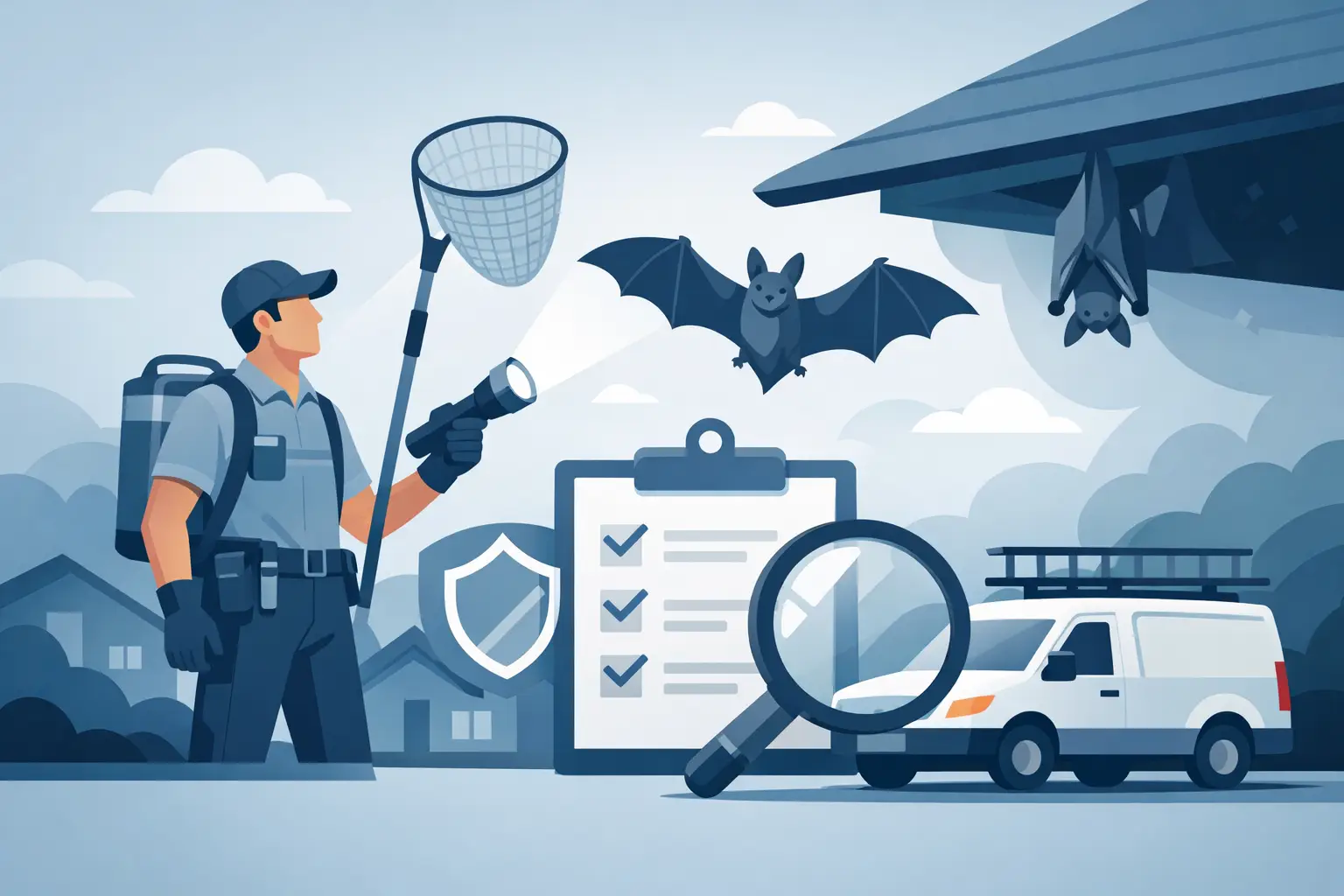
A few bats circling near a roofline can turn into scratching overhead, odors in a wall, stained insulation, and a growing concern for everyone inside the building. Knowing the best bat removal company traits helps homeowners, property managers, churches, and business owners choose a provider that solves the full problem instead of simply moving it out of sight.
Bat work is specialized property protection. The right company identifies how bats are getting in, removes them humanely, closes every usable entry point, and addresses contamination when necessary. Anything less can leave a building vulnerable to another infestation next season.
The Best Bat Removal Company Traits Start With Specialization
Bats do not behave like mice, squirrels, or insects. They can enter through gaps as small as 3/8 of an inch, use rooflines and construction seams that are difficult to see from the ground, and return to familiar roosting sites year after year. A general pest control company may be capable of handling many household pests, but bat exclusion requires its own experience, equipment, and timing.
Look for a company whose work is centered on bats, not a provider that treats bat removal as one item on a long menu. A true specialist understands common entry areas around ridge vents, chimney flashing, soffits, gable intersections, roof returns, and siding transitions. They also understand how seasonal behavior affects the work.
That specialization matters when a building has multiple bat entry points. Sealing the one gap a homeowner noticed may leave several others open. Worse, sealing an active opening without a proper exclusion process can trap bats inside walls or living spaces. A qualified provider builds a plan around the whole structure, not one visible hole.
A Thorough Inspection Should Come Before Any Work
A reliable bat removal company does not give a one-size-fits-all answer from a quick phone description. The inspection is where permanent results begin.
During a professional inspection, the technician should assess the exterior, likely roosting areas, visible staining, guano accumulation, airflow gaps, and construction details that create access. In many cases, an evening observation is also useful because it can confirm where bats exit at dusk. This evidence helps the company determine the scale of the activity and develop the right exclusion strategy.
The company should explain its findings in clear language. You should understand where bats are entering, what will be sealed, how bats will leave safely, whether cleanup is recommended, and what protection is included after the job is completed. Technical knowledge is valuable, but homeowners and facility managers should never be left guessing about the work being proposed.
Free inspections can be especially helpful when you are deciding whether the sounds in an attic are actually bats, birds, mice, or another wildlife issue. The goal should be accurate identification and an honest recommendation, not pressure to buy unnecessary services.
Humane Exclusion Is the Standard for Professional Bat Control
The best long-term answer is not poisoning, trapping, or indiscriminate sealing. It is safe, humane bat removal through proven exclusion methods.
Exclusion allows bats to leave the structure through purpose-built devices while preventing them from getting back inside. At the same time, the company seals secondary gaps and vulnerabilities throughout the building. Once the bats have exited, the remaining exclusion points are closed to create a bat-resistant exterior.
Timing is a major part of doing this correctly. During maternity season, young bats may not yet be able to fly. Excluding adult bats at the wrong time can leave pups trapped inside, creating an inhumane situation and a difficult odor problem for the property owner. A knowledgeable company follows applicable wildlife regulations and adjusts the schedule when conditions require it.
A provider should be willing to explain that timing may affect when final exclusion can occur. That is not a delay for the sake of delay. It is responsible bat control that protects the animals and prevents a worse property problem.
Cleanup Expertise Protects More Than Appearance
Bat guano is more than an unpleasant attic cleanup issue. Accumulation can damage insulation, create strong odors, stain building materials, and attract insects. In commercial properties, churches, multi-unit buildings, and other occupied spaces, contamination concerns can also affect maintenance planning and occupant confidence.
The removal company should be prepared to assess whether guano cleanup is necessary and describe the scope honestly. A small amount of droppings near an exterior entry point may require a different response than a heavily contaminated attic or wall void.
Professional cleanup should include appropriate protective practices, controlled removal of affected material when needed, and attention to the surfaces and insulation that may hold odor or contamination. The goal is not to make the space look cleaner for a day. It is to help restore a healthy, usable area after the bats are excluded.
Look for Proof, Guarantees, and Clear Accountability
Experience should be easy to verify. A dependable bat removal company can point to years in the field, completed projects, customer feedback, and a defined process for handling residential and commercial properties. Family-owned service businesses can offer another layer of accountability because their reputation is built one local job at a time.
Ask what stands behind the work after the last exclusion device is removed. An industry-leading guarantee is meaningful when it clearly states what is covered and how the company responds if bats return through a treated area. Read the terms, especially for large or complex structures where access, hidden voids, or future construction changes can affect coverage.
You should also expect the company to carry appropriate insurance and to provide a written scope of work. The document should distinguish bat exclusion from optional cleanup, repairs, or restoration. Clear pricing and clear expectations protect both the property owner and the service provider.
At CP Bat Mitigation, the work is focused exclusively on humane bat removal, exclusion, mitigation, and guano cleanup because permanent protection requires that level of focus.
Warning Signs That a Company May Not Be the Right Fit
Be cautious if a provider promises to seal every opening immediately without inspecting for active bat use. Be equally cautious of anyone who recommends harmful removal methods, cannot explain seasonal limitations, or offers only a vague assurance that the bats will be gone.
Low upfront pricing can also be misleading if it covers only a single exit point rather than a complete exclusion plan. The least expensive quote may become the most expensive option when bats find an unsealed gap and return next year. Compare the work being performed, the materials used, the guarantee, and the company’s bat-specific experience, not just the first number on the estimate.
Another red flag is poor communication. If a company cannot answer straightforward questions before the job, it may be difficult to reach if you need help afterward. Property owners deserve timely updates, respectful service, and a clear point of contact.
Questions to Ask Before You Hire a Bat Removal Company
Start by asking whether the company specializes in bats and how many exclusions it has completed. Then ask how it identifies entry points, whether it uses one-way exclusion devices, and how it handles maternity season. These answers reveal whether the company has a tested process or is improvising on your property.
Ask what areas of the structure will be sealed and whether the estimate includes a full exterior inspection. If guano is present, ask how the company determines whether cleanup or insulation removal is needed. Finally, ask for the guarantee in writing and clarify what happens if bat activity continues after the work.
For commercial buildings, add questions about scheduling, access coordination, safety procedures, and how work will be managed around tenants, employees, customers, or worship services. A capable provider will adapt the plan to the building’s use without compromising the exclusion process.
The right company will not make you feel rushed for asking detailed questions. Bat activity can be stressful, but the solution should be measured, humane, and built to last. Every Bat Deserves a Home, Just Not Yours.™