

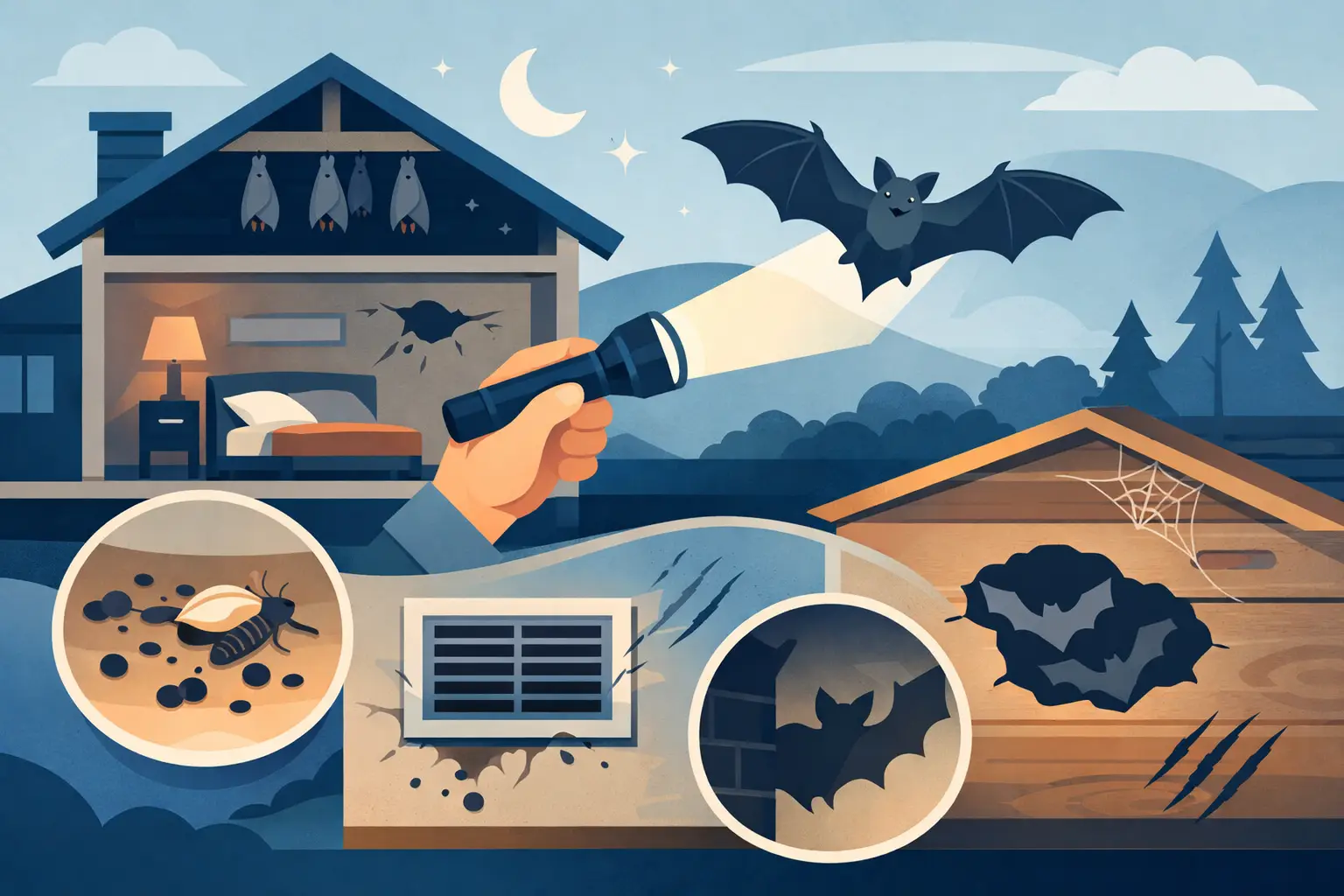
You usually do not see bats first. You hear a light scratching above the ceiling at dusk, catch a sharp ammonia-like odor near the attic hatch, or notice small dark droppings on insulation or a porch below the roofline. Those early signs of bat infestation are easy to dismiss until the colony grows, the mess spreads, and the cleanup becomes far more expensive.
Bats are protected and valuable wildlife, but they do not belong inside homes, churches, apartment buildings, offices, or warehouses. When they move into an attic, wall void, soffit, or chimney chase, the issue quickly becomes about sanitation, structural contamination, and keeping the building sealed against future entry. The earlier you identify the problem, the easier it is to address with safe, humane bat removal and proper exclusion.
Why bat activity gets missed in the early stages
One reason infestations go unnoticed is that bats are quiet compared to other wildlife. They are not stomping around like raccoons or chewing loudly like squirrels. In many buildings, the first activity happens in spots people rarely inspect – attic peaks, ridge vents, gable ends, fascia gaps, church steeples, expansion joints, or high commercial roof transitions.
It also depends on the size of the colony. A small group may leave only subtle evidence at first. A larger maternity colony creates more obvious odor, heavier guano buildup, and repeated entry and exit flights around dusk and dawn. Season matters too. During warmer months, activity often increases as pups are born and the roost becomes more established.
The most common signs of bat infestation
If you are trying to confirm whether bats are using your building, look at the pattern of evidence rather than relying on one clue alone.
1. Scratching, chirping, or fluttering at dawn and dusk
Bats are most active when leaving to feed in the evening and returning around sunrise. Homeowners often describe the sound as light scratching, faint squeaking, rustling, or brief fluttering overhead. These noises usually come from attics, wall voids, soffits, or chimney areas.
The timing matters. If the sound happens mostly around sunset or just before daybreak, bats become more likely than rodents. Midday movement can happen, but regular dawn-and-dusk activity is one of the more telling signs.
2. Guano in the attic or below entry points
Bat droppings, called guano, are one of the clearest signs of a roost. You may find it on attic insulation, rafters, window ledges, porch surfaces, decks, or the ground below an exterior gap. Guano tends to accumulate directly beneath the place bats are entering or roosting.
It is often confused with mouse droppings, but the location and quantity can tell a different story. A growing pile near siding joints, soffits, or the attic edge should not be ignored. Guano also creates real health and cleanup concerns, especially when it builds up over time.
3. Strong odor in upper levels of the building
An active bat colony can produce a distinct smell from guano and urine. Property owners often notice it as musty at first, then sharper and more ammonia-like as contamination increases. The odor may be strongest in attics, top-floor closets, mechanical rooms, or near access panels.
This does not happen in every case right away. A small colony may produce little noticeable odor. But when the smell is persistent and seems stronger in warm weather, it often points to a long-standing roost.
4. Brown or dark staining around small exterior gaps
Bats repeatedly squeeze through the same openings, and over time their body oils leave smudged staining around entry points. These marks often appear around roofline gaps, fascia seams, ridge vents, louvers, utility penetrations, or gaps where building materials have separated.
The opening does not need to be large. Bats can use very small construction gaps, which is why infestations are often missed during casual visual checks from the ground.
5. Bats seen flying from the building at dusk
If you stand outside at sunset and see bats emerging from the same part of the structure, that is a major warning sign. Watch roof peaks, dormers, corners, vents, and chimney intersections. In commercial settings, pay attention to parapet walls, expansion joints, and upper facade transitions.
A single bat outside does not always mean infestation. Bats naturally forage in neighborhoods and near water. The stronger clue is repeated emergence from one exact area of the building over several evenings.
6. A bat found inside living space
One bat inside a home does not always mean a full colony, but it should never be brushed off. It may have entered accidentally from outdoors, or it may be a sign that bats are roosting in the attic or walls and finding a path into occupied areas.
If bats are appearing in bedrooms, hallways, stairwells, or common areas, the structure needs a professional inspection. This is especially true in apartments, churches, schools, and commercial buildings where repeated interior sightings may signal a larger access problem.
7. Grease marks and rub trails near attic access or roost areas
Inside the attic, repeated movement can leave visible rub marks on beams, framing, insulation paths, and around active roost spots. You may also notice concentrated droppings stuck to surfaces below these locations.
This kind of evidence helps specialists determine where bats are resting and how long the problem has been developing. It also helps separate active infestation from an older issue that has already gone inactive.
8. Staining or damage around vents and soffits
Bats do not chew like rodents, but their presence still creates visible wear. Soffits, vent screening, and trim areas may show contamination, darkened staining, or loosened sections where entry has been repeated. In some buildings, guano and urine affect nearby materials enough to create secondary damage and expensive cleanup needs.
The damage is often less about teeth marks and more about contamination and missed maintenance. That distinction matters because the repair approach is different.
9. Increased insects and scavenger activity near roost sites
Guano can attract insects, and accumulated waste may lead to secondary pest problems in attics or wall spaces. You may also notice flies or beetles near contaminated insulation. In some cases, odor draws attention to the area before the bats themselves are confirmed.
This is not the first sign most owners notice, but it can support the bigger picture when combined with droppings, odor, and dusk activity.
10. Seasonal return to the same structure
If you have had bats before and the same signs return each spring or summer, the original exclusion likely was not complete. This is common when a general pest company addresses the visible opening but misses secondary gaps elsewhere on the building.
Bats are consistent about using proven roost sites. If the structure still offers access, they often come back.
Signs of bat infestation in attics, churches, and commercial buildings
The evidence can look a little different depending on the property type. In homes, the first clue is often noise overhead or droppings near the garage, porch, or attic hatch. In churches, bats may roost in steeples, bell towers, or high ridge spaces where the problem stays hidden until odor or guano becomes severe.
Commercial properties bring another layer of complexity. Large roof systems, multiple elevations, and hard-to-see expansion gaps give bats more opportunities to enter. Facility managers may first notice staining on the exterior, recurring interior sightings, or complaints about odor in upper mechanical areas. In these cases, proper identification of every active and potential entry point matters just as much as removing the bats.
What not to do if you notice these signs
Do not seal holes while bats are still inside. That can trap them in walls and attics, create odor from dead animals, or force them into living spaces. Do not handle a bat yourself, and do not assume store-bought repellents will solve the problem. They rarely address the actual issue, which is access.
This is also not a situation for guesswork during maternity season. Humane bat control depends on timing, species behavior, and a complete exclusion plan that removes the colony without separating mothers from pups.
Why inspection matters more than assumption
Many buildings have one or two suspicious clues without an active infestation. A few droppings on a deck might come from occasional roosting near the roofline. One bat inside may be accidental. On the other hand, a quiet attic with little visible mess can still hold a colony hidden deep in a void.
That is why a proper inspection matters. The goal is not just to confirm bats. It is to locate the primary exits, identify all secondary openings, assess guano contamination, and determine the right exclusion window. A bat specialist will also tell you whether cleanup and sanitation are needed after removal.
For property owners across the Midwest, that kind of clarity protects both the building and the people using it. CP Bat Mitigation has built its work around exactly that approach – safe, humane bat removal, proven exclusion methods, and long-term prevention backed by real experience.
If your building is showing signs of bat infestation, the smartest move is to act early. A small, hidden problem has a way of becoming a bigger, dirtier, more expensive one by the next season.