

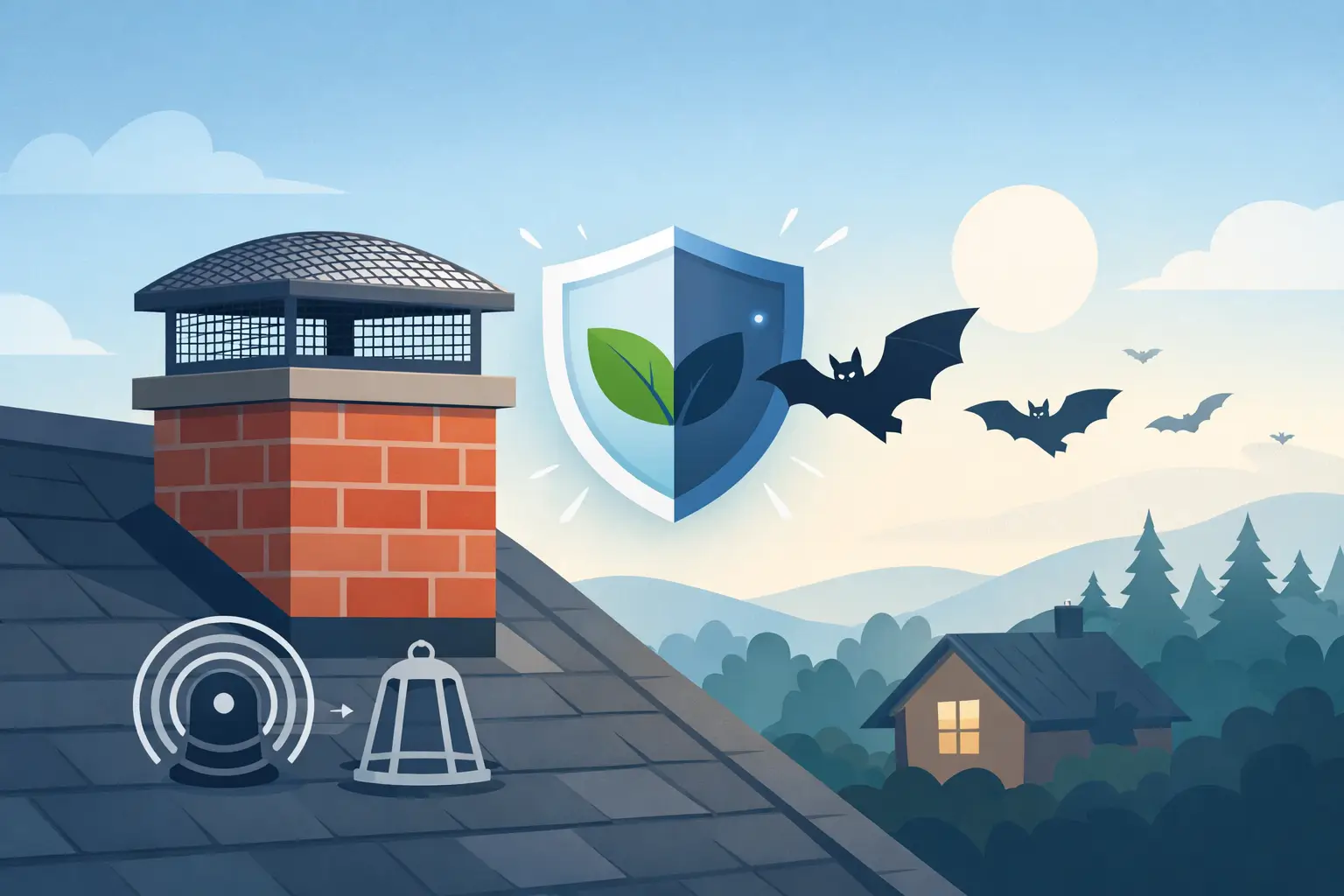
A chimney can look like a safe, quiet roost to a bat: dark, warm, sheltered from weather, and high above predators. That is why homeowners often need to prevent bats in chimneys before a few nighttime sounds turn into a recurring wildlife problem. The right solution protects your home without trapping or harming the bats already using the structure.
Bats are beneficial animals that consume large numbers of insects, but a chimney is not an appropriate place for them to live. Their droppings can create odor and sanitation concerns, while a bat that enters the flue or falls into the fireplace can create an urgent indoor situation. A properly planned exclusion keeps bats outside where they belong and protects the chimney from future access.
Why bats choose chimneys
Chimneys offer many of the same features bats seek in natural roosting sites. The masonry holds heat, the vertical space is protected from wind, and small gaps around flashing, chimney crowns, screens, or siding can lead into voids around the chimney. Some bats use the open flue itself. Others enter through an exterior gap and settle behind walls, under rooflines, or in attic spaces nearby.
A missing, damaged, or poorly fitted chimney cap is an obvious invitation, but it is not the only issue. Bats can squeeze through openings as small as 3/8 of an inch. A cap installed over the flue may stop direct entry while leaving gaps along the chase, roof intersection, or brickwork untouched.
That is why a chimney should never be treated as an isolated opening. Effective bat prevention requires an inspection of the full structure, including the roofline and the areas where the chimney connects to the home or commercial building.
How to prevent bats in chimneys safely
The goal is simple: allow any bats already present to exit, then close every viable route back inside. The order matters. Sealing a chimney while bats are still in it can trap animals in the flue, walls, or attic. Trapped bats may die, create odor, or search for another way out and appear in living spaces.
Start with a professional inspection
A bat specialist looks for more than bats flying from the chimney at dusk. Evidence may include droppings on the roof, staining around gaps, scratching or chirping sounds near sunset, odor in upper rooms, or small rub marks where bats repeatedly enter. An inspection also identifies whether the activity is limited to the chimney or connected to a larger colony in the attic, soffits, or wall voids.
For property managers and commercial operators, this step is especially valuable. Large buildings, churches, schools, and multi-unit properties often have multiple roof elevations and concealed access points. Closing one opening without locating the others rarely produces a permanent result.
Use one-way exclusion, not a trap
Humane bat exclusion uses purpose-built devices over active exit points. These devices let bats leave at night to feed but prevent them from re-entering. Once the bats have had sufficient time to exit, the openings can be permanently sealed with durable materials suited to the building.
This method is more dependable than repellents, bright lights, noise devices, or mothballs. Those approaches do not correct the physical entry point, and some can create additional health or safety concerns. Bats are persistent when a known roost is available. They may simply move to another gap in the same structure.
A professional may use netting, tubes, or other exclusion devices depending on the chimney design and the specific gap involved. The device must be placed correctly. If it blocks an alternate exit or is installed over an area containing flightless pups, the outcome can be harmful and counterproductive.
Install a properly fitted chimney cap
After bats have exited, a durable chimney cap is one of the best defenses against future entry through the flue. The cap should cover the opening fully while allowing smoke and combustion gases to vent safely. It must also be securely fastened and built to withstand Midwest wind, snow, ice, and seasonal temperature changes.
Not every screen or cap is appropriate. Lightweight mesh can bend or detach, and an improperly sized cap can leave access around the sides. If your chimney serves a fireplace, furnace, water heater, or other appliance, the cap must be compatible with that venting system. Never restrict a functioning flue with improvised wire, foam, boards, or plastic.
Seal secondary gaps around the chimney
Once exclusion is complete, prevention depends on detailed sealing. Common trouble spots include loose flashing, cracked mortar, gaps beneath chimney chase covers, damaged fascia, separated soffits, and openings where utility lines meet exterior walls. These repairs should be durable and carefully finished so that water does not enter the structure.
It depends on the building material. Brick chimneys may need masonry repair, while a framed chimney chase may require metal flashing, trim repair, or wildlife-resistant screening in protected ventilation areas. A qualified bat professional can identify what needs to be sealed and where a roofer, mason, or chimney professional may also be needed.
Timing matters when bats are raising young
Bat prevention is not a job to rush at the first sign of activity. In many areas of the Midwest, bats form maternity colonies during the warmer months. Mothers leave at night to feed, while young bats remain inside until they are able to fly. Sealing entry points or installing exclusion devices during this period can separate pups from their mothers.
This is why humane exclusion plans are based on species, weather, colony activity, and local regulations. The safest timing may require waiting until young bats are volant and able to leave with the colony. A specialist can assess the situation and explain whether active exclusion can proceed or whether temporary monitoring and a later exclusion date is the responsible approach.
Waiting does not mean ignoring the problem. During a restricted period, you can document activity, keep fireplace dampers closed, avoid disturbing the roost, and schedule a full exclusion plan for the appropriate window. If a bat enters your living space, keep people and pets away from it and contact a wildlife professional promptly. Do not handle a bat with bare hands.
What homeowners should avoid
The most common mistake is sealing visible gaps at midday after seeing bats the night before. Bats may still be inside, and an opening that looks inactive can be connected to an occupied void. Avoid lighting fires if you suspect bats are in the flue, as smoke and heat can force them deeper into the home or cause harm.
Do not rely on ultrasonic devices, chemical repellents, or strong odors. These products are not a reliable long-term answer for a chimney roost, and they can delay the repair that actually solves the problem. Poison is never an acceptable bat-control method. Beyond the humane concern, dead animals inside walls or chimneys create a difficult cleanup issue.
It is also wise not to climb onto a steep roof or attempt to install a cap without proper equipment. Chimney work carries fall risks, and a rushed repair can damage roofing, flashing, or the flue. The cost of correcting poor work is often greater than having the entry points assessed correctly from the start.
When to call a bat exclusion specialist
Call for an inspection if you see bats entering or exiting near the chimney, hear activity after sunset, notice droppings below roofline gaps, or find a bat in the fireplace or upper floor of the building. Early action usually means more options, less chance of contamination, and a cleaner path to permanent prevention.
For a home, the right service should include a clear identification of entry points, humane exclusion methods, sealing recommendations, and guidance on any guano cleanup that may be needed. For commercial properties, the plan should also account for occupant safety, building access, roof complexity, and operational schedules.
CP Bat Mitigation approaches chimney problems as part of the entire bat-entry system, not as a quick cap installation. With more than 30 years of specialized experience, the focus is safe, humane bat removal and long-term protection backed by proven exclusion methods.
A chimney cap is a strong first line of defense, but lasting results come from making the whole structure unavailable to bats. Every Bat Deserves a Home, Just Not Yours.™