

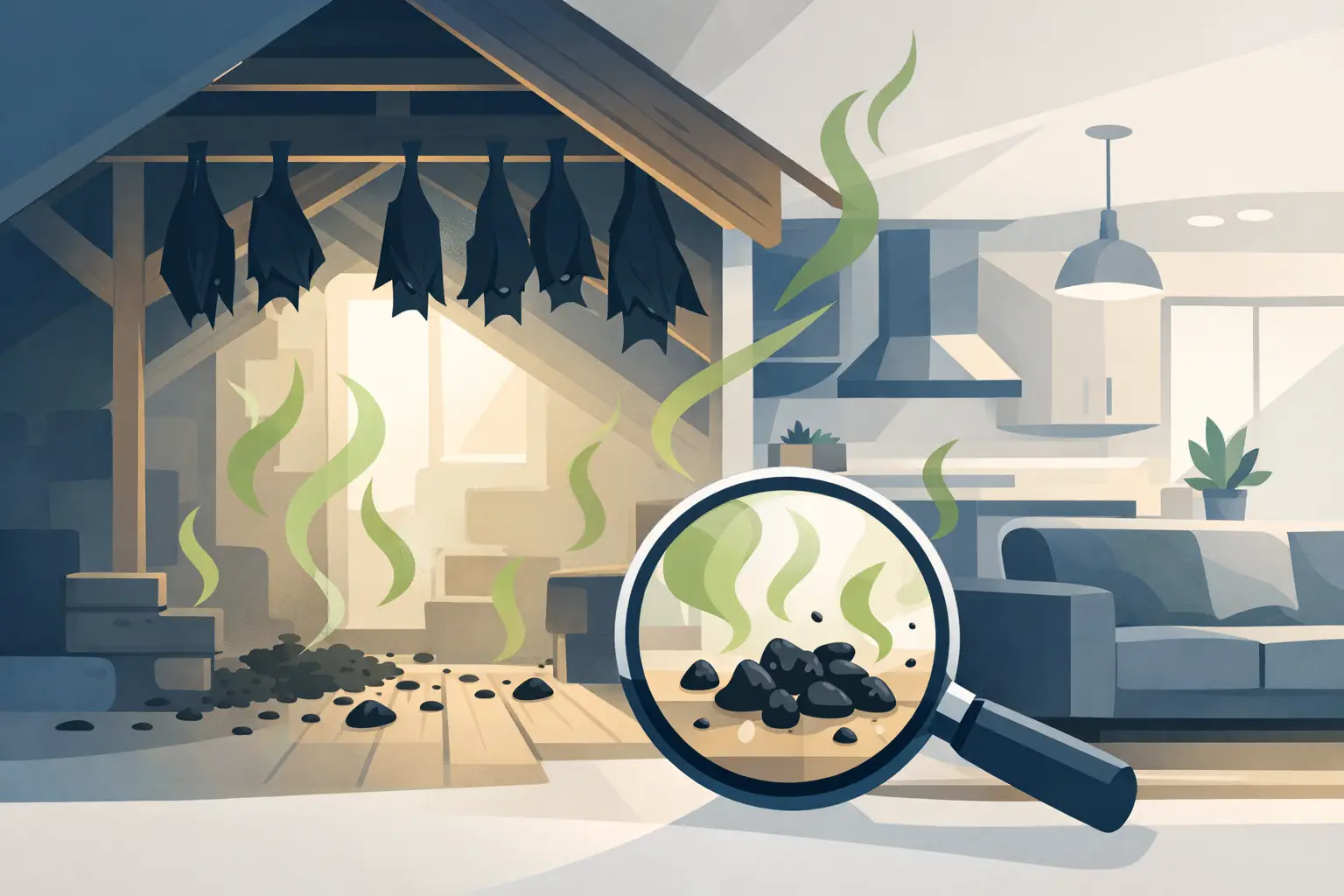
You usually notice it before you see anything. A sharp, musty, ammonia-like smell starts drifting from the attic, wall cavity, soffit, or church steeple, and it gets worse on warm afternoons. That odor after bat infestation is not just unpleasant. It is a sign that bats have likely been roosting long enough to leave behind guano, urine staining, and contaminated nesting areas that need more than a quick spray or deodorizer.
For homeowners, property managers, and commercial building operators, that smell often creates the same urgent question: will it go away on its own once the bats are gone? Sometimes it fades a little. Most of the time, the answer is no. If the source remains in place, the odor can linger for weeks or months and continue to affect indoor air quality, insulation, and the livability of the space.
What causes odor after bat infestation?
The smell comes from buildup, not from the bats themselves alone. Bats leave guano and urine in the areas where they roost, often in concentrated spots near entry points, rafters, insulation, wall voids, and behind fascia boards. Over time, that waste begins to break down and release strong odors that are especially noticeable in enclosed areas with poor ventilation.
In smaller infestations, the smell may be mild and easy to miss at first. In larger or long-term colonies, the odor can become intense. Heat and humidity make it worse. Summer attic temperatures can amplify the smell dramatically, and after rain or seasonal humidity changes, moisture can reactivate odors that seemed to disappear for a while.
There is also a practical distinction property owners should understand. A live bat issue and a cleanup issue are related, but they are not the same job. Excluding bats stops new contamination. It does not remove what is already there.
Why the smell lingers after bats are removed
One of the biggest frustrations we hear is this: the bats are gone, so why does the building still smell? The answer is simple. The contamination remains.
Guano can accumulate in insulation, between wall studs, on top of drywall, around beams, and in inaccessible cavities. Urine can soak porous building materials and leave behind staining and odor that standard household cleaners do not fully remove. If the infestation lasted through multiple seasons, the material may be compacted, widespread, and deeply embedded.
That is why odor after bat infestation often continues even after a successful exclusion. The removal process addresses the animals. The remediation process addresses the waste, soiled materials, and residual contamination.
In some cases, dead bats can also contribute to odor. This is more common when an inexperienced company or property owner tries to seal holes before the colony has been properly excluded. Trapped bats may die inside walls, soffits, or attic spaces, creating a separate and stronger decomposition smell. This is one reason humane, proven exclusion methods matter so much.
What bat odor usually smells like
Most people describe bat-related odor as musty, pungent, and ammonia-heavy. In a lightly affected attic, it may smell like stale organic waste. In a heavily contaminated structure, the odor can be strong enough to spread into living areas, hallways, offices, classrooms, or sanctuary spaces.
It does depend on the structure. In an older home with many air gaps, the smell may travel through ceiling penetrations and light fixtures. In a commercial or religious building, it may move through mechanical chases or upper voids and become noticeable far from the actual roost.
If you smell something sour, sharp, and dirty near the top levels of a building, especially with occasional scratching or fluttering noises at dusk, bats should be on the list of likely causes.
Why air fresheners and foggers rarely solve the problem
Masking the smell is not the same as removing it. Air fresheners, ozone machines, and off-the-shelf odor neutralizers may temporarily dull the scent, but they do not remove guano, saturated insulation, or urine-contaminated materials. In some cases, they make the issue harder to diagnose because the source is still active underneath the cover smell.
Fogging products can also create a false sense of progress. If bats are still entering and exiting the building, new waste continues to accumulate. If the colony has already been excluded, the odor source is still physically present until cleanup is completed.
A better approach starts with identifying the roost site, confirming whether bats are still active, and then building the right sequence of work. That usually means inspection first, exclusion second if needed, and cleanup after the bats are out.
Health and property concerns tied to the odor
The smell is often the first warning sign, but it is not the only concern. Bat guano can support fungal growth associated with histoplasmosis risk, especially when droppings are disturbed during sweeping, vacuuming, or insulation removal without proper precautions. Urine and waste can also damage insulation performance, stain ceilings, corrode some materials, and attract other pests.
For property managers and business owners, there is also the issue of occupancy and reputation. Odor in common areas, worship spaces, rental units, or customer-facing portions of a building can quickly become a sanitation complaint. Even when the colony is above the ceiling or inside a wall, the impact is felt throughout the property.
This is why experienced bat specialists treat odor as part of the larger mitigation problem, not as a cosmetic issue. If the source is ignored, the building may remain unpleasant and potentially unhealthy even after the animals are gone.
How professionals fix odor after bat infestation
The right solution depends on how much contamination is present and where it has spread. A professional inspection should determine whether the odor is coming from active roosting, residual guano and urine, dead bats, or a combination of those factors.
Once bat activity is addressed through safe, humane bat removal and exclusion, cleanup may involve removing guano, disposing of contaminated insulation, cleaning affected structural surfaces, and treating the space with products designed for biological contamination. If the waste has migrated into wall cavities or inaccessible areas, the plan may need to be more selective and targeted.
There is no honest one-size-fits-all answer here. A small seasonal colony in a detached garage may need limited cleanup. A long-term infestation in an attic above finished living space may require significant remediation to fully resolve the odor. The age of the building, the amount of material affected, the season, and whether young bats are present all influence the scope and timing.
At CP Bat Mitigation, this is exactly why inspections matter. The permanent fix is not guesswork. It comes from identifying entry points, removing the colony humanely, and correcting the contamination the right way.
When to call for help
If the odor keeps returning, gets stronger in hot weather, or is paired with staining, droppings, or bat sightings at dusk, it is time for a specialist inspection. The same is true if you have already had bats removed but the smell never fully went away. That usually means part of the contamination was missed, or the exclusion was incomplete.
This is not a situation where waiting usually improves the outcome. The longer guano and urine remain in place, the more opportunity there is for odor spread, material damage, and additional cleanup costs. Early action gives you a better chance to limit both the contamination and the repair bill.
For churches, apartment buildings, schools, agricultural structures, and commercial properties, quick action also helps reduce disruption. A proper bat inspection can clarify whether the issue is active, residual, or both, and that determines the next step.
Can the odor come back?
Yes, if bats regain access or if contaminated material remains hidden in the structure. That is why exclusion quality matters as much as cleanup quality. Sealing the right gaps, timing the work correctly, and verifying all bat entry points are closed is what prevents the cycle from starting again.
A lingering smell does not always mean live bats are still present, but a returning smell after a period of improvement should never be ignored. It can point to re-entry, moisture affecting old contamination, or missed waste in a hidden cavity.
The good news is that this problem is fixable. When the source is identified correctly and handled in the right order, the smell can be eliminated rather than covered up.
If your property has an unexplained attic or wall odor, trust what your nose is telling you. That smell is often the building’s way of saying the problem is bigger than a single bat, and the right time to address it is before another season passes.