

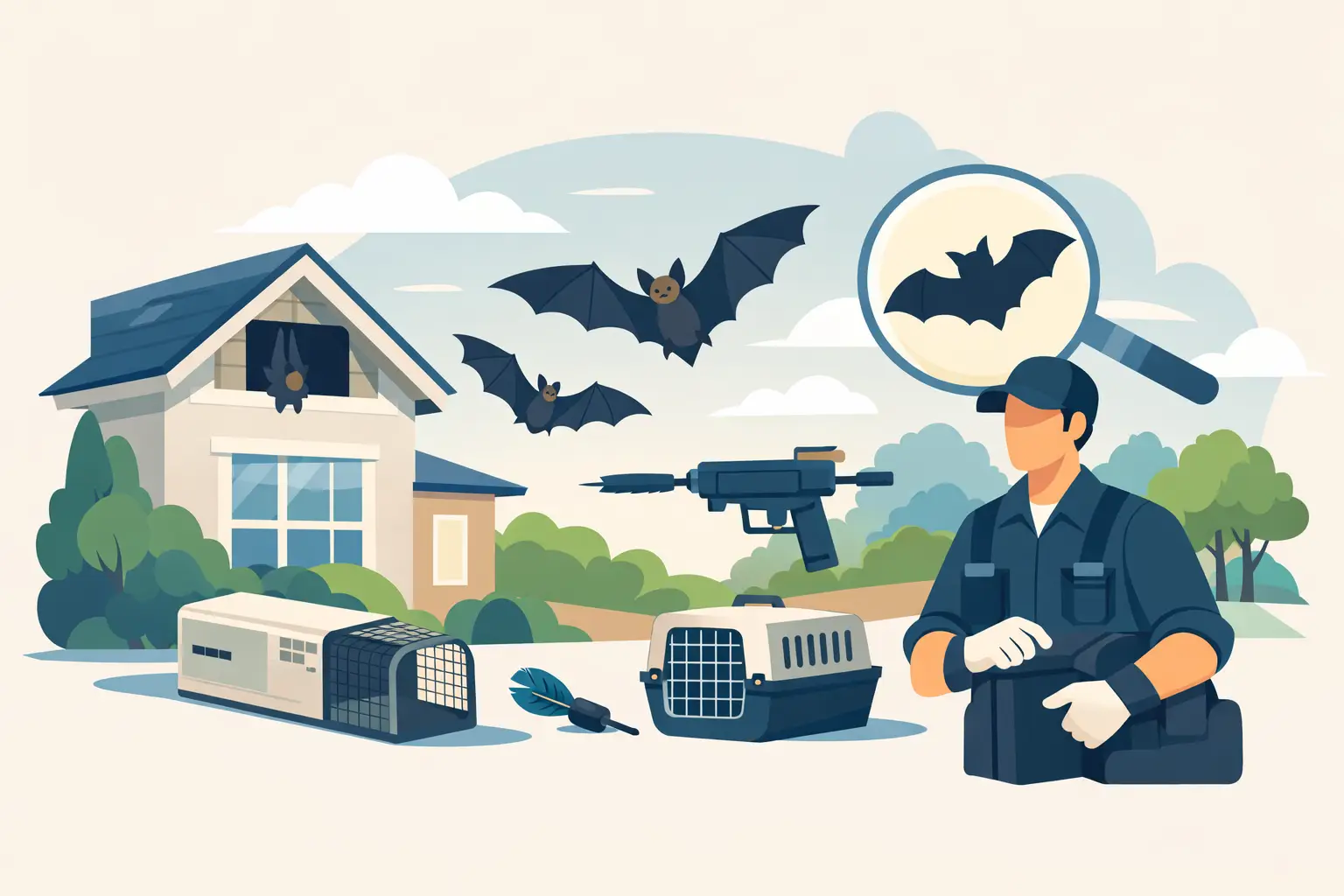
You usually do not search for humane bat removal near me on a calm, ordinary afternoon. It happens after scratching in the walls at dusk, a bat seen circling a living room, or dark staining near a roofline that suddenly makes sense. When that moment comes, the real question is not just who can remove bats. It is who can solve the problem safely, legally, and permanently.
What humane bat removal near me should actually mean
Humane bat removal is not trapping bats inside, spraying chemicals, or treating the issue like a standard pest problem. Bats are beneficial wildlife, and in many situations they are protected by state laws or seasonal restrictions. The right approach removes them from the structure without harming them, while making sure they cannot re-enter.
That usually means exclusion. A trained bat specialist identifies every active and potential entry point, installs one-way devices on the primary exits, and seals the structure so bats can leave but not get back in. Once the colony is out, the final openings are closed and the cleanup process can begin.
This is why humane work is more than a nice phrase. It is the difference between a legal, effective solution and a shortcut that can leave dead animals in walls, separated pups in attics, or a colony that returns within weeks.
Not every wildlife company is a bat specialist
When people search for humane bat removal near me, they often call the first pest control number they see. That can be a costly mistake. Bat work is highly specialized. The inspection process is different, the timing matters, and the repair strategy has to account for how bats use a building.
A general pest company may be excellent at treating ants, mice, or wasps, but bats are another category entirely. The best bat removal companies understand species behavior, maternity season, exclusion timing, roofline construction, guano hazards, and how to seal a structure without creating new access points elsewhere.
That specialization matters even more in older homes, churches, commercial buildings, barns, and multi-entry structures. A bat colony can use gaps as small as a half inch. Missing one section of fascia, ridge vent, soffit return, or masonry joint can turn a major exclusion project into a repeat infestation.
The first inspection should tell you a lot
A proper inspection is where a permanent solution starts. This is not a quick glance at the attic hatch or a flashlight pointed at one vent. A serious inspection includes the full exterior, the roofline, likely entry areas, interior signs, and evidence such as rub marks, staining, guano accumulation, and odor patterns.
You should expect clear answers. Where are the bats getting in? Are there multiple access points? Is this a single bat issue or a colony? Is there evidence of maternity activity? What repairs are required after exclusion? Will guano cleanup be necessary?
If a company cannot explain the source of the problem, it is hard to trust the proposed fix. Good bat removal is specific. It is built around the structure in front of you, not a generic treatment plan.
Why timing matters more than most property owners realize
One of the biggest variables in humane bat removal is seasonality. During maternity season, flightless pups may be present. If exclusion is done at the wrong time, adults can leave while young bats remain trapped inside. That is not humane, and it creates obvious health and odor problems.
This is one reason experienced bat professionals sometimes tell customers to wait for the proper exclusion window, even when they could make a faster sale by pushing ahead. The honest answer is not always the most convenient one. Sometimes immediate action means inspection, planning, and temporary precautions until full exclusion can be completed safely.
That kind of guidance is a good sign. It shows the company is thinking about the biology of the colony, not just the urgency of the phone call.
Humane removal is only half the job
Getting bats out is critical. Keeping them out is where the long-term value is.
A lot of frustration in this industry comes from partial fixes. Someone removes visible bats, closes one hole, and leaves secondary entry points untouched. For a short time, the home seems quiet. Then the noises return, the guano builds up again, and the owner ends up paying twice.
Long-term protection depends on complete exclusion and structure-focused repairs. That means sealing construction gaps, screening vulnerable openings where appropriate, and addressing the weak points bats are most likely to use in the future. Proven exclusion methods work because they account for both current activity and likely re-entry routes.
This is also where an industry-leading guarantee matters. A company willing to stand behind its bat exclusion work is showing confidence in the thoroughness of the job.
Do not overlook guano and contamination
For many property owners, the sight of a bat causes the panic. For specialists, the bigger concern is often what has been left behind.
Bat guano can accumulate in attics, wall voids, insulation, and commercial spaces over time. That buildup can create odor, stain materials, attract insects, and raise sanitation concerns. In larger infestations, it can affect indoor air quality and lead to expensive damage if ignored.
Cleanup should be handled carefully and professionally. The process may involve removal of contaminated insulation, sanitation treatment, and safe handling procedures that protect occupants and workers. It depends on the size of the colony, how long the issue has been active, and where waste has collected.
A company that handles both exclusion and cleanup can often provide a more complete solution than one that stops at eviction.
What to ask before hiring a bat removal company
If you are comparing providers, ask direct questions. Do they specialize in bats or handle them as one of many wildlife services? Do they use exclusion rather than trapping or poisoning? Will they identify and seal all entry points? Do they offer cleanup if guano is present? What kind of warranty or guarantee is included?
You should also ask how they handle maternity season, whether they perform detailed exterior inspections, and what experience they have with your type of building. A church, warehouse, apartment property, and single-family home can all have very different exclusion demands.
The right company will not dodge these questions. They will answer them clearly because this is the work they do every day.
Local experience matters in the Midwest
Buildings across South Dakota, Nebraska, Iowa, and Minnesota face similar bat pressures, but local construction styles, weather patterns, and seasonal timing still affect how exclusion is done. Freeze-thaw cycles, aging rooflines, farm structures, and mixed residential-commercial properties all create unique access conditions.
That is why local and regional experience matters. A provider familiar with Midwestern structures can often spot likely entry zones faster and recommend repairs that hold up better over time. For property managers and business owners, that translates into fewer disruptions and more confidence that the issue is truly resolved.
Family-owned specialists like CP Bat Mitigation have built their reputation on that kind of focused service – free inspections, proven exclusion methods, safe cleanup, and long-term prevention rather than temporary fixes.
When a single bat means something more
Not every bat sighting means you have a colony. Sometimes one bat enters a living space by accident. But sometimes that single bat is the visible part of a larger issue in the attic, soffits, or walls.
If a bat is found indoors, especially more than once, it is worth having the structure inspected. The same goes for chirping sounds at dusk, droppings near the exterior, oily marks around roof gaps, or a recurring odor in upper sections of the building. Early action can prevent a small access problem from turning into a major cleanup project.
For commercial properties, schools, churches, and multi-unit buildings, fast evaluation is even more important. One overlooked colony can create health concerns, tenant complaints, and operational headaches that spread beyond a single unit or attic.
Choosing the right solution, not the fastest pitch
The best result usually comes from a company that slows the situation down just enough to do it right. That means a real inspection, an honest conversation about timing, a detailed exclusion plan, and a clear path for repairs and cleanup. It may not be the cheapest quote on the table, and it may not be the one promising instant removal by tomorrow morning. But in bat control, rushed work often becomes repeat work.
Every bat deserves a home, just not yours. If you are searching for a humane answer, look for the team that treats your property like it needs protection, not a patch job.