

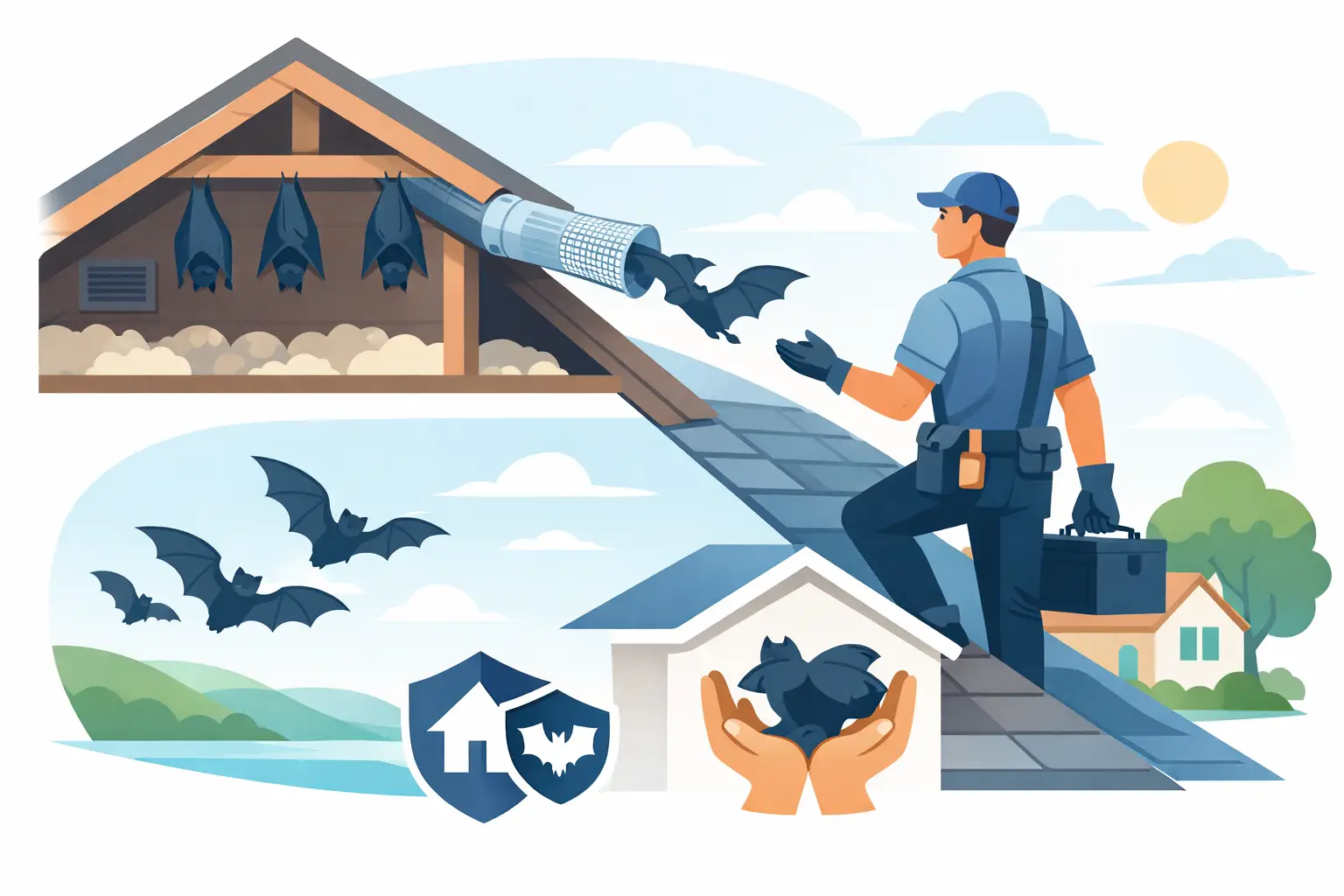
Scratching after sunset, chirping along the roofline, or a bat appearing in a second-floor room can turn an attic into a serious property concern overnight. Humane attic bat solutions address the real problem: getting bats out safely, closing every access point, and protecting the building from the odor, contamination, and repeat activity that follow an unfinished job.
Bats are valuable wildlife, but an attic, wall cavity, church steeple, or commercial roofline is not the right place for a colony. Every Bat Deserves a Home, Just Not Yours.™ The most reliable response is not trapping, poisoning, or a quick patch around one visible hole. It is a planned exclusion process tailored to the structure and the season.
Why Attic Bat Problems Need a Different Approach
Bats can enter through gaps that look too small to matter. A separation near fascia boards, a loose roof vent, an unsealed utility opening, or a gap where siding meets brick may be enough. Once inside, they often settle in warm, protected voids that are difficult to inspect from the ground.
The immediate concern is not only seeing a bat. Colonies can leave guano and urine below roosting areas, creating persistent odors and staining. Over time, droppings can affect insulation, ceiling materials, and indoor air quality. The presence of bats also deserves careful handling because direct contact can create health concerns, particularly if a bat has been found in a room where people were sleeping or where a pet may have interacted with it.
A general pest-control approach can miss the building science behind the problem. Effective bat work requires identifying species behavior, travel paths, active openings, and potential secondary exits throughout the structure. It also requires knowing when exclusion can be performed without separating dependent young from their mothers.
What Humane Attic Bat Solutions Actually Include
Humane removal is a process, not a single visit. A qualified bat specialist begins with a detailed inspection of the roofline, attic, vents, soffits, chimney areas, siding transitions, and other common access points. Evening observation can be especially useful because it shows where bats are actively exiting.
One-way exclusion, not capture or poison
The core of safe, humane bat removal is a one-way exclusion device. Installed at active exit points, these devices allow bats to leave for their nightly feeding but prevent them from reentering the structure. The bats relocate to an appropriate outdoor roost while the building is prepared for permanent sealing.
This approach avoids the risks associated with toxic products, glue traps, or sealing bats inside. Those shortcuts can create dead-animal odor, insects, staining, and a much harder cleanup problem. They also fail the basic standard of humane wildlife control.
Full structural sealing
A one-way device only works when the rest of the building has been secured. If several openings remain available, bats may simply move from one gap to another and continue using the attic. That is why exclusion must be paired with careful sealing of secondary and potential entry points using materials suited to the building surface.
The work is not cosmetic caulking alone. A durable solution considers how a roofline expands, how vents function, where water sheds, and which gaps can reopen with weather or normal building movement. On older homes, barns, churches, and large commercial properties, this step often requires the most expertise.
Guano assessment and cleanup
Not every bat presence leaves significant contamination, but established attic colonies can. Guano cleanup should be evaluated after bats have been excluded and the area is no longer active. Depending on the amount and location of droppings, work may include safe removal, treatment of affected surfaces, odor control, and replacement of contaminated insulation.
Cleanup is not simply a housekeeping task. Disturbing dry droppings without proper containment and personal protective equipment can spread dust into the air. Property owners should avoid sweeping or vacuuming large accumulations with ordinary household equipment.
Timing Matters More Than Most Property Owners Realize
The right exclusion date depends on the local bat species, weather, and whether young bats are present. During maternity season, flightless pups may remain inside while adult bats leave to feed. Installing exclusion devices at the wrong time can separate young bats from their mothers, which is neither humane nor effective.
A responsible specialist assesses conditions before recommending a start date. In some cases, the best answer is to monitor the site and schedule exclusion after young bats are capable of leaving on their own. That can feel frustrating when bats are making noise above a bedroom or office, but timing protects the animals and helps prevent the odor and sanitation problems caused by trapped pups.
There are also situations that need faster guidance. If a bat is found in a living space, especially where a person may have had direct contact or been asleep, contact local public health authorities or a medical professional for direction. Do not handle the bat with bare hands, and do not release it before receiving appropriate advice if exposure may be possible.
Why DIY Bat Removal Often Creates a Bigger Problem
Homeowners are understandably tempted to close the first hole they find. Unfortunately, bats rarely use only one opening, and an active gap may be serving as the colony’s primary exit. Sealing it before confirming bats are out can force them deeper into walls or living areas.
Store-bought repellents, bright lights, ultrasonic devices, and strong odors are also unreliable. They may cause temporary disturbance, but they do not correct the access points that allowed bats inside. A colony can return as soon as the disturbance fades, or relocate to another part of the same building.
DIY work can also be unsafe. Attic joists, steep rooflines, tall ladders, loose insulation, and unknown contamination create real hazards. For commercial facilities and multi-unit properties, an incomplete repair can affect occupants, operations, and long-term maintenance costs.
Choosing a Bat Specialist You Can Trust
Look for a company that specializes in bats rather than treating them as one category within general pest control. Ask how the inspection is performed, whether the plan uses one-way exclusion devices, how maternity-season timing is handled, and what sealing work is included.
A clear written scope matters. You should understand which entry points will be sealed, whether guano cleanup is recommended, what follow-up inspection is provided, and how the guarantee applies. The lowest quote may only cover a visible hole, while a complete exclusion addresses the entire structure and reduces the chance of another costly infestation.
For homeowners and property managers across the Midwest, CP Bat Mitigation brings more than 30 years of bat-specific experience to inspections, exclusion, structural sealing, and guano cleanup. The goal is straightforward: safe, humane bat removal backed by proven methods and long-term protection.
Protect the Attic Before Bats Return
After professional exclusion, routine property maintenance helps preserve the repair. Watch for damaged screens on vents, loose soffit panels, deteriorated trim, gaps around pipes and cables, and roofline damage after storms. These conditions do not guarantee bats will return, but they can reopen the pathways that wildlife looks for.
If you hear activity in the attic or see bats exiting around dusk, avoid rushing to seal the opening yourself. A careful inspection can determine where they are entering, whether young bats may be present, and what humane timing will produce a lasting result. The right solution protects your home or building while giving bats a safe way out.