

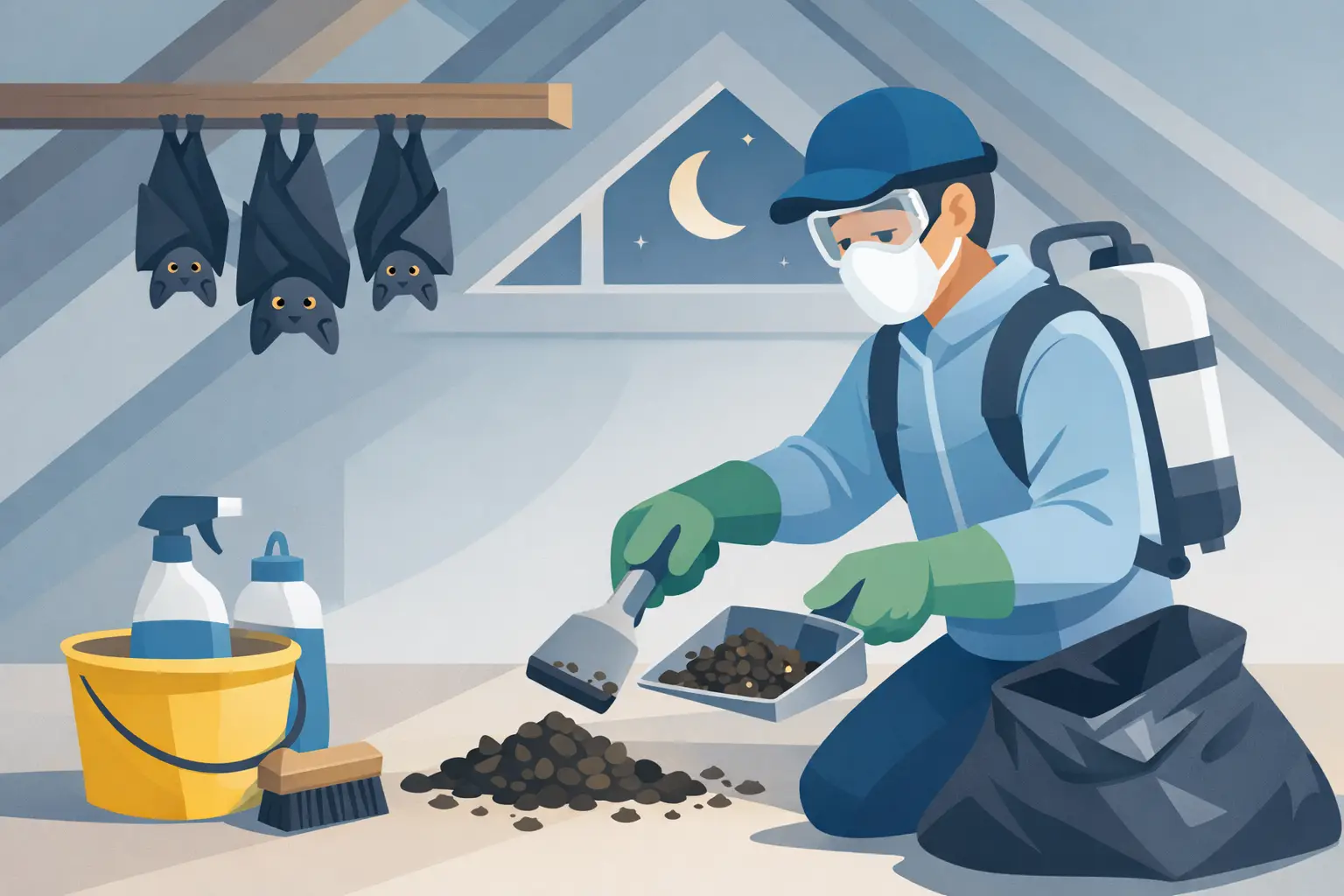
That dusty pile in the attic or along a wall cavity is not just a mess. If you are searching for how to clean bat guano, the first thing to know is that guano cleanup is part sanitation job, part health protection, and part bat-control problem. If bats are still active in the structure, cleaning alone will not solve it.
Bat guano is different from ordinary animal droppings. It can accumulate quickly, soak insulation, stain wood, create strong odor issues, and support fungal growth that may pose respiratory risks when disturbed. For homeowners, churches, apartment managers, and commercial property owners, the real goal is not just to remove the waste. It is to restore the space safely and keep the contamination from coming back.
How to clean bat guano without making the problem worse
The biggest mistake people make is sweeping or vacuuming dry droppings right away. That stirs particles into the air and increases exposure risk. Another common mistake is cleaning before the bats have been professionally excluded. If the colony is still using the attic, soffit, or wall void, fresh guano will start building up again almost immediately.
Before any cleanup begins, confirm whether bat activity is current or historic. Fresh guano is typically dark, crumbly, and found beneath active roosting points. You may also hear movement at dusk or dawn, notice staining around entry gaps, or smell a strong ammonia-like odor. If bats are still present, humane exclusion needs to happen first.
This is where people often run into a trade-off. A small amount of old droppings in an outbuilding may be manageable with the right precautions. A heavily contaminated attic, a church steeple, or a commercial structure with active roosting usually calls for a specialist. The more guano there is, the less sense it makes to treat it like a simple cleanup project.
Safety gear matters more than speed
If you are dealing with a limited amount of guano after the bats are gone, proper protection comes first. At minimum, that means a respirator rated for fine particles, disposable gloves, eye protection, and clothing that can either be discarded or washed separately. A basic dust mask is not the same thing as a properly fitted respirator.
You should also isolate the work area as much as possible. In an attic, that may mean restricting access, turning off HVAC equipment that could spread particles, and laying plastic to control tracking. In occupied buildings, especially rental properties or businesses, preventing cross-contamination matters just as much as removing the visible waste.
Ventilation can help, but it depends on the space. Opening the area carelessly can move contaminated dust into other parts of the building. In some structures, controlled containment is better than simply airing everything out.
The right way to remove bat guano
Dry removal is where problems begin, so start by lightly misting the droppings with a disinfectant or enzyme-based cleaner labeled for biohazard-style cleanup. The goal is not to soak the material into surrounding building components. It is to reduce dust before handling it.
Once the guano is dampened, remove it carefully with disposable towels, scoops, or other tools that can be sanitized or discarded. Place waste directly into heavy-duty sealed bags. If the contamination is on top of insulation, the insulation itself may need to be removed. Guano often works down into the material, and odor can remain even after the visible droppings are gone.
For hard surfaces such as wood framing, masonry, or concrete, follow removal with detailed surface cleaning. In many cases, a second pass with an appropriate disinfectant is needed. If urine staining or odor has penetrated porous surfaces, treatment may require more than a wipe-down. Some attics and wall voids need deep sanitation, odor control, and material replacement before they are truly restored.
Household vacuums are a bad idea here. They are not designed for contaminated fine particles, and they can spread what you are trying to contain. Even with a shop vacuum, the issue is filtration and exposure. Professional crews use equipment and containment practices designed for hazardous debris, not general housekeeping.
When insulation and building materials need to go
One of the hardest parts of guano cleanup is accepting that surface cleaning may not be enough. If bats have occupied a space for months or years, the contamination may extend far beyond the obvious piles. Insulation can become compressed, urine-soaked, and odor-saturated. Drywall around heavy roost areas may carry staining. Wood can absorb smell and moisture.
This is why cleanup estimates can vary so much. A light spot-cleaning job is very different from a full attic restoration. If the guano is concentrated in one section and the underlying materials are sound, partial removal may work. If the contamination is widespread, replacing insulation and treating the full attic is often the better long-term decision.
Property managers and commercial operators should also consider liability. If tenants, staff, or visitors could be exposed to airborne contaminants, cutting corners on cleanup is rarely worth the risk. The cheapest approach up front can become the most expensive one later.
What to do after the guano is removed
Cleanup is only complete when the structure is protected against repeat infestation. That means finding and sealing the entry points bats were using, except for the exits needed during humane exclusion. Gaps at rooflines, vents, fascia intersections, ridge areas, and construction joints are common access points. Many are much smaller than people expect.
This is one reason bat work should never be confused with general pest control. Bats require species-aware timing, humane exclusion methods, and careful inspection of the entire building envelope. Miss one active gap, and the colony may simply shift to another section of the structure.
After exclusion and cleanup, monitor the area for odor, staining, and renewed activity. A clean attic that still smells strongly may need additional deodorization or replacement of contaminated materials. A quiet attic with fresh droppings appearing again points to a missed access point.
When not to clean bat guano yourself
There are times when DIY cleanup is simply not the right call. If you have a large accumulation, visible contamination in HVAC zones, droppings spread through insulation, or any uncertainty about active bat presence, professional help is the safer option. The same goes for churches, schools, apartment buildings, warehouses, and other occupied commercial spaces.
You should also avoid handling the cleanup yourself if anyone involved has asthma, a compromised immune system, or other respiratory concerns. Even a small job can become risky when contaminated dust is disturbed.
In our experience, the toughest jobs are rarely just cleanup jobs. They usually involve active bat entry points, hidden roosting areas, odor migration, and contamination in places the property owner cannot fully access. That is where a bat specialist earns their keep – not just by removing the waste, but by solving the whole problem the right way.
A practical standard for homeowners and property managers
If you want a simple rule, use this one: do not clean guano until you know the bats are out, and do not assume visible droppings are the full extent of the damage. Safe cleanup depends on the amount of contamination, the type of building materials involved, and whether the space can be restored without removing insulation or other porous materials.
For a small, old deposit in a non-living area, careful cleanup with proper protection may be reasonable. For an attic, wall void, church steeple, or commercial structure with recurring bat activity, the smarter move is to have the site inspected by a bat-only specialist who understands exclusion, sanitation, and long-term prevention. That is how you protect the building, the people inside it, and the investment you have made in the property.
At CP Bat Mitigation, we have seen the difference between a quick cleanup and a complete solution. Guano removal matters, but what matters more is making sure you never have to clean the same mess twice.
If you are standing under a stained attic hatch or smelling something sharp and musty above the ceiling, trust what the building is telling you. Clean it carefully, fix it completely, and make sure the bats find a home that is not yours.